Crane Cable Snaps at Chittagong Port, Crushes Truck
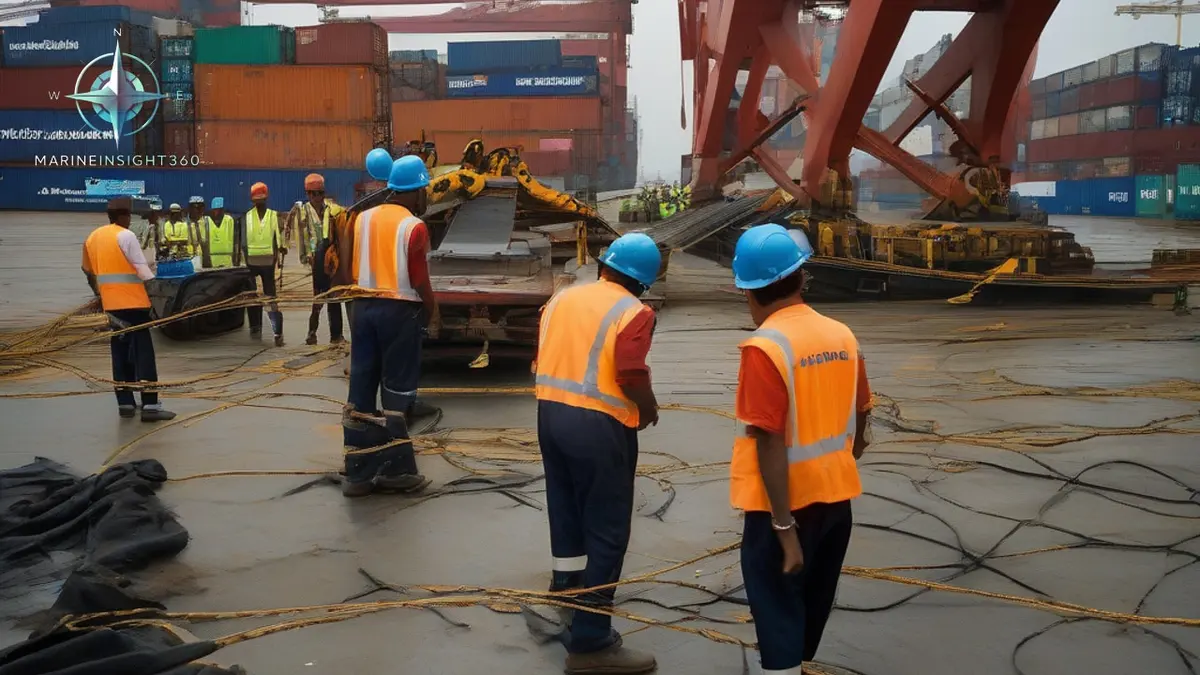
A gantry crane cable snapped at Chittagong Port's CCT Terminal, completely crushing a trailer truck and container. No injuries have been reported so far.
Crane Cable Snap at Chittagong Port: What Seafarers and Operators Need to Know
When a crane cable snaps, whatever it is holding falls: at Chittagong Port's CCT Terminal a gantry crane lost its balance mid-lift and dropped its load onto a trailer truck and container. No injuries were reported, but the failure exposes safety gaps that apply at any container terminal.
Incident Overview
The Chittagong Port Authority confirmed that Q Gantry Crane‑4 lost its balance during a routine lift. The sudden loss of equilibrium caused the main cable to snap, dropping the heavy load onto a waiting truck and container. The crash was captured on social media by the account AIWOWAI, which posted a video of the cable breaking and the resulting impact.
While the incident did not injure anyone, the damage to the truck and container, and the potential for crew injury, underscore the importance of rigorous crane safety practices.
Why This Matters to Shipping Professionals
Gantry cranes are the backbone of container handling at major ports. A cable failure can:
- Endanger crew and nearby vessels.
- Cause significant cargo damage and equipment loss.
- Lead to costly downtime and regulatory scrutiny.
For vessels that rely on port operations for loading and unloading, any delay can ripple through schedules, berth allocations, and contractual obligations.
Key Decision Criteria for Operators and Port Managers
When assessing crane safety, operators should weigh the following:
- Load Limits and Distribution – Verify that the cargo weight and center of gravity fall within the crane’s rated capacity.
- Cable Inspection Frequency – Follow manufacturer and regulatory guidelines for visual and non‑destructive testing of cables.
- Balance Checks Before Lifting – Conduct a pre‑lift balance assessment, especially when lifting uneven or oversized loads.
- Maintenance Records – Ensure that all maintenance logs are up to date and that any anomalies are investigated promptly.
Choosing a higher inspection frequency increases upfront costs but reduces the risk of catastrophic failure and the associated downtime.
Common Mistakes That Can Lead to Cable Failure
Operators often fall into these pitfalls:
- Overloading – Exceeding the crane’s rated capacity or lifting a load with an improper center of gravity.
- Neglecting Balance Checks – Skipping the balance assessment before a lift, especially in busy yard conditions.
- Inadequate Cable Maintenance – Relying solely on visual inspections without employing ultrasonic or magnetic particle testing.
- Ignoring Wear Signs – Overlooking fraying, corrosion, or micro‑cracks that can develop over time.
These mistakes often stem from cost pressures or time constraints but can lead to far greater losses.
Operational Impact and Cost Considerations
A cable snap can trigger a chain reaction:
- Immediate Downtime – The crane must be inspected, repaired, or replaced, halting all container movements in that area.
- Repair Costs – Replacing a heavy‑lift cable can run into the tens of thousands of dollars, depending on the crane model.
- Insurance and Liability – Incidents may lead to higher premiums and potential legal claims.
- Reputation Risk – Ports that experience safety incidents may see reduced traffic from shippers wary of delays.
Balancing these costs against the safety benefits of rigorous inspection regimes is a core decision for port authorities and shipping companies alike.
What to Do After a Cable Snap
Immediate actions should include:
- Isolate the crane and secure the area to prevent further incidents.
- Conduct a full structural assessment of the crane and cable system.
- Document the incident in detail, noting load, cable type, and environmental conditions.
- Notify relevant authorities and insurance providers.
- Review and update maintenance schedules to prevent recurrence.
Long‑term measures involve investing in advanced monitoring systems, such as load‑cell sensors and cable tension monitors, which can alert crews to abnormal stresses before failure.
Learning from the Chittagong Incident
While the Chittagong Port incident involved a gantry crane, the lessons apply to any heavy‑lift operation:
- Never assume a “routine lift” is risk‑free; always verify balance and load limits.
- Maintain a culture where crew can report potential cable wear without fear of reprisal.
- Use data from past incidents to refine risk models and adjust inspection intervals.
By embedding these practices, ports and vessels can reduce the likelihood of a cable snap and protect both people and cargo.
Next Steps for Shipping Professionals
Review your current crane inspection protocols and compare them against the criteria outlined above. If you haven’t already, consult the Marine Insight 360 Shipboard Operations section for detailed guidelines on crane maintenance and safety audits.