Iran VS U.S. War VIDEO: U.S. Bahrain Base DESTROYED, Israel Fears BIG Attacks | Saudi VS Houthis
Tensions in the Middle East have reached a dangerous new level as the United States and Iran exchange fresh military strikes across the Strait of Hormuz.
Iran Strikes US Bases Across the Gulf
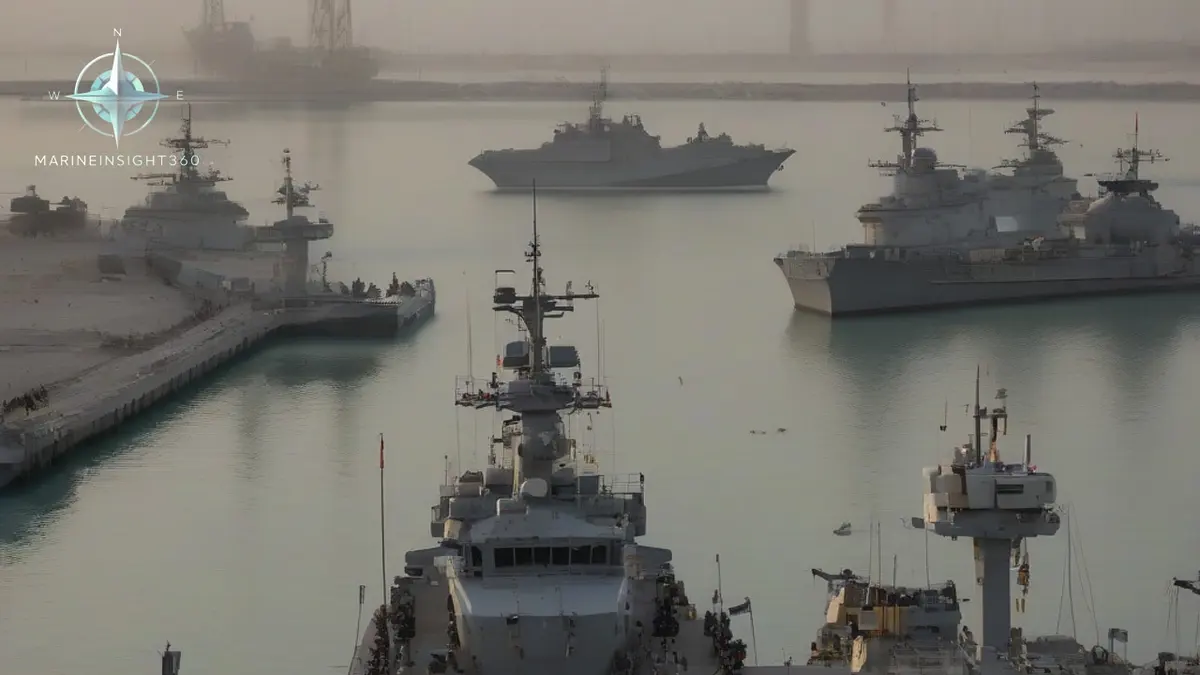
Iran has struck US bases in Bahrain, Kuwait, Qatar, Jordan and Saudi Arabia, damaging at least 20 American sites including the Navy's base in Bahrain. The escalation now sits across the Strait of Hormuz, the chokepoint that carries roughly 20% of the world's oil. That changes the risk picture for every vessel transiting it.
Key Developments and Maritime Impact
The Islamic Revolutionary Guard Corps (IRGC) has launched coordinated missile and drone attacks against American military facilities in Kuwait, Bahrain, and other locations. Iran has retaliated against U.S. military facilities in Bahrain, Jordan, Kuwait, Qatar, and Saudi Arabia, resulting in damage to at least 20 U.S. sites, including the Navy's base in Bahrain.
The Strait of Hormuz is a critical chokepoint for global oil trade, with approximately 20% of the world's oil passing through it. The conflict has raised concerns about the safety of shipping vessels and personnel in the region.
Shipping in the Strait of Hormuz: Risks and Precautions
- The conflict has resulted in damage to at least 20 U.S. sites, including the Navy's base in Bahrain.
- Maritime professionals should be aware of the potential risks and take necessary precautions when navigating the Strait of Hormuz.
- Crews should be aware of the potential for increased security measures, such as escorts and surveillance.
- Vessels should be prepared for potential delays or changes in cargo handling procedures.
Regional Developments and Operational Considerations
Saudi Arabia has rejected American military presence on its soil, which may impact the region's geopolitics. Israel is concerned about potential attacks from Iran, which could escalate the conflict further.
Shipping companies and operators should monitor the situation closely and adjust their routes and schedules accordingly. Consider consulting Marine Insight 360's Knowledge Base for guidance on navigating the Strait of Hormuz and mitigating risks.
Staying Informed and Preparing for the Worst
- Shipping professionals should stay informed about the latest developments and adjust their operations accordingly.
- Consult Marine Insight 360's Knowledge Base for guidance on navigating the Strait of Hormuz and mitigating risks.
Why the Bahrain base matters to merchant ships
Naval Support Activity Bahrain is the shore base for the United States Fifth Fleet and for the International Maritime Security Construct, the coalition set up to escort and monitor traffic in the Gulf. Damage there is a story about the coordinating centre for Gulf shipping protection, not only about a military installation.
The reporting line for a merchant ship is separate from all of it. UKMTO, based in Dubai, is the first point of contact for a master who is followed, boarded, illuminated or attacked in the region, and UKMTO passes the report on to the naval forces. A vessel does not call the Fifth Fleet directly.
That contact takes the form of a reporting schedule rather than a single call. Ships entering the region file an initial report, then position reports while inside the voluntary reporting area, so a vessel that stops transmitting is noticed. The schedule sits in the industry Best Management Practices rather than in any national regulation.
What actually changes on a Hormuz transit
Escalation of this kind shows up in three places before it shows up in a decision to reroute. Underwriters reprice the war risk premium for a Gulf call and shorten the notice period. Satellite navigation interference and AIS spoofing rise around the strait, so position fixing has to be cross checked against radar and visual bearings. And transits get planned for daylight and for the shortest time inside the strait.
None of that replaces the company security officer's assessment for the specific ship. It is the reason a Gulf transit is planned as an evolution rather than sailed as a routine passage, which is what separates Hormuz from most other maritime chokepoints.