
Russian Navy Sinks British Arms Ship To Ukraine
Russia claims to have sunk a cargo ship carrying weapons and military equipment to Ukraine on Saturday, March 1.
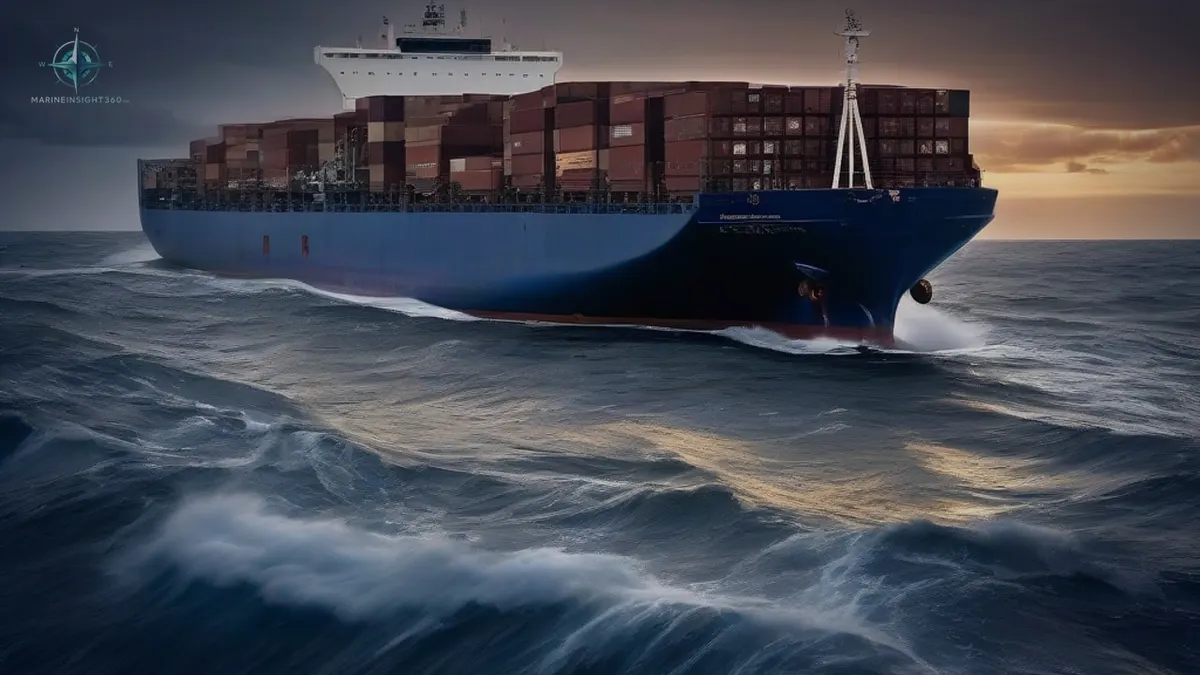
Russia claims it sank the Panama-flagged container ship MSC Levante F at Odesa, said to be carrying British arms to Ukraine, but Ukrainian officials say the ship is damaged, not sunk, and its cargo civilian.

Russian Navy Sinks British Arms Ship To Ukraine
Russia claims to have sunk a cargo ship carrying weapons and military equipment to Ukraine on Saturday, March 1.
Russian war channel Telegram Talebov Online reported that Moscow's military fired two Iskander-M missiles at the Panama-flagged container ship MSC Levante F anchored in the port of Odesa.
The ship, which was carrying yellow and red containers, reportedly stopped in Turkey to load British Navy drones and other weapons from a NATO base in the UK before heading to Ukraine.
"The container ship was hit while preparing to unload," the Telegram channel reported. "After the offensive bombardment began, the cargo was completely destroyed and the ship sank."
Ukrainian authorities confirmed that two port workers were injured in the attack and that port infrastructure was also damaged.
However, despite this claim, Russia has yet to provide evidence that the MSC Levante F actually sank.
Reply from Kyiv
Oleg Kiper, the governor of Odessa, confirmed that a cargo ship docked in the port of Odessa was attacked by missiles.
However, he said that the attack only "damaged" the civilian ship owned by a Swiss shipping company.
Oleksiy Kuleba, Ukraine's deputy prime minister for reconstruction, denied Russia's claims, saying that the ship was carrying "purely civilian cargo."
He also revealed that a second ship was also attacked.
Ukrainian President Zelensky said that at least 20 foreign merchant ships have been attacked by Russia since Russia invaded Ukraine in February 2022.
What would confirm a sinking, and what has not
A total loss leaves a paper trail. The ship stops transmitting AIS from a position it never leaves. The classification society withdraws class. The flag registry closes the entry, and hull underwriters record a total loss. A wreck in a working port has to be marked, and then removed, before the berth can be used again.
None of that has been shown here. No imagery of a sunk hull has been produced. Odesa officials describe a damaged ship that is still owned and operated. Where two accounts conflict, the flag state has standing to settle it. Under SOLAS Chapter XI-1, Regulation 6 that is Panama, which runs the safety investigation into a very serious casualty.
Why merchant ships are calling at Odesa at all
Odesa is not an incidental port in this war. The Black Sea Grain Initiative was brokered by the United Nations and Turkey in July 2022. It moved grain out of Odesa, Chornomorsk and Pivdennyi under joint inspection. Russia withdrew from it in July 2023.
Ukraine then opened a corridor of its own along the western Black Sea. It hugs the territorial waters of Romania and Bulgaria, both European Union members, and traffic returned with no agreed protection. Owners buy war risk cover voyage by voyage. The exposed period is the time alongside working cargo. This ship, like the targets of earlier strikes on Odesa, was hit in port rather than at sea.
Recommended Reading
Average Merchant Navy Salary in US & UK
The Merchant Navy offers a thrilling career, blending high seas adventure with competitive salaries and global travel. Whether you’re eyeing a role as a…
Average Merchant Navy Salary in the UK & USA
A UK Merchant Navy salary is determined based on rank position, experience level, ship type, and employment status between private shipping companies and…
Navy or Marines: What's different?
Navy or Marines: What's different?: career, certification and hiring context for US, UK, Canada, Australia, Singapore and European maritime readers.