
What Is a Search and Rescue Transponder (SART)?
A Search and Rescue Transponder (SART) is a lifesaving device used on ships and survival craft to help rescuers quickly locate a vessel or liferaft during distress situations.
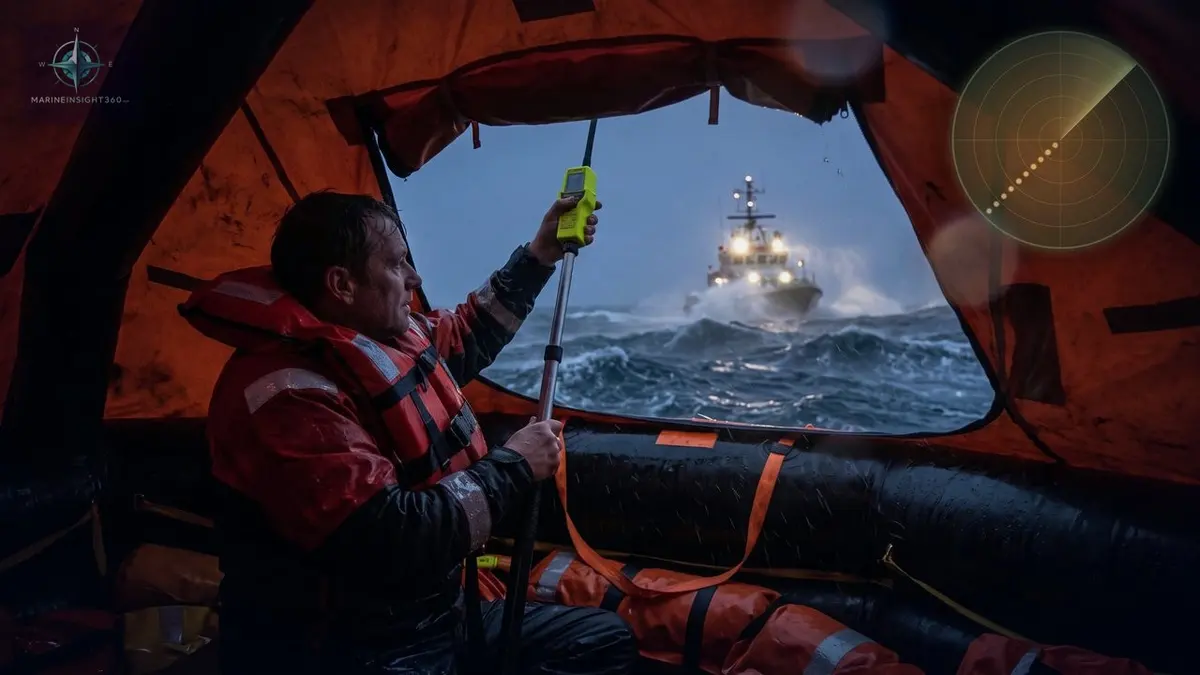
A Search and Rescue Transponder (SART) is a lifesaving device used on ships and survival craft to help rescuers quickly locate a vessel or liferaft during distress situations. It is a mandatory piece of safety equipment on most commercial vessels under international maritime regulations.
SART plays a critical role in search and rescue (SAR) operations , especially when visibility is poor or survivors are difficult to spot at sea.
What Does SART Do?
A SART is designed to respond to radar signals transmitted by nearby ships or aircraft. When it detects a radar signal in the 9 GHz (X-band) frequency, it automatically sends back a series of strong radar pulses.
On a rescuer’s radar screen, these responses appear as:
- A line of dots
- Or a series of concentric arcs
- Pointing directly toward the location of the SART
This makes it easier for rescue teams to pinpoint survivors, even in rough seas or low visibility.
Where Is a SART Kept on Board?
SART devices are typically:
- Mounted on the bridge for quick access
- Stored near lifeboats and liferafts
- Designed to float if dropped into water
During abandon ship situations, the SART is taken into the lifeboat or liferaft to help rescuers locate survivors.
How Does SART Work? (Step-by-Step)
- Activation – The device is manually switched on during distress.
- Standby Mode – It waits for incoming radar signals.
- Radar Detection – When a radar pulse is detected, SART activates.
- Signal Transmission – It transmits a response signal back.
- Radar Display – The rescue ship’s radar shows a pattern leading to the SART.
The closer the rescue vessel gets, the clearer and more detailed the radar signal becomes.
Range of a SART
The effective detection range depends on antenna height and weather conditions. Generally:
- Around 5 to 10 nautical miles
- Higher if the rescue vessel’s radar antenna is elevated
SART vs AIS-SART
Modern ships may also carry an AIS-SART (Automatic Identification System SART) .
Difference:
- Traditional SART → Works on radar frequency
- AIS-SART → Transmits digital distress signals via AIS, showing exact GPS position on electronic charts
AIS-SART provides more precise location data but both devices are critical for safety.
Regulatory Requirement
SART is required under:
- SOLAS (Safety of Life at Sea Convention)
- International maritime safety regulations
- Passenger ships and cargo ships above certain tonnage
Regular testing and inspection are mandatory to ensure proper functioning.
How many search and rescue transponders must a ship carry?
SOLAS Chapter III sets the count by size. A cargo ship of 300 gross tonnage up to 500 carries at least one search and rescue transponder. A cargo ship of 500 gross tonnage and above, and every passenger ship, carries at least two, stowed one on each side so that whichever side is used for abandonment has one within reach.
The performance standard gives a SART 96 hours in standby and a further 8 hours transmitting once a radar starts interrogating it. Height then decides range far more than the device does. Held at arm's length in a liferaft it may answer at only about 2 nautical miles, while the same unit raised on a pole or mounted on a lifeboat mast reaches considerably further.
Why a working SART is not always seen
The device answers only in the 9 GHz X-band. A searching vessel watching an S-band radar will see nothing at all, which is why a ship joining a search needs the X-band set running and properly tuned.
Settings hide it too. Automatic clutter and rain suppression, and automatic gain, can flatten the line of twelve dots into the sea return. The standard advice is to switch the anti-clutter controls off, take the radar to the 6 or 12 nautical mile range scale, and look for the dots running outward on the bearing. On board, the recurring deficiencies are an expired battery and a unit left out of the monthly test routine.
Why Is SART Important?
In emergency situations such as:
- Ship sinking
- Fire onboard
- Collision
- Abandon ship scenarios
SART significantly increases the chances of quick rescue by making survivors electronically visible on radar.
Final Thoughts
A Search and Rescue Transponder (SART) is a small but powerful device that can make the difference between life and death at sea. By guiding rescue teams directly to survivors, it shortens search time and improves rescue success rates.
Understanding how SART works is essential for every seafarer, as it forms a critical part of modern maritime safety systems.
Recommended Reading
What Are Fast Rescue Boats (FRBs)?
In maritime emergencies, speed can mean the difference between life and death.
Automatic Mutual Assistance Vessel Rescue (AMVER)
The Automatic Mutual Assistance Vessel Rescue ( AMVER ) system is a unique technology developed by the United States Coast Guard in 1958.
What Is A Fast Rescue Boat?
A lifeboat is a floating craft used to rescue the crew and passengers of a ship in the event of an emergency. They can be either rigid or inflatable and vary in size and construction.