
Marine Fire Safety: What the FSS Code Requires on Every Ship
How marine fire safety works under the FSS Code: fire mains and pumps, fixed gas and sprinkler systems, detection, escape gear and the drills that bind it all.
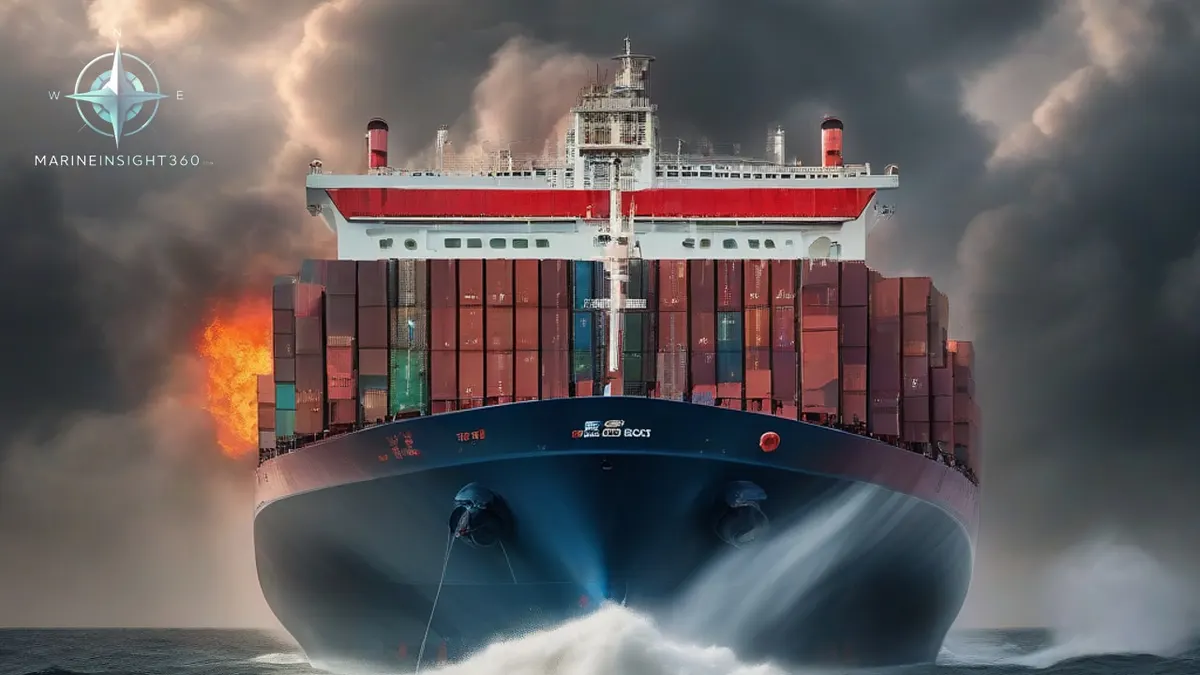
Marine fire safety on commercial ships is governed by the International Code for Fire Safety Systems, the FSS Code, adopted under SOLAS in 2000. It sets the engineering standards for every major firefighting and life-protection system on board, from the fire main and pumps to fixed gas smothering, detection, and escape equipment.
Fire is the shipboard emergency with no fire brigade coming. A crew of twenty must detect, contain and kill a fire themselves, hundreds of miles from help, which is why the rules prescribe hardware in unusual detail and why inspectors test it without mercy.
The Fire Main: Water Everywhere, Always
The backbone is the fire main, a seawater system feeding hydrants throughout the ship. The FSS Code and SOLAS require at least two independently powered fire pumps. Pressure must run multiple hydrants at once, at roughly 0.27 N/mm² and above depending on ship type. Hydrant spacing must put two separate jets of water on any point on board.
An emergency fire pump sits outside the main machinery space, so an engine-room fire cannot kill the water supply meant to fight it.
Every ship also carries an international shore connection, a standardized flange that lets any port's fire brigade couple into the ship's main regardless of national hose fittings.
Fixed Systems: Gas, Water and Foam
- Fixed gas systems , most commonly carbon dioxide, flood a sealed machinery space or cargo hold and smother the fire. Because CO2 also smothers people, discharge is deliberately a two-step, alarmed, muster-first operation.
- Sprinkler and water-mist systems protect accommodation, service spaces and, on passenger ships, cabins and public rooms, knocking fires down automatically while people escape.
- Foam systems cover tanker decks and machinery spaces where burning oil defeats plain water.
- Local application systems aim water mist directly at high-risk machinery like main engines and purifiers, buying time before a full space flood is needed.
Detection, Alarms and Finding the Fire Early
Fixed detection loops of smoke and heat sensors cover machinery spaces, accommodation and cargo areas, reporting to a bridge panel that identifies the zone at once. Manual call points back up the sensors, and on many cargo ships a sample-extraction smoke system continuously sniffs the holds. Early detection is the cheapest firefighting there is: everything about the response gets easier in the first two minutes.
Containment hardware backs up the electronics. Fire dampers in ventilation ducts close to starve a space of air. Remote stops shut down fans and fuel pumps from outside the machinery space, and quick-closing valves isolate fuel tanks.
The ship's structure itself is part of the system: bulkheads and decks are rated by fire class so a blaze meets a rated boundary in every direction, and portable extinguishers, matched to the hazard in each space, handle the small fire before it becomes the big one. Galley ducts, a classic ignition path, get their own fixed protection and cleaning routine.
People Equipment: Outfits, Air and Escape
The Code specifies the human end too. Firefighter outfits with breathing apparatus equip the attack teams. Emergency escape breathing devices (EEBDs) give anyone caught in smoke ten to fifteen minutes of air to get out. Fire control plans posted at the gangway show arriving responders every system and boundary. Escape routes are marked, lit and sized so a full complement can leave a burning space fast.
Drills and Maintenance: Where Compliance Lives or Dies
Hardware satisfies the FSS Code only if it works on the day. Weekly, monthly and annual test routines run through pumps, dampers, detectors and extinguishers in the planned maintenance system, and fire drills exercise the crew's muster, attack and boundary-cooling roles. Port state control officers routinely pick a hydrant or start the emergency fire pump themselves, and a failed test can hold the ship. In practice, most fire-safety deficiencies found on ships are maintenance failures, not design failures.
The drill itself follows the muster list. A fire team dresses in outfits and breathing apparatus while a support team charges hoses and cools boundaries. The bridge and engine control room rehearse ventilation shutdown and system decisions against the clock. Crews that drill honestly, with a different scenario and space each time, are the ones whose real fires stay small.
The gap the Code cannot close is the one between a system that passes inspection and a crew that can fight a fire. Hardware is testable and gets tested; competence is not, and a port state officer starting your emergency fire pump learns nothing about whether the attack team can find a fire in smoke on a deck they have never drilled on. That is why the drill scenario matters more than the drill count, and why crews that rehearse the same easy space every month are the ones caught out. Fire prevention starts before the flame, at the bunker manifold, and continues through the decisions that shut machinery down.
Recommended Reading
Safety Management System (SMS): The Rulebook Every Ship Runs On
What a safety management system is in shipping: the ISM Code framework of procedures, drills, audits and the DPA that turns safety from intention into system.
Ship Decks: Every Type, What It Does, and the Equipment It Carries
What ship decks are, from tank top to bridge: the main deck types, how they are numbered, and the windlasses, winches, cranes and hatches that work on them.
What Does SS Mean on a Ship? Steamship, and Every Other Prefix Explained
SS on a ship means steamship, a vessel driven by steam engines. What the prefix tells you, why modern ships use MV instead, and what RMS, HMS and USS mean.