
The Largest Icebreaker In The United States.
The largest icebreaker in the United States is the USS Healy (WAGB-20). It is also the largest ship of the United States Coast Guard and is classified as…
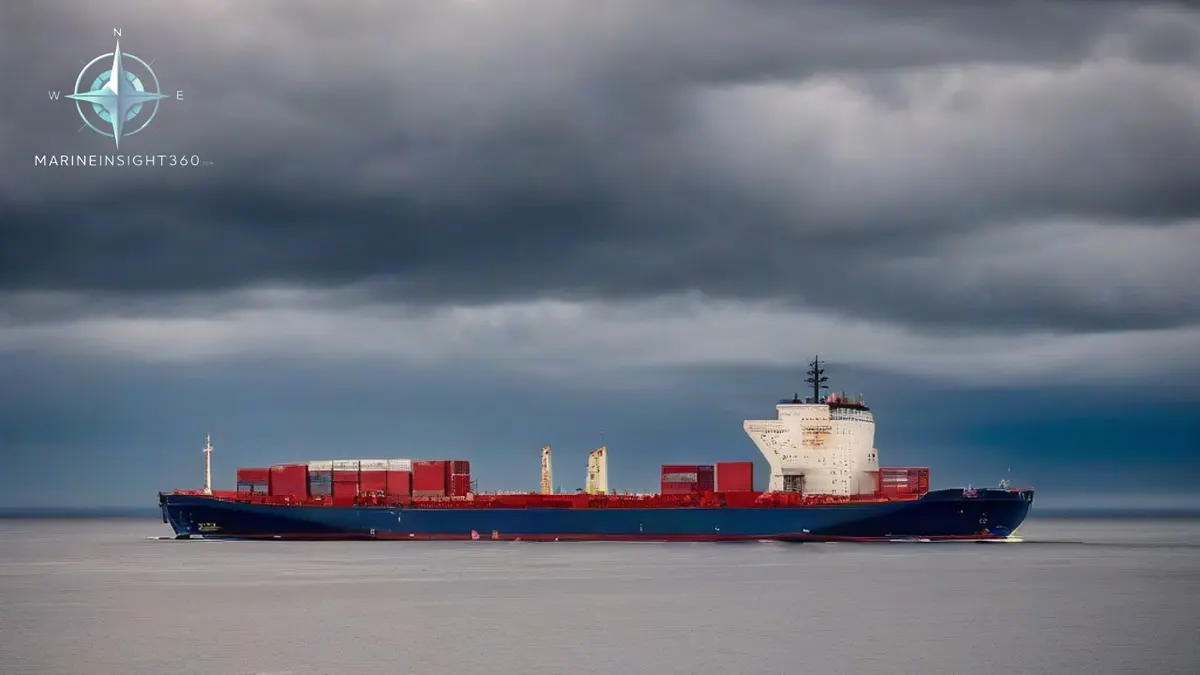
The Largest Icebreaker In The United States.
The largest icebreaker in the United States is the USS Healy (WAGB-20). It is also the largest ship of the United States Coast Guard and is classified as a medium icebreaker. Its home port is Seattle, Washington, and it was commissioned in 1999. It is famous for its first visit to the Arctic in September 2001 and for its other important missions, which will be discussed in this article.
It is capable of breaking through 1.4 meters of ice at a speed of 3 knots and uses propulsion to break ice. It is capable of operating in harsh conditions as low as -50°C.
The Healy can also serve as a platform to support other potential missions in polar regions, such as ship escort, law enforcement, search and rescue, environmental protection, and more.
Avondale Industriesbuilt the largest icebreaker in the United States in New Orleans, Louisiana. It is named after Captain Michael A. Healy of the United States Coast Guard.
The Healy has a displacement of 16,000 tons, is 128 meters long, 25 meters wide, and has a draft of 8.92 meters.
It has a maximum speed of 17 knots and a cruising speed of 14 knots. The crew includes 19 officers, 54 enlisted personnel, and 51 scientists. The Healy has five research laboratories.
The largest American icebreaker has a well-equipped crew and advanced facilities. It is equipped with two A-frame cranes, one on the aft working deck and one on the starboard side.
There are two cranes on the aft working deck, providing ample space for scientific research operations.
The icebreaker is equipped with a 2.7-ton bow crane and two 15-ton winches.
It is equipped with a dynamic positioning system (DPS) that uses a 2,200-horsepower azimuth thruster bow thruster to facilitate navigation and positioning during operations.
The command deck can accommodate two Coast Guard helicopters. The Healy is also equipped with eight small ISO containers that serve as laboratories and work areas.
It also has three smaller boats, including a speedboat and two rigid-hull inflatable boats, one on each side.
Designed for a variety of research activities, the Healy features over 4,000 square feet of laboratory space, a range of electronic sensor systems, an ocean crane, and accommodations for up to 50 scientists.
Highlights of America's largest icebreaker
On its maiden voyage in 2001, the Healy mapped 1,100 nautical miles of Jackal Ridge, the only unexplored offshore ridge at the time, and discovered 12 underwater volcanoes. In 2003, it participated in Operation Deep Freeze, escorting ships and supporting annual resupply at McMurdo Station in Antarctica.
In 2009, the icebreaker Healy researched the Bering Sea ecosystem, specifically sea ice, seabird populations, and zooplankton.
World’s First Solar-Powered Inland Cargo Vessel Begins Operations
What Are Fishing Vessels? Types & Purpose
Top 10 Flag States In Ship World
Top 10 Largest Insurance Payouts
In 2015, it became the first U.S. unmanned surface vessel to reach the Arctic, where it conducted extensive research and collected samples. It worked with the German icebreaker Polarstern to support the international scientific mission Geotraces.
In 2024, an engine room fire interrupted its mission. However, after conducting bathymetric surveys in the Chukchi and Beaufort Seas to enhance Arctic navigation safety and ship routes, it was reassigned to an Arctic mission in October 2024, which included supporting the Arctic Passage Routes Study (PARS).
It also hosted 20 polar scientists and guides who participated in a training expedition for senior Arctic scientists, conducting multidisciplinary research and mapping.
Her 73-day Arctic deployment ended in December 2024. This included mapping uncharted waters for the Alaska Arctic Coast Ports Passage Study (AACPARS), conducting search and rescue operations, and conducting training exercises.
How the Healy actually breaks ice
An icebreaker does not cut ice. The bow is shaped so the ship rides up onto the sheet and breaks it downward under her own weight, then pushes the broken pieces down and out along a rounded, low-friction hull so they clear the propellers. Reinforced shell plating in an ice belt around the waterline takes the impact.
Heeling tanks pump ballast from side to side to roll the ship and free her when the ice grips the hull. Diesel-electric drive is chosen because electric propulsion motors deliver full torque at low shaft speed and tolerate the sudden load changes of ice contact, which would stall or overload a directly coupled diesel.
The figure of 1.4 metres at 3 knots is a continuous-mode rating and it describes level ice. Pressure ridges and multi-year floes are cleared by backing and ramming, driving the bow up onto the ice, retreating and repeating. It is slow, it is hard on shafting and propellers, and it is the mode that decides whether a mission gets through.
The rest of the American icebreaker fleet
The Healy carries as much of the workload as she does because there is very little behind her. The heavy icebreaker Polar Star, commissioned in 1976, spends each southern summer breaking the channel into McMurdo Sound for the Antarctic resupply, which leaves the Arctic to the Healy by default.
Her sister Polar Sea has not operated since an engine casualty in 2010 and has served since mainly as a source of spare parts to keep Polar Star running. The United States Coast Guard has pursued a replacement class, the Polar Security Cutter, but building heavy icebreakers is the yard capability the country stopped exercising decades ago.
That is the context for a 73-day deployment and for an engine room fire that ends a mission. With two hulls in service and the heavy one dating from 1976, a single casualty removes a share of national capability rather than one ship from a rotation.
Conclusion
The US Coast Guard's Healy is the nation's largest icebreaker and is important in advancing Arctic knowledge, ensuring safe navigation, and maintaining the United States' presence in the highly contested Arctic waters. She is an advanced ship that has performed many important missions and achieved many brilliant achievements.
Recommended Reading
Top 10 Flag States In Ship World
Surprisingly, the countries with the largest Flag state are not the traditional naval powers one might expect. Instead, countries like Panama and Liberia…
Knock Nevis – World’s Largest Supertanker
Knock Nevis – World’s Largest Supertanker: ports, trade and shipping-market context for US, UK, Canada, Australia, Singapore and European maritime readers.
Top 10 Largest Flag States in the Shipping Industry
In global shipping, a flag state is the country where a vessel is registered. The flag a ship flies determines the laws it must follow, safety…