
The Navy with no sailors
The Navy with no sailors: ports, trade and shipping-market context for US, UK, Canada, Australia, Singapore and European maritime readers.
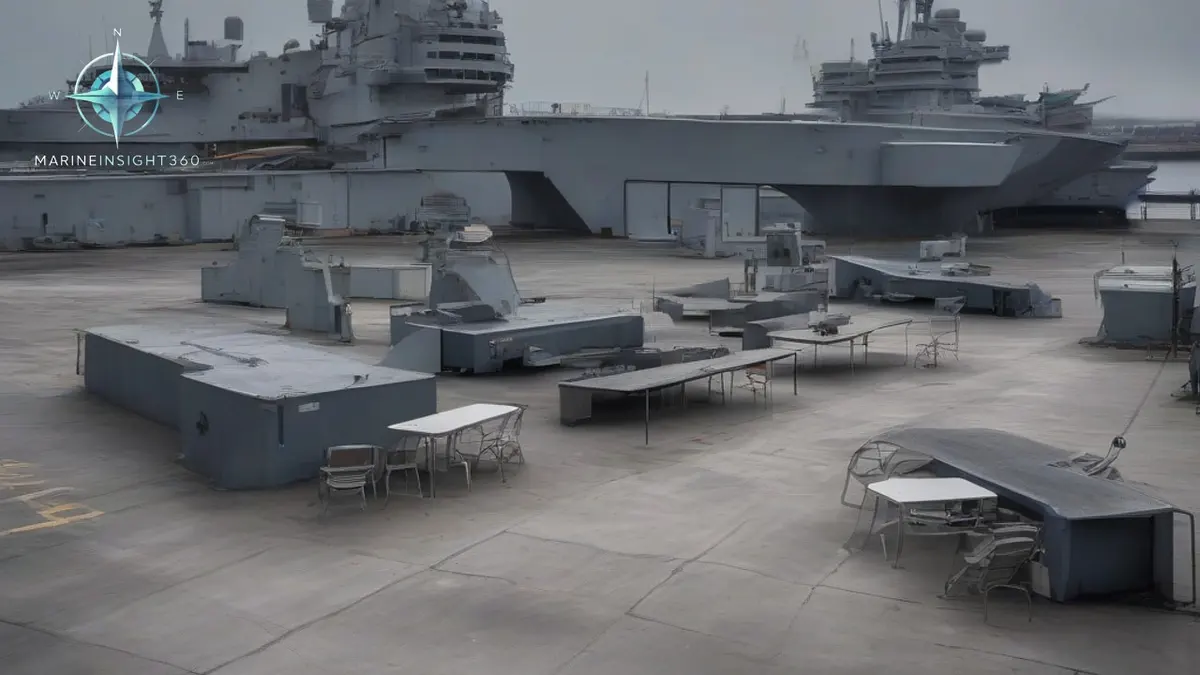
The Royal Navy is short of sailors rather than ships, and the shortage is severe enough that it is weighing scrapping vessels while all six of its nuclear attack submarines sit alongside or in refit.
Bad management in an organization that once ruled the waves
Did you know that the Navy once had a fleet with no sailors? It may sound unusual, but it's true!
"The organization that once dominated its industry is now suffering from poor management."
What would Lord Nelson have said! ? "We should change the famous words of the hero of Trafalgar to "Let's expect every man and woman in England to do their duty; unfortunately, we don't have enough of them!"
The Royal Navy is pondering scrapping ships not because of defence cuts but because it needs more sailors . Amazingly, no one noticed that recruitment had fallen and the number of sailors leaving the Navy had risen. Due to a lack of personnel, the Royal Navy must operate to meet the increasing global threats.
Royal Air Force planes fly from Cyprus to attack targets in Yemen because the Royal Navy can't send a submarine. The Royal Navy possesses six nuclear-powered attack submarines that would suit the current role. However, all of them are either docked at their base in Scotland or undergoing refit in Plymouth. Therefore, the submarines' availability for the role needs to be improved. But the Royal Navy is not alone.
The Airforce is in need of pilots
The Royal Air Force needs more pilots. The Royal Air Force (RAF) has 31 F35 fighter jets, but only 30 pilots are available. Five of these pilots are on exchange from the Australian and US air forces. And in some cases, it takes seven years to train a pilot. But what annoys me is that no one resigns; it is just a blame game.
It's not the government's fault this time. The admirals and air marshals are to blame. They often complain about the lack of equipment, but it's their fault for insufficient personnel.
The latest documentary about the Royal Navy aircraft carrier Queen Elizabeth featured a junior chef from the Merchant Navy. I am not saying that chefs do not play a vital role, but will it inspire a generation of young men and women to join the Royal Navy? Stick to fast jets and helicopters. They sell more than a hot oven. Currently, unemployment is high in Britain, and the armed forces are no exception. The Royal Navy has a strength of 30,000 and can't keep that small number!
The Royal Fleet Auxiliary is where this becomes a merchant navy problem
The ships that keep a task group at sea, the tankers and stores vessels of the Royal Fleet Auxiliary, are not crewed by the Royal Navy. They are civilian seafarers holding Maritime and Coastguard Agency certificates of competency, the same certificates the commercial fleet hires against.
That puts the RFA in direct competition for officers and ratings with every tanker and container operator in the United Kingdom, and it does not win on pay. The strain surfaced in 2024, when RFA crews in the RMT and Nautilus International took strike action over pay for the first time in decades.
Where a British officer actually comes from
A UK deck or engineer officer comes out of a cadetship of roughly three years, sponsored by a shipping company, with part of the cost met by the Department for Transport's SMarT scheme. The pipeline is small and it is slow.
Nobody joins it in response to a shortage announced this year and stands a watch the same year. A retention failure and a recruitment failure look identical in a headcount but need different fixes, and only one of them can be corrected quickly. That distinction is missing from most of the argument about who is to blame.
Recommended Reading
Average Merchant Navy Salary in US & UK
The Merchant Navy offers a thrilling career, blending high seas adventure with competitive salaries and global travel. Whether you’re eyeing a role as a…
Average Merchant Navy Salary in the UK & USA
A UK Merchant Navy salary is determined based on rank position, experience level, ship type, and employment status between private shipping companies and…
Navy or Marines: What's different?
Navy or Marines: What's different?: career, certification and hiring context for US, UK, Canada, Australia, Singapore and European maritime readers.