
What Is The Lower Deck Of A Ship?
As we all know, decks are the horizontal boundaries of a ship. They mainly define the height of the hull and mark the upper and lower boundaries of any space.
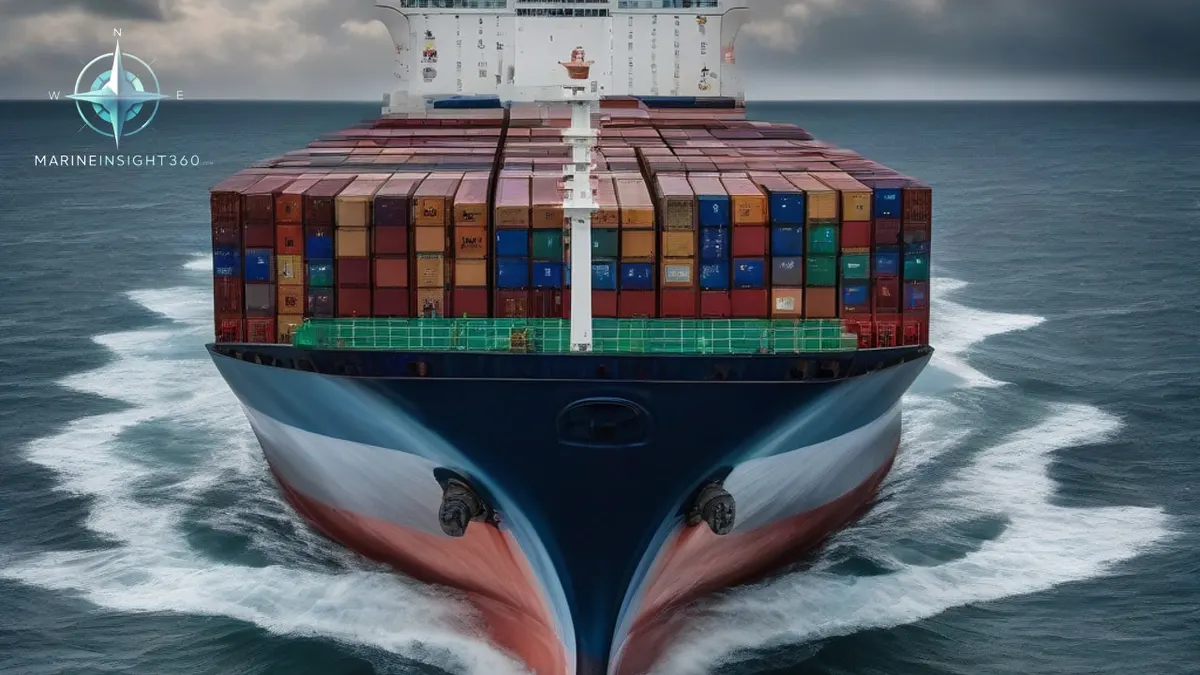
What Is The Lower Deck Of A Ship?
As we all know, decks are the horizontal boundaries of a ship. They mainly define the height of the hull and mark the upper and lower boundaries of any space.
The main deck is the most common deck on a ship. It defines the upper limit of the main hull, has a high load-bearing capacity, and contributes to the overall strength. Therefore, it is also called the strength deck.
Since it is exposed to the outside environment in practical applications, it is also called the bare deck. In addition, in almost all conventional ships, since the bulkheads mainly extend to their height, the main deck is also called the bulkhead deck.
All other decks within the main hull are intermediate decks of varying lengths and unique numbers. While most cargo ships, such as oil tankers and bulk carriers, do not have multiple decks containing cargo holds or spaces, other types of ships, such as passenger ships, have multiple overlapping decks. The lower deck is an essential element of the ship's structure.
As the name suggests, the deck below the lower hull of a ship is called the lower deck. The definition of the lower deck varies depending on the type of ship.
Lower deck
If the ship is a double hull or double bottom structure, the inner bottom is the lower deck. If the ship is a single bottom structure with one or more intermediate decks below the main deck, the lower deck is the deck located directly above the lower hull.
What is a Deck Seal?
If the ship is simpler in structure and has no intermediate decks, the lower deck is usually a partial deck, especially in the engine room that must withstand high loads without directly affecting the hull, or a specific space with vertical separation. See the figure below.
Even on small fishing boats or small, simple inland passenger ships, the concept of a lower deck does not exist. The machinery/engine is simply mounted on the lower support of the superstructure and deck.
Some elevated structures, such as small platforms or grooved plates for placing machinery or equipment, are directly connected to the bottom of the plate and other less solid members and should not be confused with the lower deck.
10 Important Facts About the Tyrrhenian Sea
Allure of the Seas – Biggest cruise Ship
Lower deck of a ship
The lower deck is mainly composed of a flat reinforced concrete slab, similar to other decks. However, it can be stepped or corrugated.
If the lower deck is intermediate, it is reinforced both horizontally and vertically, like other decks. The bottom support as well as the supports are lower than those of the main deck or lower hull.
However, when they have to bear heavy loads (e.g,. machinery), the lower decks are significantly reinforced and have higher supports.
The inner bottom covers or tanks have a lower protective layer than the lower decks, but they are susceptible to corrosion if located in the area of tanks containing liquids.
However, all surfaces that are subject to heavy loads, such as machinery or equipment, have a thicker protective layer and higher rigidity. The lower deck mainly supports the interior of the bottom.
Depending on the stability of the ship's structure against damage, the lower deck is important in preventing water intrusion. However, manholes and drains are provided when necessary, especially in the engine room and compartments for sanitary and other services.
Like other decks, the lower decks are also additionally reinforced at the openings. In general, the lower decks are mostly horizontal.
On most ships, these decks are crucial for storing cables, pipes, ducts, hydraulic systems, and other essential components. On warships, the lower deck is used as a storage deck for weapons and ammunition Although it is not common today, the lower deck was also formerly known as the "orlop deck".
The deck names that carry legal weight
Lower deck is a descriptive term rather than a defined one, which is why it has to be explained differently for each hull form. Two other deck names are defined, and they decide real things.
The freeboard deck is the deck freeboard is measured from under the Load Line Convention, normally the uppermost complete deck exposed to weather and sea, with permanent means of closing every opening in it. Where that deck sits determines the assigned load line and therefore how deep the ship may legally load.
The bulkhead deck is the uppermost deck to which the transverse watertight bulkheads are carried. It sets the top of the subdivision, so it governs how far a compartment can flood before water spills over a bulkhead into the next one. A deck below either of these can be watertight and structurally useful without being either.
What the inner bottom carries
On a bulk carrier the inner bottom, the tank top, takes the cargo directly and is scantled for it. Damage there is usually mechanical in origin rather than structural: grabs, bulldozers and hard cargo worked against the plating. That is why the tank top is a standing item at hold inspection and why loading manuals limit the equipment allowed to work in the hold.
Below it the double bottom is divided into ballast and fuel tanks. Those are enclosed spaces, entered on a permit after ventilation and gas testing, and SOLAS requires crews to drill enclosed space entry and rescue rather than treat it as an occasional job. Corrosion is worst where a tank alternates between wet and dry.
On oil tankers the space beneath the cargo is regulated rather than optional. MARPOL Annex I requires cargo tanks to be protected by a double bottom and double sides, so there the inner bottom is a pollution prevention boundary as well as a strength member, and a wastage finding on it carries consequences beyond the cost of the steel.
Recommended Reading
Bosun: The Deck Department's Working Boss, Explained
What a bosun does on a merchant ship: the deck crew's foreman, the maintenance planner's right hand, and the rank between ratings and officers, explained.
How To Become Deck Officer in Merchant Navy?
Merchant mariners are a lucrative and exciting field of work that requires a great deal of commitment from the moment one enters a maritime academy,…
Prism Magic: Illuminating the Secrets of Deck Prisms on Ships
Meta Description: Beyond the ocean's surface lies a marvel: the secret of deck prisms. Join us as we explore its history, science, and magical role in the…