
Blackout on Ship: What Initial Steps Should Be Taken?
Blackout on Ship: What Initial Steps Should Be Taken?: safety, training and compliance context for US, UK, Canada, Australia, Singapore and European...
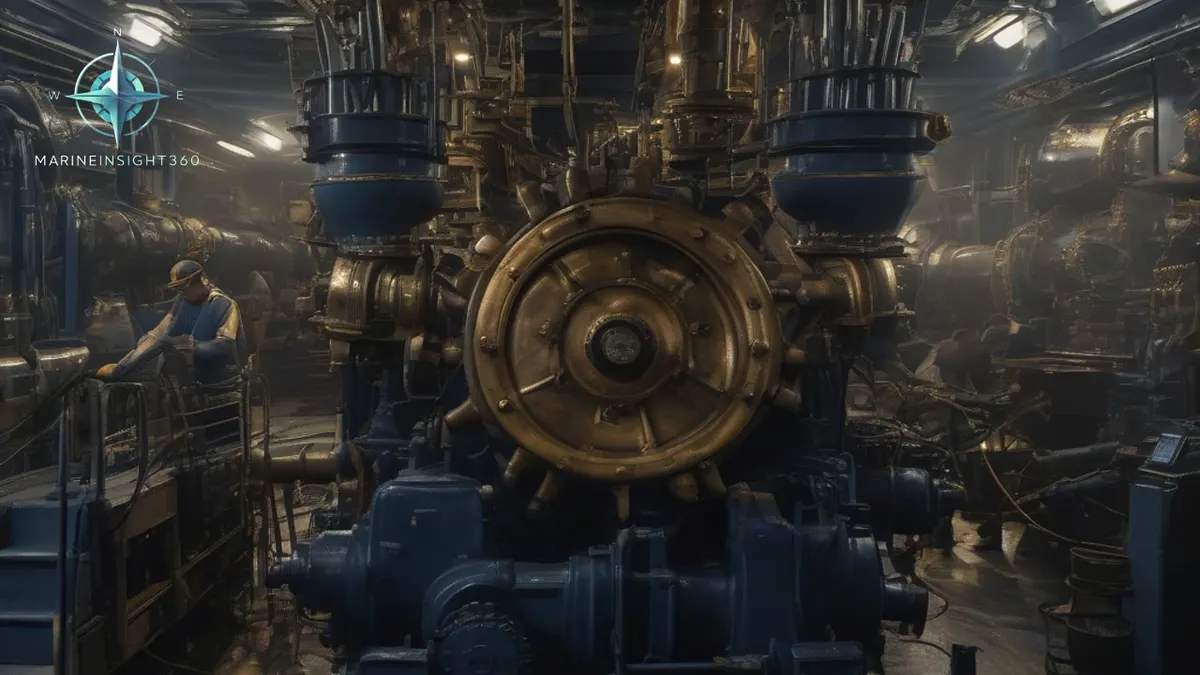
Blackout on Ship: What Initial Steps Should Be Taken?
For every sailor, a blackoutis a familiar yet terrifying situation. It's a dreadful experience for all crew members, as it can cripple the entire ship. From the bridge to the engine room, from the mess hall to the crew quarters, everyone is affected.
If you work in the engine room, then a power outage is your responsibility, and you must take responsibility; sooner or later, you will be blamed.
In this article, we will learn about the initial steps to take when a power outage occurs on board.
Understanding of Blackout on the Ship
A power outage refers to the cessation of operation of the ship's main propulsion system and related machinery (such as boilers, purifiers, and other auxiliary equipment) due to a failure of the ship's power generation system (generators and alternators).
Thanks to technology and automation, ships have implemented measures such as automatic load-sharingand backup systems to prevent power outages. In this system, if a running diesel generator fails, a parallel backup generator set will automatically start.
What to Do During a Blackout?
In the event of a power outage, the following precautions and actions should be taken:
Remain calm. The emergency generator will restore power quickly.
Briefly report the situation to the bridge supervisor.
Gather the crew and notify the chief engineer.
If the primary propulsion system is running, place the fuel rod to zero.
Disconnect the fuel supply to the purifier during operation to prevent fuel spillage and waste.
If the auxiliary boiler is running, close the main steam shut-off valve to maintain steam pressure.
Identify and resolve the power outage problem and its cause.
- How does a nautical almanac help navigation at sea?
- How Are Ship Fenders Used for Berthing?
- 10 Things to Consider While Using Auto-Pilot System on Ships
- Best Container Tracking Software
- Port Facility Security Officer (PFSO) Appointment
- The Role of Merchant Navy in Global Trade
If the emergency generator powers the pre-lubrication pump, start the pump before starting the generator set. If the above methods are ineffective, use the manual lubrication rod (available on some generators).
Start and test the generator. Then immediately start the main engine lubrication oil pump and the main engine cooling water pump.
Reset the circuit breakers and start all other necessary machinery and systems. Reset the circuit breakers in the priority order of operation (non-essential machinery).
Handling power outages requires skill and patience, especially when the ship is navigating or maneuvering. However, the best approach is to remain calm and familiarize yourself with the cabin and mechanical equipment beforehand.
What has to happen in the first 45 seconds
SOLAS Chapter II-1 requires the emergency generator to start automatically and be connected to the emergency switchboard within 45 seconds of the main supply failing. That is the design intent behind staying calm: the emergency board is expected to be alive before anyone has finished walking to the switchboard.
Where a transitional source is required, batteries bridge the gap and carry emergency lighting and essential services for the first 30 minutes. The emergency source itself has to sustain its load for 18 hours on a cargo ship and 36 hours on a passenger ship, which is what the routine test on load is protecting.
What the emergency switchboard feeds is worth knowing by heart, because it defines what the ship can still do while the main board is dead: emergency lighting, navigation lights, internal and radio communications, fire detection, one fire pump and steering gear power. Losing steering during a manoeuvre is why the 45 second figure exists at all.
Where blackout recovery usually stalls
The generator that will not start is the least common problem. More often the emergency set runs and the breaker does not close, or it closes onto a board still carrying tripped feeders that have to be reset in order rather than all at once.
Starting air is the classic trap. If the main air compressors sit on the main switchboard and the bottles were already low, every failed start attempt spends air that cannot be replaced until something is running. Checking bottle pressure before repeated cranking is faster than losing the last of it.
Interlocks then hold the restart. A main engine will not turn on air with the turning gear engaged and will not run without lubricating oil pressure, so the order is pre-lubrication, cooling water, then the start. Shortcutting that sequence is how a blackout turns into machinery damage.
Record what the alarm printer captured before the board went dead. The first-up alarm usually names the cause: reverse power, under-frequency, an overload with the preferential trips operated, low fuel pressure at the running set, or a purifier that dumped its throughput. Without it the investigation becomes guesswork and the same blackout returns.
Recommended Reading
What Are the Six Steps of Safe Mooring Operations?
What Are the Six Steps of Safe Mooring Operations?: shipboard and port-operations context for US, UK, Canada, Australia, Singapore and European...
Iran retaliates with missiles and drones, defying Trump’s warning
Learn iran with practical maritime context, safety checks, operational guidance and related resources for global shipping readers.
Hapag-Lloyd Invests in APM Terminals Rotterdam to Drive Growth
Hapag‑Lloyd’s new stake in APM Terminals Rotterdam aims to expand capacity, improve hinterland links and enhance crew efficiency in Europe’s busiest port.