
Able Seaman Certification: Sea Service, Courses and the STCW Endorsement
Able seaman certification explained: USCG sea service day counts for AB Unlimited, Limited and Special, the STCW Able Seafarer Deck layer, and course list.
The short answer
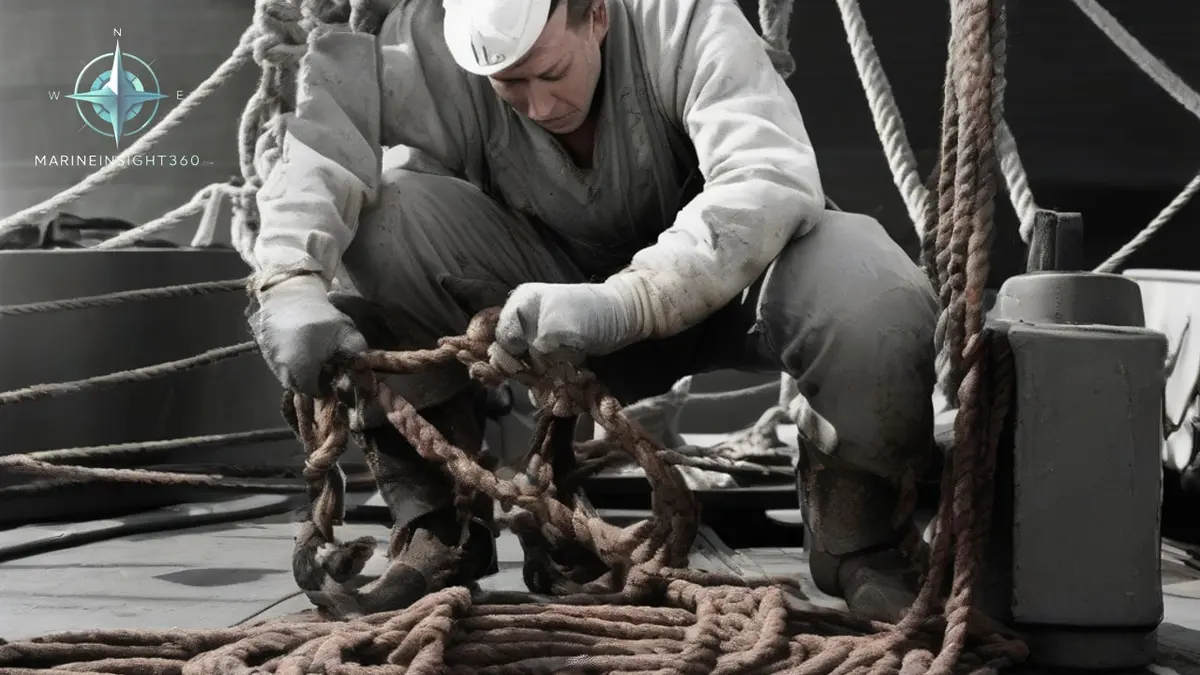
Able seaman certification is a rating endorsement proving you can perform the full range of deck work without supervision: steer, stand lookout, handle mooring lines and cargo gear, operate survival craft and maintain the ship. In the United States the Coast Guard issues it on a Merchant Mariner Credential, in grades set by how much sea time you hold and where you earned it.
Internationally the equivalent is the STCW Able Seafarer Deck endorsement, which applies to ships of 500 gross tonnage or more.
US grades and the sea service behind each one
- AB Unlimited. 540 days of qualifying deck service on ocean waters. This grade opens unrestricted deep sea work.
- AB Limited. 360 days of qualifying deck service on vessels over 100 gross tons operating on ocean waters.
- AB Special. 180 days on vessels operating on ocean waters or the federally navigable inland waters of the United States.
- AB Offshore Supply Vessels. 180 days of deck service on ocean or inland waters, aimed at the OSV sector.
- AB Fishing. 180 days of deck service on ocean or inland waters, aimed at fishing industry vessels.
The grades are not interchangeable. AB Special will not put you on an unlimited deep sea berth, and time on a vessel under 100 gross tons does not build AB Limited service.
The STCW layer sits on top
Able Seafarer Deck under STCW Regulation II/5 is a separate endorsement, not a replacement. The Coast Guard issues both, and you must already hold a national AB rating before the STCW endorsement can be added to your credential.
STCW II/5 sets a minimum age of 18 and requires either 18 months of approved seagoing service in the deck department, or 12 months of service combined with approved training documented in a training record book. The competence standard appears in table A-II/5 of the STCW Code, covering watchkeeping, mooring, cargo handling, maintenance and emergency duties.
Courses you need alongside the sea time
Sea service alone does not produce a certificate. Expect to hold:
- STCW Basic Training, covering personal survival techniques, fire prevention and firefighting, elementary first aid, and personal safety and social responsibility.
- Proficiency in Survival Craft, historically called Lifeboatman, required for most AB endorsements.
- A current medical certificate and drug test result.
- A Transportation Worker Identification Credential for US mariners.
Several approved training providers run AB courses that substitute for part of the sea service requirement. That route costs money but shortens the timeline, and the Coast Guard publishes the conditions under which reduced sea service is accepted.
Documenting sea service without losing months
The most common reason an AB application comes back is paperwork rather than insufficient time. A sea service letter needs the vessel name and official number, gross tonnage, propulsion power, route or waters, your capacity and the exact dates aboard, signed by the company or the master.
Habits that save applicants real time:
- Ask for the letter when you sign off, not two years later once the company has restructured.
- Keep discharge documents together and scan them the day you receive them.
- Check the tonnage stated on the letter matches what your target grade requires before submitting.
- Count days actually aboard. Leave and shore standby days do not count as sea service.
UK and other tier one routes
UK Merchant Navy ratings work to the same STCW II/5 standard, certificated by the Maritime and Coastguard Agency rather than the Coast Guard. The structure is similar: approved sea service in the deck department, a training record book, safety courses and an assessment of practical deck competence. Canadian and Australian ratings follow their own national routes onto the same international endorsement.
If you plan to work internationally, target the STCW endorsement from the start and treat the national rating as the vehicle that carries it.
Where AB leads
AB is the last rating rung before officer training for most people who come up through the deck department. Sea service earned as AB counts toward mate and officer of the watch pathways, and the ship knowledge built in that time is what separates a competent junior officer from a graduate who has only seen a simulator.
Set a target grade before accepting your next berth, then choose vessels that build the right kind of days. For officer pathways from the ratings side, see the Merchant Navy Careers section on Marine Insight 360.
Applications fail more often on evidence than on sea time. The National Maritime Center returns a file when the sea service letter omits the official number or gross tonnage, when the dates overlap another vessel, or when the signature is not the master's or a company officer's. Days claimed on a vessel under 100 gross tons are rejected against an AB Limited target, and the shortfall usually surfaces months after a corrected letter could still have been obtained.
The consequence at sea is a manning deficiency rather than a returned envelope. Port state control officers under the Paris MoU and Tokyo MoU check that each rating holds a valid certificate and an endorsement matching the ship's trade, and certification and manning findings are among the categories that can lead to detention until a replacement crew member is flown out. Expired basic training or a lapsed medical certificate produces the same result as no certificate at all.
Sources and further reading
- National Able Seafarer checklist, 46 CFR 12.401 - USCG National Maritime Center
- STCW Able Seafarer-Deck checklist, 46 CFR 12.603 - USCG National Maritime Center
- STCW II/5 Able Seafarer Deck - EduMaritime
- U.S. Coast Guard Able Seaman Credential Requirements - Maritime Institute
What to read next
Recommended Reading
STCW Certification: What It Is, the Five Basic Courses, and How to Get It
STCW certification is the international training standard every seafarer needs. The five basic safety courses, what they cost, renewal rules, and how to start.
What is Seaman’s Service Book?
What is Seaman’s Service Book?: ports, trade and shipping-market context for US, UK, Canada, Australia, Singapore and European maritime readers.
Who is an Able Seaman on a Ship?
Who is an Able Seaman on a Ship?: ports, trade and shipping-market context for US, UK, Canada, Australia, Singapore and European maritime readers.