
Are Pirates Still Around? Where Attacks Happen and How Crews Prepare
Yes. The IMB recorded 137 piracy and armed robbery incidents in 2025, most of them in the Singapore Straits. Here is where, how, and what crews do about it.
Yes, and the Numbers Went Up Again
Are pirates still around? Yes, and 2025 was worse than the two years before it. The ICC International Maritime Bureau recorded 137 incidents of piracy and armed robbery against ships in 2025, against 116 in 2024 and 120 in 2023. Eighty eight seafarers were affected through hostage taking, kidnapping, threats, injury or assault, and 25 were kidnapped compared with 12 the previous year.
Modern piracy is mostly theft from ships at anchor or under way in narrow waters, not the boarding and capture image the word carries.
The distinction matters operationally. The measures that stop a two man theft of engine spares at 0300 are not the measures that stop a kidnap team offshore, and a ship trading between both regions needs both.
The Singapore Straits Is Now the Busiest Area for Incidents
The Singapore Straits recorded 80 reported incidents in 2025 against 43 in 2024, the highest of any area worldwide. Most are low level: a small group boards a ship under way at night from the stern quarter, takes portable engine spares, scrap metal or stores from the steering gear space or engine room, and leaves as soon as the crew notices them.
Two things make the transit awkward. Traffic density and shallow water inside the traffic separation scheme limit a ship's freedom to alter course or work up speed, so the standard advice to run fast and manoeuvre hard does not apply cleanly. And the weapons picture is worsening: the IMB noted 27 reports involving guns in 2025 against eight in 2024. The correct response is to raise the alarm from a safe position rather than confront anyone.
The Gulf of Guinea: Fewer Incidents, Far Higher Stakes
The Gulf of Guinea recorded 21 incidents in 2025 against 18 in 2024 and 22 in 2023, and the IMB credited regional naval and coastal state efforts with holding activity down. The region still accounts for the bulk of crew kidnapping.
The pattern there is different in kind. Attackers operate well offshore from mother craft, board with the intent of taking a small group of officers, and move them ashore into the creeks for a ransom negotiation that runs for weeks. A falling incident count in West Africa does not mean falling risk, because the consequence of a single successful attack is measured in months of a seafarer's life.
The Other Regions Crews Should Plan For
- Anchorages across Southeast Asia and West Africa , where opportunistic theft happens while ships wait for a berth. Long waits at anchor are the single biggest exposure most vessels have.
- South American anchorages , where theft overlaps with stowaway and narcotics attachment risk, so the security search regime has to cover all three.
- Somalia and the wider Indian Ocean , where hijack for ransom collapsed after 2011 through naval task forces, armed guards and disciplined ship hardening. The capability ashore did not disappear and attempts have recurred, so transit precautions remain.
- The southern Red Sea and Gulf of Aden , where attacks on shipping in recent years have come from missiles and uncrewed craft rather than boarding parties. That is a maritime security threat with its own reporting chain, and it should not be folded into a piracy plan.
How an Underway Attack Actually Develops
The template is consistent enough to plan against. A skiff approaches between 0100 and 0500, usually with no moon, from the stern quarter where the ship has her worst radar picture and her smallest visual arc. The boarders use a hooked pole or grapnel at the lowest freeboard point, go directly to a known store space, take what two people can carry, and leave.
Everything about that sequence is a choice by the attackers, and they have alternatives. Ships with high freeboard, good speed, alert stern lookouts and well arranged deck lighting are passed over for easier targets in the same waters on the same night. Deterrence is the entire mechanism.
What Ships Do About It
Ship protection works in layers, and no single layer is sufficient.
- Threat picture before departure. Check the current advisories from ReCAAP ISC for Asia, MDAT GoG for West Africa, UKMTO for the Indian Ocean and Gulf region, and the IMB Piracy Reporting Centre, which runs a 24 hour watch in Kuala Lumpur. Register with the relevant reporting scheme before entering the area rather than during an incident.
- Ship security plan. The ISPS Code sets the security levels, the ship security officer role and the master's overriding authority. A transit specific risk assessment and crew briefing sit on top of it.
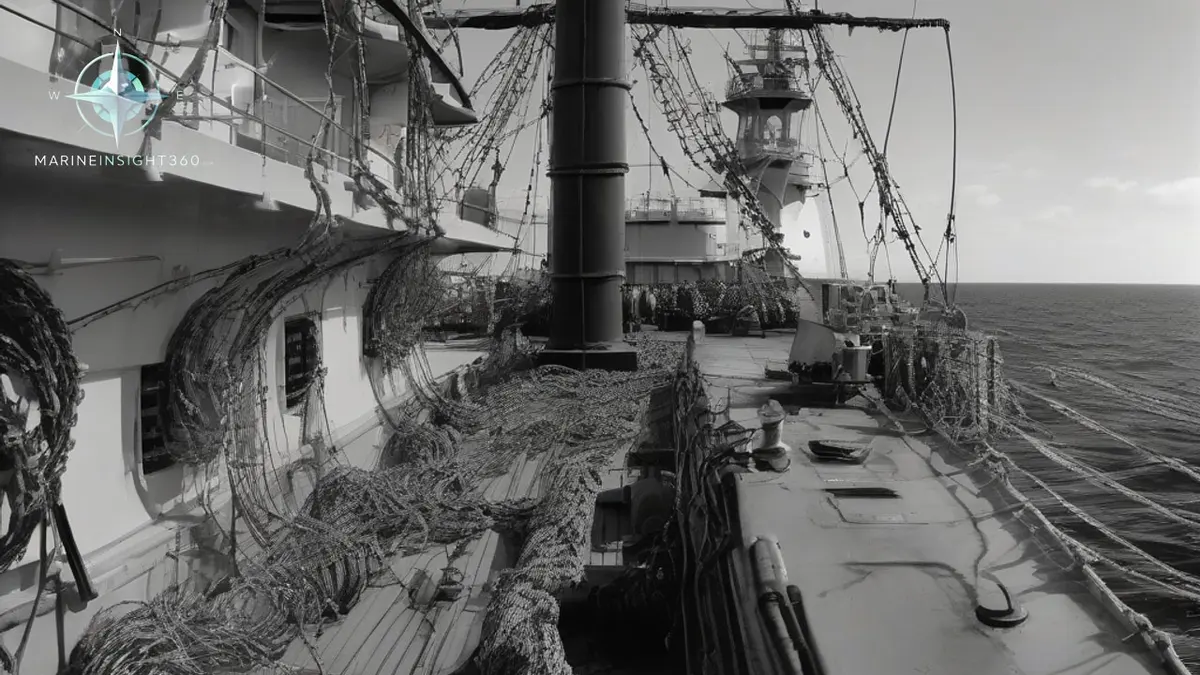
- Hardening. Razor wire on low freeboard sections, hawse pipe and anchor covers, secured accommodation and steering gear access, fire hoses rigged and pressurised, and deck lighting arranged so the ship's side is lit while lookouts keep their night vision.
- Watchkeeping. Extra lookouts including one aft, radar tuned for small targets at short range, and a deliberate refusal to relax in dense traffic, which is exactly when attention drops.
- Speed and manoeuvre. Hold the highest safe speed for the waters. Where sea room allows, helm alterations that generate wash make a skiff approach difficult.
- Alarm and reporting. Raise the general alarm, activate the ship security alert system, broadcast on VHF channel 16 and report to the regional centre. Early reporting protects the ships behind you.
- Citadel, used honestly. A citadel only works with independent communications, ventilation, water and a verified full crew muster. A citadel holding part of the crew while others are outside is worse than no citadel at all.
- Armed guards where lawful. Privately contracted armed security is accepted in some transit corridors under flag and coastal state rules, and is prohibited in others, including most territorial waters in Southeast Asia.
Why the Published Numbers Are a Floor
The IMB counts reported incidents. Masters have real incentives not to report a minor theft of stores, because an investigation delays departure and invites port state attention. Under reporting is widely acknowledged, so published totals should be read as a minimum rather than a measurement.
What to Do Before Your Next High Risk Transit
Pull the latest regional advisory for every leg of the passage plan, not just the one everyone talks about. Confirm the ship security alert system has been tested and the shore contact list is current. Walk the deck at night before entering the area and look at your own ship the way a boarding party would, starting at the lowest freeboard point aft. Then brief the crew on the decision that matters most: nobody confronts anyone, everybody reports and withdraws.
The Maritime Safety section covers ship hardening and drills in more detail.
Sources and further reading
- Global maritime piracy and armed robbery increased in 2025 - ICC
- IMB recorded 137 piracy incidents in 2025 - Riviera Maritime Media
- IMB: 50% increase in piracy incidents in first six months of 2025
What to read next
Recommended Reading
Do Pirates Still Exist? Number and Type of Attacks
Piracy is not an ancient phenomenon. We mapped all pirate attacks between 1993 and 2024 to understand their impact on modern trade. Few topics are more…

Greek Tankers Reroute Around Africa to Avoid Deadly Red Sea Attacks
Why Greek tankers reroute around Africa to avoid Red Sea attacks: the war risk, charterparty and bunker arithmetic behind the Cape of Good Hope call.
Chinese and Russian Warships Sail Around Japanese Islands: What Merchant Crews Need to Know
Chinese and Russian warships sail around Japanese islands on joint patrols. The straits involved, the passage rules that apply and safe bridge practice.