
Greek Tankers Reroute Around Africa to Avoid Deadly Red Sea Attacks
Why Greek tankers reroute around Africa to avoid Red Sea attacks: the war risk, charterparty and bunker arithmetic behind the Cape of Good Hope call.
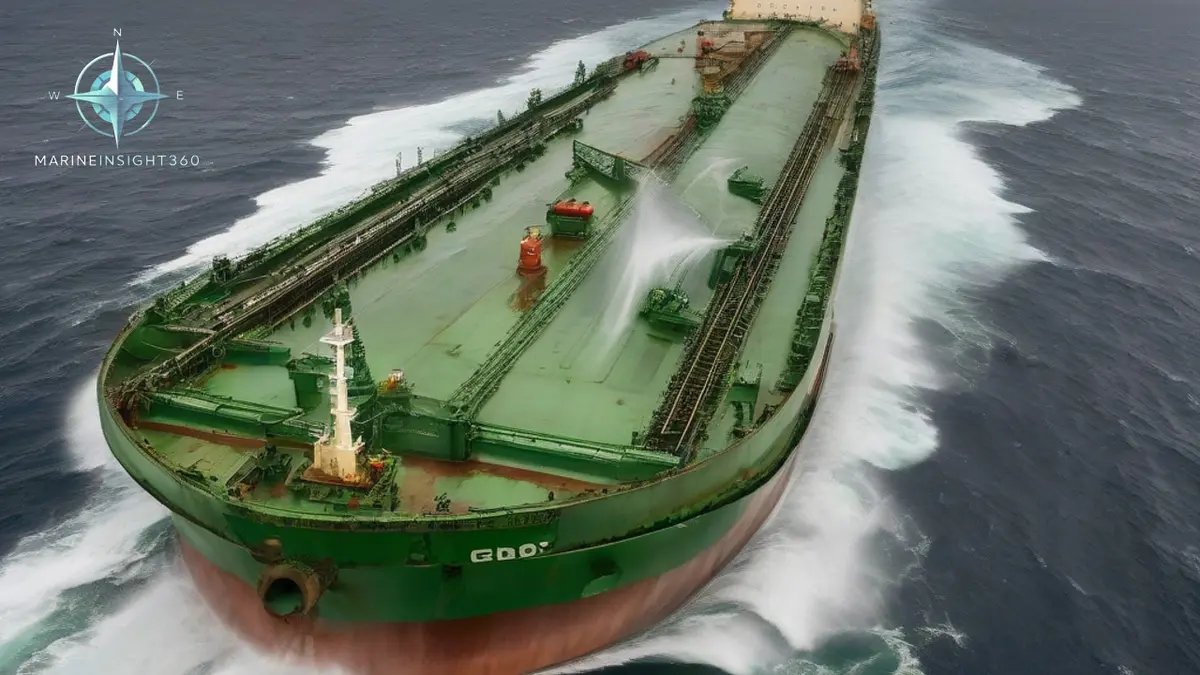
Greek tankers reroute around Africa to avoid deadly Red Sea attacks because the Cape of Good Hope passage prices out cheaper than a Bab el-Mandeb transit. That holds even after the extra sea time and bunkers. Add war risk premiums, crew exposure and the chance of losing a ship, and the gap widens.
In July 2025 trade press reported several Greece-managed tankers carrying Russian oil to India taking the southern route instead of the Suez Canal, close to doubling the passage time.
The decision is not sentiment. It is a commercial calculation any operator in the same trade can reproduce, and it is worth taking line by line.
What the reported diversions involved
Reporting in July 2025 named Greek-managed tankers including Minerva Elpida, Minerva Vera and Nissos Ios, carrying a combined figure of around 300,000 tonnes of Russian oil, sailing for India via the Cape rather than the Red Sea. Accounts of the cargo grade varied between crude and fuel oil across outlets, so treat the grade as unconfirmed.
The background matters. Greek owners had moved into Russian oil transport after the price of the grade fell below the Group of Seven price cap, which allowed Western-linked tonnage and insurance to service the trade lawfully. Those cargoes had largely kept using the Red Sea while most Western liner operators had already left it, so the diversion marked a shift in one of the last segments still running the route.
The cost arithmetic of going around the Cape
A Cape routing trades variable cost against tail risk. On the Asia to North Europe run the diversion is commonly put at roughly 3,000 to 3,500 nautical miles and 10 to 14 extra days. On a Black Sea or Baltic voyage to west coast India the proportional penalty is heavier, which is why the reported diversions were described as close to doubling transit time.
What that does to a voyage account:
- Bunkers. More sea days at the same speed means proportionally more fuel, and the extra distance is normally the single largest cost item in the diversion.
- Canal dues avoided. A laden tanker transit of Suez is a six-figure sum, so the saving is real, but nowhere near the fuel penalty.
- Tonnage absorption. Longer voyages tie up ships. Fewer available vessels push freight rates up, which is how owners recover part of the cost.
- Bunkering ports change. Cape routings shift stem demand toward Durban, Algoa Bay and Las Palmas, and those calls need planning well before departure.
Why insurance usually decides the call
War risk cover is the deciding factor more often than fuel is. Hull war risk for a listed area transit is quoted as a percentage of insured hull value for a short period, and after attacks on merchant ships began, reported quotes rose to a large multiple of their pre-crisis level. On a large tanker that turns a modest add-on into a serious voyage cost, and underwriters can restrict or decline cover outright.
Charterparty terms follow the insurance. Standard war risk clauses give owners the right to refuse to enter a dangerous area, or to enter only if the charterer pays additional premiums and crew war bonuses. Where the charterer will not, the ship goes the long way and the parties argue afterwards about who carries it. Settling the clause before fixture is far cheaper than arbitration after.
What changes on board when you route via the Cape
The Cape is not the soft option it looks like on a small scale chart. It carries its own hazards, and crews used to Suez transits need to prepare for them.
- Agulhas Current sea states. The current runs southwest along the South African coast, and when a southwesterly gale opposes it the sea builds into steep, dangerous waves that have broken large ships. South African authorities have long advised deep-draft vessels to adjust routing in those conditions rather than push through.
- Provisions and stores. Ten to fourteen extra days means fresh provisions, lube oil and medical stores planned against the longer leg, not against the original schedule.
- Crew relief. Longer round voyages push seafarers toward the maximum contract length under the Maritime Labour Convention. Reliefs have to be arranged around Cape ports or Singapore instead of Suez.
- Hull fouling. Extra sea days and warm water passages add fouling, which shows up as speed loss and higher consumption on the following leg.
How to frame the decision on any comparable voyage
Ask three questions in order. Can war risk cover be obtained at a price the voyage can carry? Does the charterparty allow diversion without breaching it? Can the crew be kept legal and rested on the longer route? If any answer is no, the Cape stops being an option and becomes the only route.
Marine Insight 360's Shipboard Operations and Ports sections track the routing and bunkering side of these decisions as conditions change.
Owners do not make this call from news reports. UKMTO runs the reporting and advisory channel for the region, and transiting vessels file position reports with it and receive the incident picture back. Flag administrations and the IMO issue their own circulars, while war risk underwriters and protection and indemnity clubs set the listed areas that decide what a transit actually costs.
What went wrong for the ships that stayed is on the record. Merchant vessels in the southern Red Sea have been hit by missiles and by uncrewed surface craft, and several were abandoned and later sank with cargo aboard. Seafarers have been killed. The quieter failure is operational: fighting a fire or flooding in that stretch of water with no salvage tug and no realistic prospect of a tow.
Sources and further reading
- Three Greece-owned tankers laden with Russian fuel oil divert from Red Sea transits
- Greek-Managed Tankers Divert Around Africa to Avoid Red Sea Attacks
- Greek-managed tankers reroute Russian oil via Africa to skirt Red Sea threats
- Shipping lines reroute from Red Sea avoiding Houthi threat
What to read next
Recommended Reading
VLCC and ULCC Tankers: Capacity, Size and How Supertankers Work
VLCC capacity in barrels, tonnes and meters: what separates a VLCC from a ULCC, how supertankers load at sea, and why giant tankers dominate crude shipping.
South Africa Sees a Maritime Traffic Surge as Ships Reroute Around the Cape
Why South Africa sees a maritime traffic surge, what 10 to 14 extra days costs a voyage, and where ships can still bunker on the Cape route.
Are Pirates Still Around? Where Attacks Happen and How Crews Prepare
Yes. The IMB recorded 137 piracy and armed robbery incidents in 2025, most of them in the Singapore Straits. Here is where, how, and what crews do about it.