
Bridge Navigational Watch and Alert System (BNWAS)
Bridge Navigational Watch and Alert System (BNWAS): safety, training and compliance context for US, UK, Canada, Australia, Singapore and European...
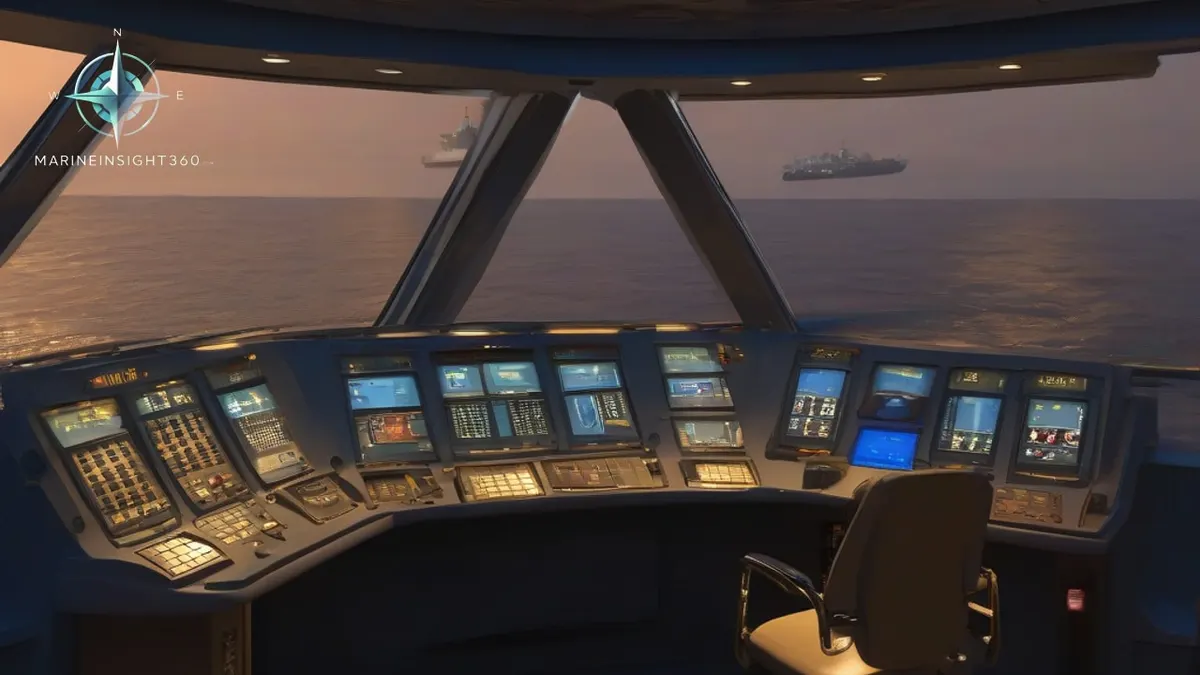
What is a Bridge Navigational Watch and Alert System (BNWAS)?
Navigating a large vessel is no easy task. In emergencies, mariners must make swift decisions, and the safety of the vessel and its crew depends on their actions. This is where automated systems come in handy.
A Bridge Navigational Watch and Alert System (BNWAS) is an automated system used on ships. While navigation is the most important aspect of safely transporting cargo and crew between two points, it is equally important to recognize that the human element responsible for navigation is prone to errors and problems. If an emergency occurs to the officer on duty (for example, leaving duty due to health reasons), the vessel could be put in danger. A Bridge Navigational Watch and Alert System helps address this issue.
A Bridge Navigational Watch and Alert System (BNWAS) is a monitoring and alarm system that notifies other officers or the captain when the officer on duty (OOW) is unresponsive or unable to effectively perform watchkeeping duties, potentially leading to a maritime incident.
The Bridge Navigational Watch Alarm System (BNWAS) is designed to monitor bridge activity and detect operator errors that could lead to a maritime incident.
The system monitors the awareness of the Officer of the Watch (OOW) and automatically issues an alert if the Master or other qualified OOW is unable to perform their duties for any reason. This is achieved through a series of alarms and indicators that alert the backup OOW in addition to the Master.
The BNWAS issues an alert when the OOW is unable to perform due to an accident, illness, or a security breach such as piracy and/or hijacking. The BNWAS remains operational at all times unless the Master decides otherwise.
Why does a ship need a Bridge-North Sea Warning System (BNWAS)?
Many ship collisions and groundings have occurred due to poor or ineffective decision-making.
In an emergency, if the mariner is unable to handle the situation, the consequences can be disastrous. To prevent this, a Bridge-North Sea Warning System (BNWAS) is installed on the ship's bridge as an alarm system for the engine room.
The Bridge-North Sea Warning System (BNWAS) triggers a series of alarms on the ship's bridge to alert the officer on watch. If the officer on watch does not respond to the series of alarms, the system alerts other deck officers, including the captain, so that someone can descend to the bridge to address the situation and resolve the issue.
Operational Requirements for Fire Alarm Systems (BNWAS)
BNWAS has three main operating modes:
- Automatic
- Manual On
- Manual Off
When does the BNWAS alarm sound?
After the BNWAS is activated, there must be an idle time of 3 to 12 minutes. The idle time is the time during which the BNWAS is active and no alarms are sounding. Alarms will only be triggered after the idle time has expired, the alarms/indicators have been triggered, and the reset function has been activated.
After the idle time has expired, a visual indicator (stage 1; flashing indicator) must be activated to signal the officer to reset (if present and active).
If not reset within 15 seconds of the visual signal, the audible alarm (first stage) will be triggered.
If the first stage audible alarm is not reset, a second stage audible alarm (the sound must have a distinctive pitch or modulation designed to alert, not alarm, firefighters) will sound 15 seconds later, followed by another alarm in the reserve officer's and/or captain's cabin.
If the second stage audible alarm is not reset, another alarm (third stage) will sound 90 seconds later; this alarm should be easily distinguishable, indicating an emergency situation, and loud enough to be heard at all locations above and awaken any sleeping crew members in other locations, allowing them to take corrective action.
Except on passenger ships, the second and third stage alarms may be combined in all locations. In this case, the third-stage alarm may be suppressed.
On large ships, sufficient time of up to three minutes must be allowed for the support officer or captain to reach the watchtower and address the situation.
Reset Function
The reset operation can only be performed from a physically accessible area on the bridge.
The operator only needs to press the reset button once (or, for those familiar with the BNWAS system, a single press of the round reset button), which activates the lockout time and cancels the alarm/indicator.
Continuous activation of the lockout time using the reset button must not exceed the set value or silence the alarm/indicator.
In addition, an "emergency call" function must be provided to immediately switch to Level 2 and Level 3 alarms. This allows the officer of the watch to immediately call for assistance.
The BNWAS system must have an accuracy of 5% or within 5 seconds, whichever is less.
The lockout time mode and duration must be controlled solely by the captain.
The system must be powered by the mains power source. All components of the fault indicator and emergency call system must be battery-powered.
If necessary, a socket must be provided for integration with other bridge equipment.
Regulations for Unmanned Cargo Ships
Regulation 19 of Chapter V of the SOLASConvention states:
Cargo ships and passenger ships of 150 gross tonnage and above, regardless of size, constructed on or after July 1, 2011.
Passenger ships constructed before July 1, 2011, regardless of size, shall undergo their first survey after July 1, 2012.
Cargo ships of 3,000 gross tonnage and above, constructed before July 1, 2011, shall undergo their first survey after July 1, 2012.
Cargo ships of 500 gross tonnage and above but less than 3,000 gross tonnage, constructed before July 1, 2011, shall undergo their first safety survey after July 1, 2013.
Cargo ships of 150 gross tonnage and above and 500 gross tonnage and above but less than 500 gross tonnage, constructed before July 1, 2011, shall undergo their first survey after July 1, 2014.
BNWAS installed before 1 July 2011 may, at the discretion of the Administration, be exempted from full compliance with the regulations adopted by the Organization.
Recommended Reading
Safety Management System (SMS): The Rulebook Every Ship Runs On
What a safety management system is in shipping: the ISM Code framework of procedures, drills, audits and the DPA that turns safety from intention into system.
Ship Navigation Equipment: The 30 Systems on a Modern Bridge
The ship navigation equipment a modern bridge carries, grouped by job: position fixing, collision avoidance, charts, communications, safety recorders and more.
What is the Ship Security Alert System and Function of SSAS?
What is the Ship Security Alert System and Function of SSAS?: ports, trade and shipping-market context for US, UK, Canada, Australia, Singapore and...