
Cheap Hydrogen Fuel Breakthroughs and What They Would Mean for Ships
Cheaper hydrogen would reshape marine fuel choices, but tank volume, bunkering and the missing safety code decide adoption. What ship operators should track.
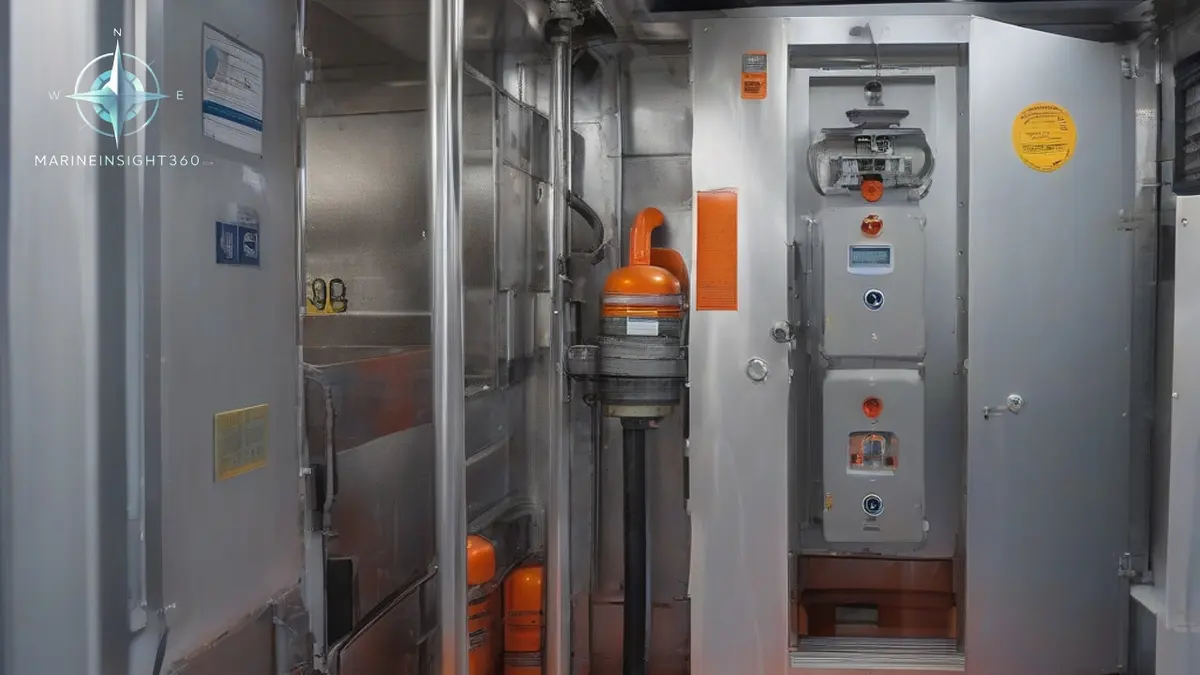
Talk of breakthrough cheap hydrogen fuel keeps arriving, and it would change shipping, but mostly at one remove. Very few merchant ships will burn hydrogen directly. What cheap hydrogen does is cut the input cost of green ammonia and e-methanol. Those are the two fuels that can realistically be stored and bunkered at deep sea scale.
Judge any cost announcement by what it does to the delivered price of those derivatives at Rotterdam, Singapore or Houston, not by the headline dollars per kilogram.
That framing matters because the IMO 2023 greenhouse gas strategy targets net zero emissions from international shipping by or around 2050, with zero or near-zero greenhouse gas fuels making up at least 5 percent, striving for 10 percent, of the energy used by international shipping by 2030. Meeting that means buying molecules at scale from producers who need a price signal now.
Why hydrogen is hard to put in a ship's tank
The problem is volume, not chemistry. Liquid hydrogen must be held at about minus 253 degrees C (minus 423 F), and even then it carries far less energy per unit volume than marine gas oil. A ship needing a given amount of energy needs several times the tank volume, plus vacuum insulation, plus boil-off management. Compressed hydrogen at 350 or 700 bar is worse again on volume.
On a short sea ferry with a fixed route and a shore filling point, that is a solvable engineering problem. On a bulk carrier crossing the Pacific, the tanks would eat the cargo.
- Tank volume and insulation displace revenue-earning space.
- Boil-off has to be consumed, reliquefied or vented, and venting is both a safety issue and an efficiency loss.
- Hydrogen embrittlement constrains material selection in piping and containment.
- The flammability range is very wide and the ignition energy very low, so leak detection and ventilation design dominate the arrangement.
What cheap hydrogen actually has to beat
Not the price of very low sulfur fuel oil alone. It has to beat the delivered, bunkered cost of the alternative after conversion losses, and after the regulatory cost of continuing to burn fossil fuel. Green ammonia has been quoted around 800 dollars per tonne, against conventional bunkers at a fraction of that on an energy basis.
Public programs such as the United States Department of Energy target of one dollar per kilogram of clean hydrogen exist because closing that gap is the entire problem.
Conversion is the hidden tax. Electricity to hydrogen loses energy in the electrolyzer. Hydrogen to ammonia or methanol loses more in synthesis. A fuel cell or engine loses more again. Cheap hydrogen at the plant gate does not mean cheap propulsion at the propeller.
The derivative fuel route is the realistic one
Ammonia carries hydrogen at ambient pressure with modest refrigeration, uses infrastructure that already exists for the fertilizer trade, and has an established seaborne transport chain. Methanol is liquid at ambient conditions, is already bunkered in several ports, and needs the least new hardware on board. Both are made from hydrogen, so a cheaper molecule lowers both directly.
The trade-offs differ. Ammonia is toxic, requires strict handling and crew protection, and brings unburned ammonia and nitrous oxide slip to control. Methanol has a low flashpoint and roughly half the energy density of fuel oil, so tank volume roughly doubles, but the retrofit path is the simplest of the alternatives.
Where hydrogen does work on ships today
Short sea and harbor craft. The Norwegian ferry MF Hydra has operated on liquid hydrogen, and hydrogen fuel cell passenger vessels have entered service on protected coastal routes. The pattern is consistent: a fixed route, a short leg, one bunkering point ashore, and an operation where fuel is a small share of total cost.
Fuel cells also suit hotel load and harbor operation on larger vessels, where quiet, zero-emission-at-berth capability has direct value in ports with air quality rules.
The safety rule gap that slows everything down
The IGF Code covers ships using gases and other low flashpoint fuels, with detailed provisions for natural gas. Methanol has interim guidance. Hydrogen installations are still largely approved case by case through the alternative design route, with class societies carrying much of the assessment. That adds time and cost to every project and makes financing harder.
Bunkering is the other gap. A fuel with no port infrastructure and no settled simultaneous operations rules cannot be adopted by a tramp operator, however cheap the molecule becomes.
What operators should track
- Delivered ammonia and methanol prices at real bunker ports, not production cost estimates at a plant gate.
- Electrolyzer capital cost and electricity prices in the regions building export projects, because those two set the hydrogen price.
- Progress on IMO safety guidance for hydrogen and ammonia as fuels, since that is what turns a pilot into a fleet order.
- Regional carbon costs, including the EU emissions trading scheme and FuelEU Maritime, which change the comparison independently of fuel prices.
- Newbuilding orders specified as dual fuel or ammonia ready, which are the clearest signal of what owners actually believe.
The practical position for a shipowner today
Specify optionality rather than a fuel. Ammonia ready and methanol ready notations, tank space reserved, and a machinery arrangement that can accept a conversion all cost less than betting on the wrong molecule. Cheap hydrogen, if it arrives, will reach your invoices as cheaper ammonia and methanol long before it reaches your berth as a hydrogen bunker barge. Our Marine Engineering section covers alternative fuel machinery and retrofit planning in more detail.
Sources and further reading
- Hydrogen gains traction as a marine fuel
- Hydrogen as fuel for ships
- Green Shipping Fuels
- A new climate deal for shipping: Three decades to zero
What to read next
Recommended Reading
What Does SS Mean on a Ship? Steamship, and Every Other Prefix Explained
SS on a ship means steamship, a vessel driven by steam engines. What the prefix tells you, why modern ships use MV instead, and what RMS, HMS and USS mean.
Marine Scrubbers: Types, How They Work and Where the Rules Are Tightening
How marine scrubbers strip sulfur from ship exhaust, the difference between open-loop, closed-loop and hybrid systems, and where washwater discharge is banned.
10 of the World's Greatest Natural Harbors, and Why They Matter
What makes a natural harbor, and ten of the world's greatest: Sydney, San Francisco, New York, Rio, Halifax and more, with the geography that shelters them.