
Panama Canal Locks and Ship Transit Guide
"Have you ever crossed the Panama Canal?". One of the many questions we seafarers face when dealing with land-based thieves is. "Where do they sleep on…
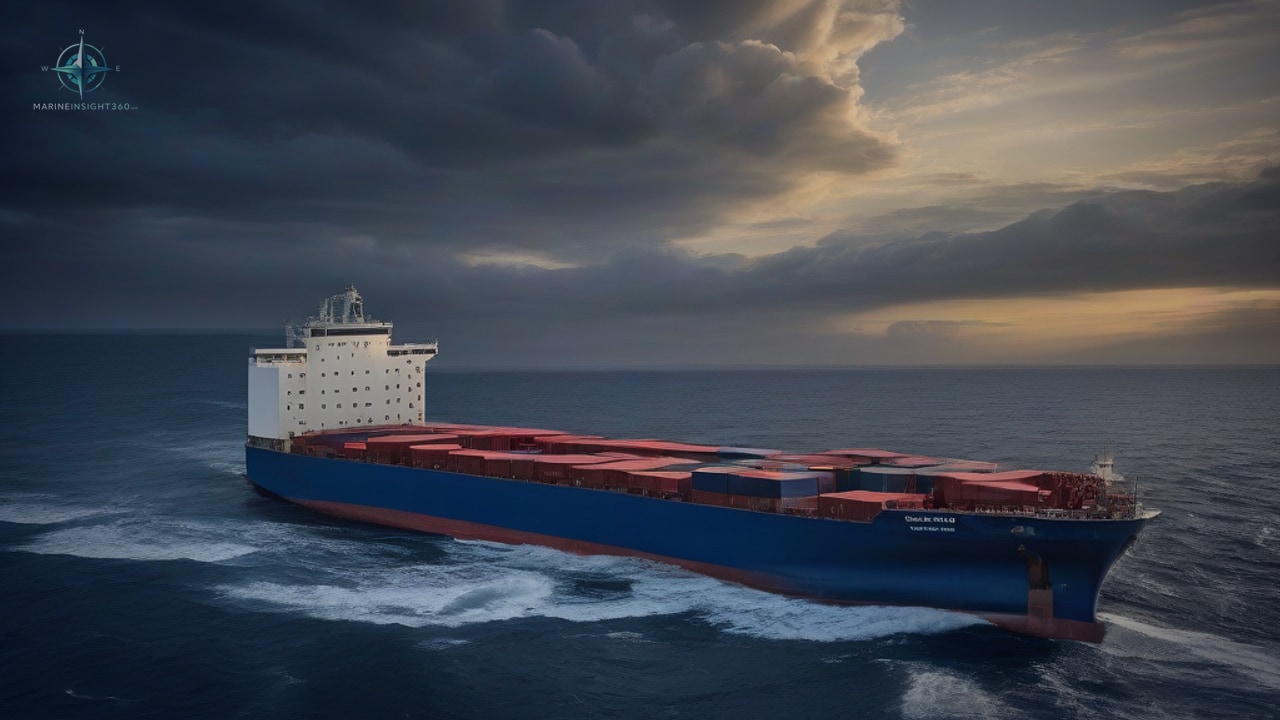
"Have you been through the Panama Canal?" is one of the questions seafarers hear most from people ashore, along with "Where do you sleep on the ship at night?" The Panama Canal locks are among the greatest engineering works ever built, and the American Society of Civil Engineers lists the canal as one of the seven wonders of the modern world. Seafarers get to know the canal from the bridge and the deck, which is a good reason to know some of the facts behind it.
Let's Look At 5 Interesting Facts About Panama Below:
Who Built The Panama Canal?
The United States completed the canal, with the work driven by President Theodore Roosevelt, but the French started it. Ferdinand de Lesseps, the French diplomat behind the Suez Canal, began work in 1881. His company collapsed in 1889 after yellow fever and malaria had killed an estimated 22,000 workers and the project had cost around $287 million. The Americans took over in 1904, after the US had backed Panama's independence from Colombia in 1903.
Controlling water and disease were the hardest problems. Under John Frank Stevens, the American chief engineer from 1905, and then Colonel George Washington Goethals, who took over in 1907, the Americans abandoned the French plan for a sea-level canal and built a lock canal instead, with the Gatun Dam creating Gatun Lake to supply the locks. The canal was finished in ten years and opened on 15 August 1914, ahead of schedule.
What Was The Very First Ship To Pass Through The Panama Canal?
The SS Ancon made the first official transit of the Panama Canal locks on 15 August 1914. Built as a cargo and passenger ship for the Boston Steamship Company, she was later bought by the Panama Railroad Company. She was about 150 metres long and 18 metres wide, measured about 9,600 gross tons and drew about 8.8 metres.
Before the opening she had carried workers and building materials, including large amounts of cement, from New York to Panama for the construction of the canal and its locks.
How Much Time Will You Save By Crossing It?
The idea of a canal across the isthmus is centuries old. In 1534 Charles V, Holy Roman Emperor and King of Spain, ordered a survey of a route across Panama to shorten the voyage between Spain and Peru. It took almost four hundred years to build. A ship sailing from New York to San Francisco through the canal saves about 8,000 nautical miles compared with the route around South America, between the Atlantic and the Pacific Ocean.
At 15 knots, those extra 8,000 miles would take about 22 days. The transit through the canal takes about 8 to 10 hours. The canal saves ship operators time, fuel and money, and the shorter distance also means less fuel burnt and lower CO2 emissions.
How Much Does It Cost To Transit The Panama Canal?
The Panama Canal Authority measures ships under the Panama Canal Universal Measurement System (PC/UMS), which is based on the International Convention on Tonnage Measurement of Ships, 1969. The ship's total enclosed volume is calculated by formula to give its PC/UMS net tonnage, where one net ton equals 100 cubic feet of volume. Tolls are then charged according to the ship type and size, and for many ship types they differ depending on whether the ship is laden or in ballast.
Warships and naval auxiliaries are calculated on displacement tonnage, where one ton of displacement is one long ton, or about 35 cubic feet of seawater. For large cargo ships, a single transit toll can run to hundreds of thousands of dollars. The lowest toll on record is the 36 cents paid by the American adventurer Richard Halliburton, who swam the canal in 1928.
How Do Locks Work And Why Do They Exist?
The original canal has three sets of locks, each with two lanes, giving 12 lock chambers in all. Coming from the Pacific, the first are the Miraflores Locks, a two-step flight that lifts ships about 54 feet to Miraflores Lake. Next come the Pedro Miguel Locks, a single step that lifts ships another 31 feet to the level of Gatun Lake, about 85 feet above sea level.
From Pedro Miguel, ships pass through the Culebra Cut (also called the Gaillard Cut) and across Gatun Lake to the Gatun Locks.
The Gatun Locks are a three-step flight that lowers ships the full 85 feet to sea level at the Atlantic (Caribbean) entrance. Because each set of locks has two lanes, ships can in principle pass in opposite directions at the same time. The locks exist because the canal crosses the continental divide: they lift ships up to Gatun Lake and back down, so the canal did not have to be dug down to sea level.
The lake also supplies the water, which flows into the lock chambers by gravity with no pumps. In 2016 a third set of larger locks opened, at Agua Clara on the Atlantic side and Cocolí on the Pacific side, each a three-step flight in a single lane.
What Is The Maximum Allowable Draft When Transiting Through The Panama Canal?
The Autoridad del Canal de Panamá (ACP), the Panama Canal Authority, sets the size and draft limits for ships using the canal and publishes them in advisories to shipping, which change when water levels in Gatun Lake are low. Since the new locks opened to commercial traffic on 26 June 2016, different limits have applied to the original locks, known as the Panamax locks, and to the new Neopanamax locks.
The maximum draft for the Panamax locks is 12.04 metres (39 feet 6 inches) in Tropical Fresh Water (TFW), which is water of density 0.9954 g/cm³ at 29.4°C (85°F). The Neopanamax locks allow a maximum draft of 15.2 metres (50 feet) in TFW.
What Preparations Do I Need Before Arriving?
The canal is one of the busiest waterways in the world, and every transit follows strict rules. Transits are booked through the ship's agent, who also sends the list of documents needed before arrival for customs clearance and the canal's own requirements. Ships arriving at the anchorages on the Atlantic or Pacific side must report on VHF channel 12 to Cristóbal Signal Station or Flamenco Signal Station, as appropriate.
At the anchorage, a Panama Canal Authority boarding inspector may carry out a pre-transit inspection. The bridge equipment, steering gear, mooring winches and fittings, main engine and auxiliary machinery must all be in good working order, because defects found at inspection can delay the transit or lead the ACP to refuse it.
Recommended Reading
How Does The Panama Canal Work
The Panama Canal length is one of the world's largest man-made waterways, connecting the Atlantic and also Pacific oceans.
Top Flag States in Shipping: Panama, Liberia and More
The world's biggest flag states, from Panama and Liberia to the Marshall Islands, Singapore, Hong Kong, Malta and the Bahamas, and why owners register ships there.
What Is The Length Of Suez Canal In Miles? Briefly Explained
The Suez Canal is the world's longest canal without locks, connecting the Mediterranean and the Red Sea via the Isthmus of Suez. Various European factions…