
How Much Do You Get Paid as a Marine Biologist?
Marine biologist pay in the US, UK and Australia, why federal data has no separate category, and which offshore and consultancy roles pay the most.
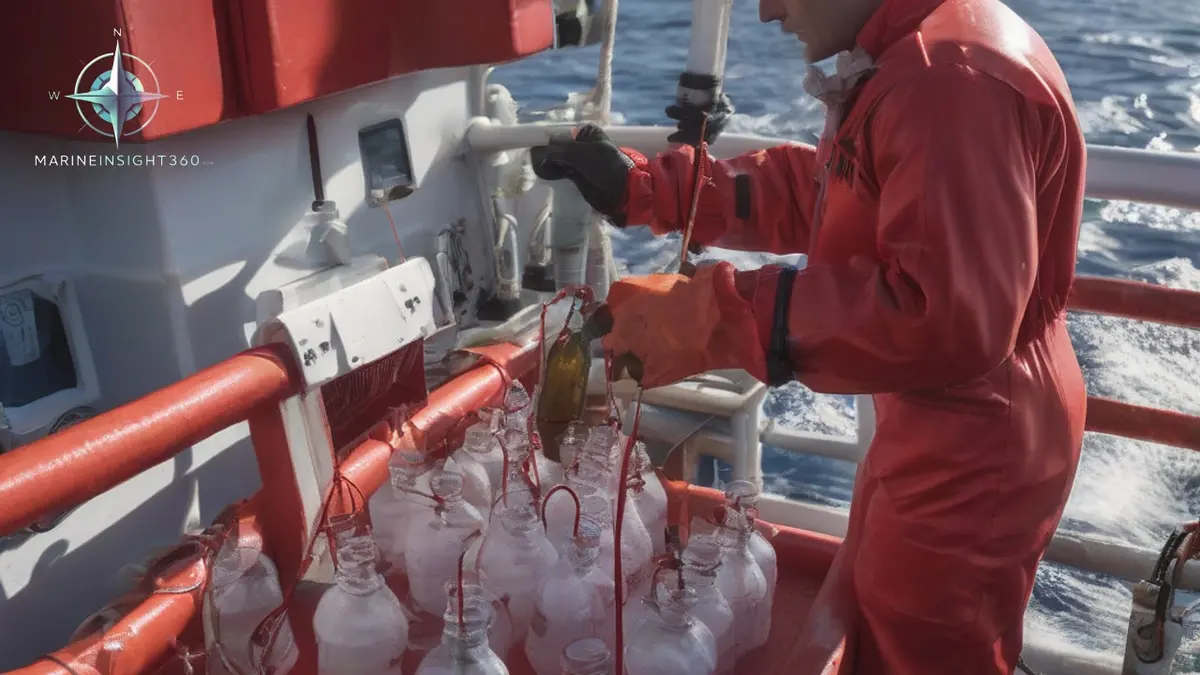
How much do you get paid as a marine biologist? In the United States, typically somewhere between USD 41,000 and USD 110,000, with a middle figure near USD 73,000.
That range comes from the US Bureau of Labor Statistics category for zoologists and wildlife biologists, which reported a median annual wage of USD 72,860 in May 2024, a lowest tenth under USD 41,270 and a highest tenth above USD 109,390. There is no separate federal wage category for marine biologists, which is the main reason published figures for the job disagree so violently.
Sector matters far more than qualification level. A conservation NGO role, a federal research post, an offshore survey contract and an environmental consultancy job can all be held by the same person with the same degree and pay amounts that differ by a factor of two.
What the figures look like outside the US
In the United Kingdom, commercial salary surveys put the average marine biologist around USD 39,000 (GBP 30,562), with graduate research assistant and technician roles starting well below that. Public sector and academic posts follow published pay spines, so progression is predictable but slow.
Australian figures vary more than any other market. Job board data has shown averages near USD 75,000 (AUD 114,224), while other surveys place typical marine biologist pay in the USD 40,000 to 46,000 band (AUD 60,000 to 70,000). The gap reflects what is being counted: the higher figures pull in offshore, mining-adjacent and consultancy roles, the lower ones reflect research and field positions.
Canada, Ireland and New Zealand sit broadly in the same territory as the UK for research posts, with government agency roles paying above university contracts at equivalent experience.
The roles that pay above the median
The highest paying work in marine biology is almost always attached to industry rather than to research, and much of it is seagoing.
- Marine mammal observer and protected species observer. Stationed on seismic survey and offshore wind survey vessels to monitor for marine mammals and shut down operations when required. Paid as a day rate, offshore, with the rate reflecting the mobilisation and the qualification.
- Offshore wind environmental consultant. Benthic surveys, environmental impact assessment and post-construction monitoring for developers. Consultancy rates and a clear seniority ladder.
- Fisheries observer and fisheries scientist. Sea-going observer programmes in the US, Australia and New Zealand pay reasonably and give directly relevant sea time.
- Aquaculture health and fish veterinary support. A commercial sector with genuine shortages, particularly in Scotland, Norway, Canada and Tasmania.
- Government agency science. Federal and national agency roles in the US, UK, Canada and Australia offer stable pay, pension and a defined grade structure.
The certificates that turn a biology degree into offshore pay
Offshore work is where marine biology intersects with the shipping and energy industries, and it has entry requirements that have nothing to do with biology.
- Offshore survival training. BOSIET for oil and gas, or the GWO sea survival and working-at-height package for offshore wind.
- An offshore medical. The energy industry medical, or an ENG1 seafarer medical where the work sits on a vessel under a maritime contract.
- STCW basic safety training. Required for many vessel-based roles and useful on all of them.
- Recognised observer accreditation. Regulators and developers specify approved observer training and, in some regions, a register of accredited individuals.
Those four items are what separate a graduate applying for shore-based roles from one who can accept a mobilisation next week. The training cost is modest against the day rate difference.
How education level actually affects the number
A bachelor degree is enough for technician, observer and field survey work. A masters is the practical entry point for consultancy and for most agency scientist grades. A doctorate is required to lead research and to hold an academic position, but it does not by itself raise pay in industry, where project delivery experience carries more weight.
The most common financial mistake is stacking degrees in the hope that pay follows. Three years of offshore survey experience typically moves earnings further than a PhD does, unless the goal is a research career.
The trade-off nobody mentions on the course brochure
Marine biology attracts far more graduates than the field employs, and early career competition for the visible roles is severe. Entry-level positions are frequently short contracts tied to a single survey season or grant, so the first few years often mean stitching together fieldwork, observer contracts and technician posts.
The people who reach the upper end of the pay range usually did one of two things: they specialised in a discipline with commercial demand, such as benthic ecology, acoustics or fish health, or they went to sea and built the offshore certification and sea time that consultancies bill out at a premium.
If pay is a priority, target the offshore wind and survey sector, get the survival training and medical in place early, and treat sea time as a career asset rather than an interruption. Our Careers section covers the offshore and survey vessel roles that hire science staff alongside marine crew.
Two documents decide whether a graduate can accept an offshore mobilisation, and neither is issued by a university. The seafarer medical is signed by a doctor approved by the Maritime and Coastguard Agency. Basic safety training counts only if the centre is approved by a flag administration, and the MCA, the USCG and AMSA each publish their own lists of accepted providers. Employers check both before a day rate is agreed.
The common failure is administrative rather than academic. Candidates are stood down when a medical is refused on eyesight or an untreated condition, when survival training has quietly expired, or when an observer accreditation covers a different region from the survey area. Each of those cancels a contract already priced into the year, and rebooking a course after a rejected medical can cost a whole season of paid sea time.
Sources and further reading
- Zoologists and Wildlife Biologists - U.S. Bureau of Labor Statistics
- Marine Biologist Salary in Australia - SEEK
- Marine Biologist Salary - PayScale
- Marine Biologist Salary, Career Path and Education
What to read next
Recommended Reading
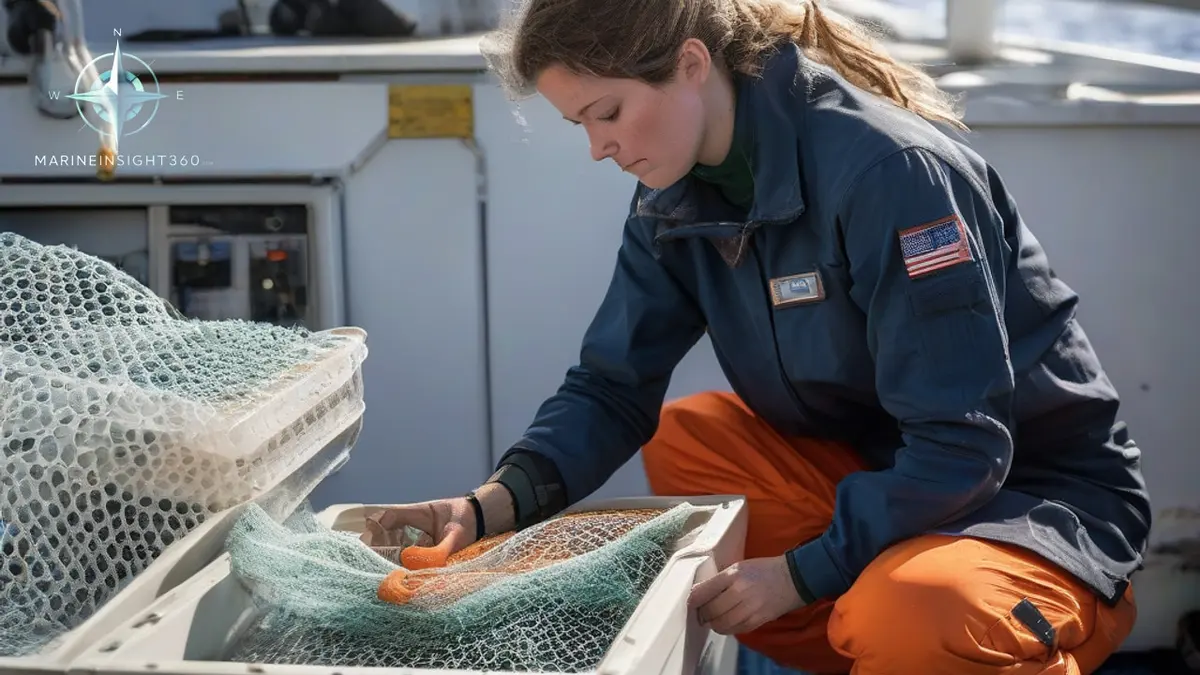
How Much Money a Marine Biologist Makes
How much money a marine biologist makes: US federal wage data, entry to senior pay bands, and the employers and qualifications that actually move the number.
How Much Money Does A Marine Biologist Make
How Much Money Does A Marine Biologist Make: career, certification and hiring context for US, UK, Canada, Australia, Singapore and European maritime...
How Much Do Merchant Mariners Make? Pay by Rank and Trade
US merchant mariner pay by rank, with federal wage medians, day-rate math, rotation effects, union scales and how UK sea pay compares.