
How to Be a Deck Cadet in the Merchant Navy: Sponsorship, Sea Time and the Certificate
Sponsorship, medical and academic entry rules, cadetship structure, sea time requirements and the training record book habits that decide if you pass OOW.
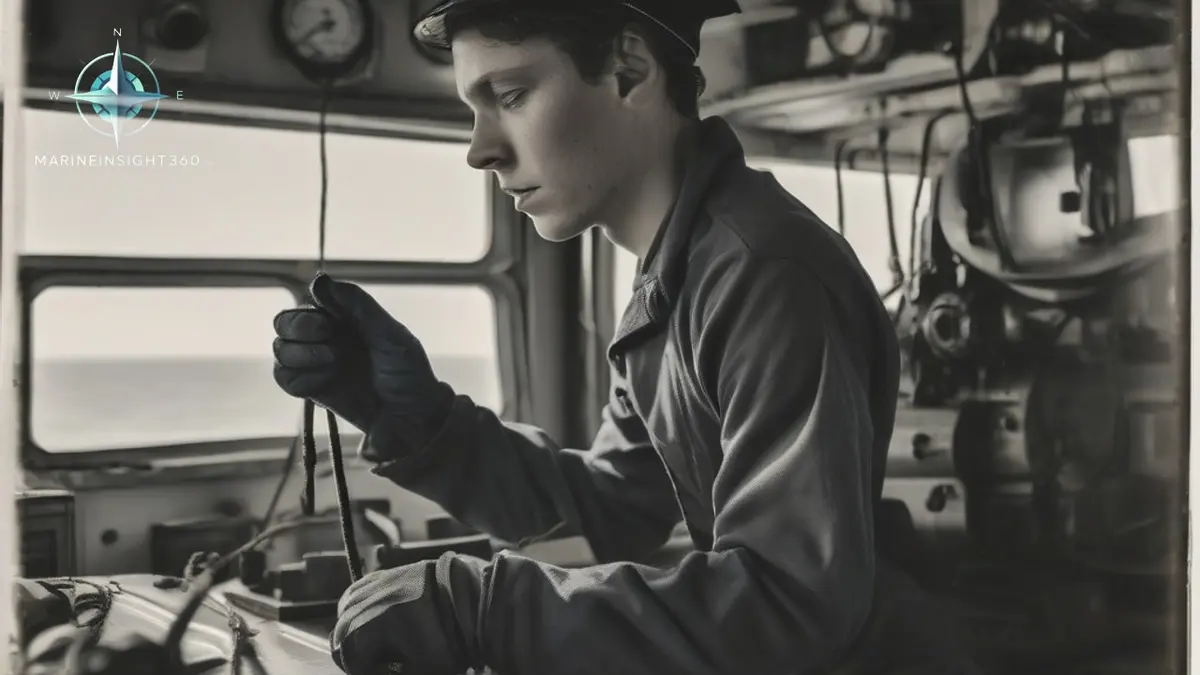
How to be a deck cadet in the merchant navy is a sponsorship question before it is an academic one. The route starts with a sponsored training place, not with a college application. A sponsor, usually a shipping company or ship manager, pays your fees, provides a training allowance and places you on their ships.
In the UK a cadetship typically runs about three years across five alternating college and sea phases. The Officer of the Watch certificate requires at least 12 months of approved seagoing service gained since the age of 16. Six of those months must be on bridge watchkeeping duties. US cadets follow a comparable path through a maritime academy toward a Coast Guard endorsement as Officer in Charge of a Navigational Watch.
Applications for sponsorship usually open around a year before the intake, so the timing of your first move matters more than most candidates expect.
Sponsorship comes before everything else
A cadetship without a sponsor is a course, not a career route. The sponsor funds training, arranges the seagoing phases and frequently offers a job as third officer on qualification. Because sponsors carry that cost, they select carefully and they select early.
Apply to many sponsors rather than one, and apply directly to the training providers that run cadet schemes as well. In the UK that means companies and managers recruiting through approved colleges and training organisations. In the United States it means applying to a state or federal maritime academy licence programme, where the academy structures the sea terms.
Entry requirements to settle before you apply
- Medical fitness. A seafarer medical, the ENG1 in the UK, is a hard pass or fail gate. Eyesight and colour vision standards for deck officers are strict and are not negotiable. Get examined before you spend money on applications.
- Age. Training can start from 16 in the UK, but the certificate of competency requires the candidate to be at least 18.
- Academics. Sponsors and academies look for solid mathematics, English and a science subject at school leaving level, or an equivalent national qualification.
- Right to work and travel documents. A passport with long validity, plus a seafarer transit visa for the country where you join ships. US candidates also need a Transportation Worker Identification Credential and a Merchant Mariner Credential.
- Swimming and basic fitness. Required for the survival training modules.
How a UK cadetship is structured
The programme alternates between shore-based study and seagoing service, usually across five phases. The academic strand delivers a foundation degree or higher national qualification in nautical science. The seagoing strand delivers the sea time and the practical competence.
Running through both is the training record book issued by the training board, which is the document the examiner actually reads. It lists the tasks a cadet must complete and have signed by a certificated officer, covering watchkeeping, chartwork, cargo work, mooring, safety equipment and ship maintenance.
Alongside the degree work, cadets complete the STCW short courses: personal survival techniques, fire prevention and firefighting, elementary first aid, personal safety and social responsibilities, then proficiency in survival craft and rescue boats, medical first aid, ECDIS, radar and ARPA, and the GMDSS General Operator Certificate. The programme ends with a written and oral examination for the Officer of the Watch certificate of competency.
How the US route differs
US cadets typically enrol at a state or federal maritime academy as licence option students, complete academic terms ashore and a set of sea terms, some aboard the academy training ship and some aboard commercial vessels, then sit the Coast Guard examination.
The sea service requirement follows the same international standard, a minimum of 12 months including six months of supervised bridge watchkeeping, and the Coast Guard verifies service, training and assessments against the STCW competence standard before issuing the endorsement.
What the job is really like on board
A cadet is a trainee officer, not a passenger and not a rating, and the ships that train well make that distinction clear. Expect bridge watches under the supervision of a certificated officer, cargo watches, mooring stations, chart and publication corrections, safety equipment rounds, and deck maintenance alongside the crew.
The cadets who qualify smoothly do three things consistently. They get training record book tasks signed while the work is fresh, rather than presenting a blank book in the last month. They ask to steer, to handle the manoeuvring, to work the cargo calculations and to sit in on pilot exchanges. And they keep a personal notebook of ship systems, because the oral examiner asks about the ships you sailed on.
Mistakes that delay qualification
- Leaving the training record book until the final trip, when the officers who supervised the work have signed off.
- Failing a colour vision test after starting the course rather than before applying.
- Spending sea phases only on the bridge and never learning cargo operations, which the oral examination covers hard.
- Missing a short course in a college phase and discovering the gap when the certificate application is submitted.
- Treating the seagoing phase as time to be served rather than as the assessment it is.
Pay, cost and the timeline
Cadet allowances are modest, and the financial case for a cadetship is what happens afterwards. On qualification the certificate is internationally portable under STCW, which is why officers from tier-1 training systems move between fleets and flags with relative ease. Reaching master typically takes a further eight to fifteen years of sea time and two more certificate levels.
What to do in the next three months
Book a seafarer medical, gather your school certificates, and build a shortlist of sponsors and academies with their application deadlines. Then apply widely and early, because sponsorship rounds close long before college terms begin. Our Merchant Navy Careers section sets out certificate pathways and entry requirements for UK, US, Canadian and Australian candidates.
Sources and further reading
- Deck cadet foundation degree, Warsash Maritime School
- UK MCA Officer of the Watch (OOW) Requirements
- Deck Cadet, Engineer Cadet, or ETO Cadet Training for the Merchant Navy
What to read next
Recommended Reading
How To Become Deck Officer in Merchant Navy?
Merchant mariners are a lucrative and exciting field of work that requires a great deal of commitment from the moment one enters a maritime academy,…
What Is the Difference Between the Chief Engineer and the Captain in the Merchant Navy?
The difference between the chief engineer and the captain in the merchant navy: command authority, certificates, career paths and pay compared.
Merchant Navy Medical Test: Entry Requirements and What to Expect
What the merchant navy medical test covers, how the UK ENG1 and US Coast Guard medical certificates differ, and the conditions that most often cause a fail.