
How to Become a Shipbroker: Desks, Qualifications and Pay
How to become a shipbroker: which desks hire, how the ICS qualifying exams work, how commission and bonus pay is structured, and mistakes that stall careers.
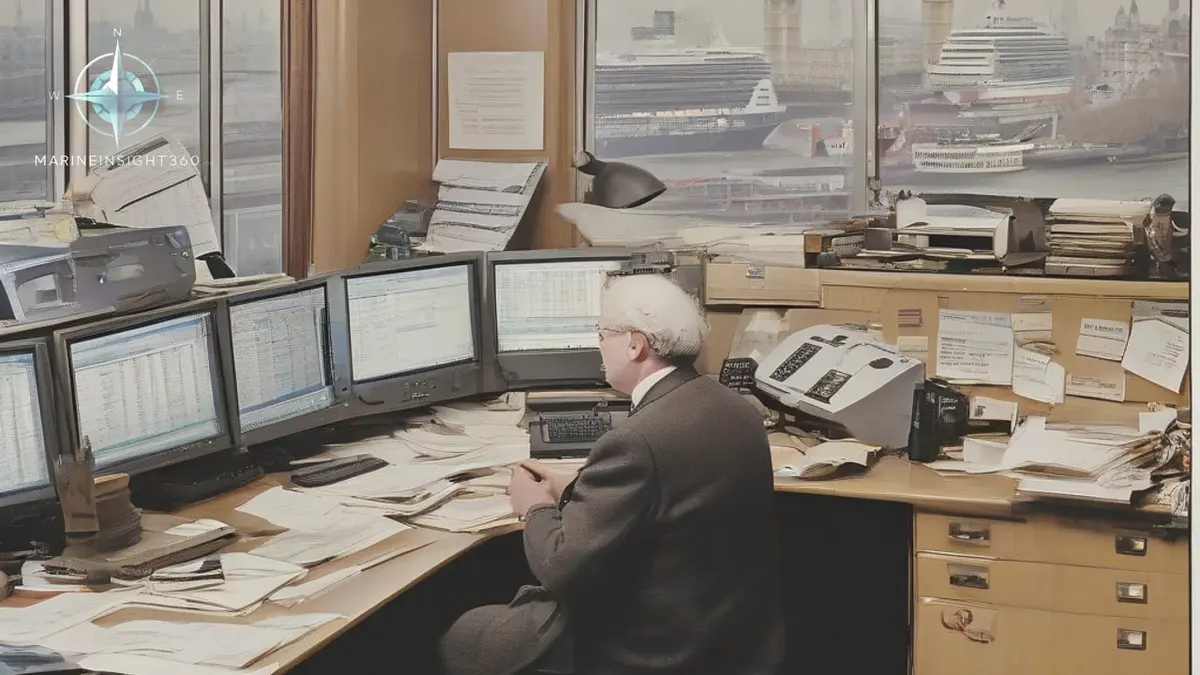
The honest answer to how to become a shipbroker is that it starts with a job offer, not a licence. No major maritime jurisdiction regulates the title: the United Kingdom, the United States, Singapore and the EU all allow anyone to broker a fixture. The recognised professional credential is membership of the Institute of Chartered Shipbrokers, founded in 1911 and granted a Royal Charter in 1920, and it is earned by examination rather than by degree.
Almost everyone studies for it while already sitting on a broking desk, so the sequence that works is straightforward: get hired as a trainee, learn one market properly, then take the exams.
That order matters because broking is an apprenticeship trade. A first-year trainee builds position lists, chases cargo enquiries and listens to how senior brokers talk to owners and charterers. The qualification proves you understand charterparty law and freight economics. It does not prove you can hold a negotiation with a Greek owner at 2200 on a Friday, and that second skill is what eventually earns you a book of clients.
What a shipbroker is actually paid to do
A shipbroker matches tonnage to cargo and takes a commission when the deal completes. The work splits into distinct desks that rarely overlap in practice:
- Dry cargo chartering covers bulk carriers moving iron ore, coal, grain and bauxite. Highest volume, fastest turnover, the most desks and the most trainee openings.
- Tanker chartering covers crude, clean products, chemicals and gas. Cargo chemistry, tank coating compatibility and charterer vetting matter as much as the freight level.
- Sale and purchase brokers move secondhand vessels between owners. Recycling brokers place end-of-life tonnage with yards under the Hong Kong Convention regime.
- Newbuilding brokers place orders at shipyards. A long-cycle desk built on yard relationships and berth availability rather than daily fixtures.
- Container, offshore and project cargo desks serve liner operators, offshore support fleets and heavy-lift shippers, each with its own contract forms.
Commission on most desks is conventional rather than negotiated deal by deal. Chartering pays the broker a percentage of gross freight or hire; sale and purchase pays a percentage of the sale price. The broker is paid only once the deal closes and money moves, which is why experienced brokers spend as much time on laytime and demurrage paperwork as on fixing.
Getting hired without a maritime degree
Broking houses recruit from three pools. The first is graduates in economics, law, business or maritime studies, taken on as trainees and rotated through desks. The second is ex-seafarers, particularly deck officers with tanker or bulker experience, who arrive fluent in cargo operations and tend to be strong on sale and purchase and tanker work. The third is operations and post-fixture staff who move across after proving they can handle owners under pressure.
Applications work far better through the broking clusters than through job boards. London, Singapore, Hamburg, Copenhagen, Athens, Oslo, Dubai, Houston and Stamford hold most of the desks. Attend Baltic Exchange and local shipbroker association events, ask for a coffee rather than a job, and follow up with something specific about the market that person trades. Brokers hire people who already sound interested in their trade lane.
The ICS qualification and how long it really takes
The Institute of Chartered Shipbrokers runs the Professional Qualifying Examinations, the route to full membership and the only internationally recognised professional qualification in commercial shipping. The structure is fixed: seven papers passed within five years, made up of all four Group 1 subjects, at least one Group 2 subject, and two further papers from the optional list. Plenty of candidates finish well inside five years by sitting two or three papers per session.
Foundation Diploma or straight into the qualifying exams
If you are new to shipping and want a lower-commitment start, the ICS Foundation Diploma runs to two subjects: Introduction to Shipping plus one Group 2 subject of your choice. Both passes count towards the seven papers needed for membership, so the Foundation Diploma is a staged entry rather than a separate track. Candidates with relevant prior qualifications or documented industry experience can apply for exemptions, which cut the number of papers still to sit.
Registering as an ICS student is the first administrative step, and teaching runs through local branches or the ICS online academy.
Pay structure, and why the second number matters more
Broking pay is a modest base salary plus a bonus tied to the commission your desk generates. Trainees live on the base. Brokers with an established book live on the bonus, which is why earnings swing hard with the freight cycle: a strong Capesize year and a weak one are not comparable. Treat any single published salary figure with suspicion unless it separates base from bonus and names both the desk and the year.
Mistakes that stall broking careers
- Spreading across too many markets. Depth in one trade lane beats shallow coverage of five. Owners call the broker who already knows their ships.
- Treating the exams as the career. The qualifying examinations open doors and settle arguments over charterparty clauses. They do not generate business.
- Ignoring post-fixture. Laytime, demurrage and disputes are where relationships are kept or lost. Juniors who handle them well get handed accounts.
- Weak record keeping. A broker who cannot reconstruct a negotiation from the recap trail is exposed the moment a fixture goes wrong.
Your first three moves
Pick one market and read its daily reports for a month, until vessel names and route names stop reading as noise. Register as an ICS student and book Introduction to Shipping for the next sitting. Then approach three broking houses in the nearest cluster with a short note showing you understand what their desk trades.
Our Merchant Navy Careers section covers the seagoing route that feeds tanker and sale-and-purchase broking if you would rather build the technical foundation at sea first.
A broker's description of a ship has to survive checking, and the checks come from public registers. Charterers and their vetting departments pull the class record from DNV, Lloyd's Register, ClassNK or ABS, the port state control history from the Paris MoU and Tokyo MoU databases, and confirmation that the owner holds cover with a protection and indemnity club in the International Group.
That is why the recap matters more than the pitch. Owners and charterers rely on the broker to state class, flag, last drydocking, detention history and insurance cover accurately, and the broker who passes on an owner's figures unchecked owns the argument when the ship arrives. Juniors who verify a description against the registers before circulating it get handed accounts sooner than those who do not.
Sources and further reading
- Choosing your qualification (Institute of Chartered Shipbrokers)
- ICS Online Academy
- ICS Qualifications (Institute of Chartered Shipbrokers Ireland)
What to read next
Recommended Reading
How to Become a Mariner: The Two Real Routes to Sea
Two routes into a seagoing career: entry-level rating or officer cadet. Credentials, medicals, STCW courses, timelines and real costs in the US and UK.
Oceanographic Engineer: What Ocean Engineers Design and How to Become One
What an oceanographic engineer designs, how ocean engineering differs from oceanography and naval architecture, and the degrees and tickets employers want.
When Does a Boat Become a Ship? Where Mariners Actually Draw the Line
When does a boat become a ship? The tonnage thresholds, traditional tests and odd exceptions mariners use to draw the line between boats and ships.