
Oceanographic Engineer: What Ocean Engineers Design and How to Become One
What an oceanographic engineer designs, how ocean engineering differs from oceanography and naval architecture, and the degrees and tickets employers want.
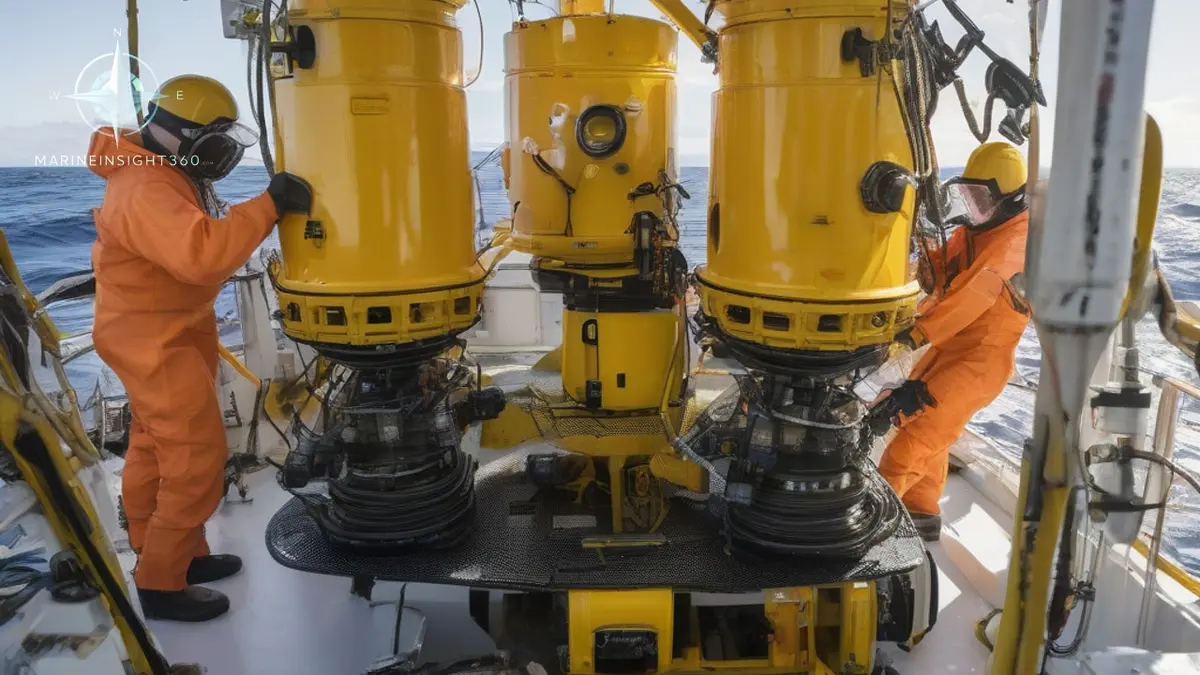
An oceanographic engineer is more usually called an ocean engineer, and designs hardware that has to survive and work in seawater: subsea structures, moorings, sensors, underwater vehicles, coastal defenses and marine energy devices. The discipline sits between mechanical and civil engineering on one side and oceanography on the other. Oceanographers study the ocean. Ocean engineers build the equipment that lets them study it and that lets industry work in it.
If you are choosing between courses, that distinction is the one that matters. An oceanography degree points toward science and data analysis. An ocean engineering degree points toward design, analysis, testing and offshore installation.
What ocean engineers actually design
- Subsea systems : remotely operated and autonomous vehicles, pressure housings, wet-mate connectors, launch and recovery systems.
- Offshore structures : fixed jackets, floating platforms, anchoring and mooring systems, risers and subsea tie-backs.
- Coastal and hydrographic work : breakwaters, sea defenses, sediment transport studies, dredging design and survey planning.
- Marine renewables : tidal stream turbines, wave energy converters and the mooring systems for floating offshore wind.
- Instrumentation and acoustics : echo sounders, hydrophones, moored buoys, telemetry and data recovery.
- Materials and corrosion : cathodic protection design, coatings, biofouling control and composite selection.
The physics that governs the job
Four constraints shape almost every ocean engineering decision. Pressure rises by roughly one bar for every 10 meters (33 ft) of depth, so a housing rated for 3,000 meters (9,843 ft) is a pressure vessel working near 300 bar. Seawater is an aggressive electrolyte, so galvanic pairing and cathodic protection are design decisions rather than afterthoughts.
Loads are random rather than steady. Structures are analyzed against wave spectra and checked for fatigue across tens of millions of cycles over a 25 year life, not against a single design wave. And radio does not travel underwater, so acoustics carries the communication and positioning load, with all the range and bandwidth limits that implies.
Degree routes and what employers check
North American universities offer dedicated ocean engineering degrees, including programs at Florida Atlantic University, the University of New Hampshire and Florida Institute of Technology. In the UK and Europe the more common path is a mechanical or civil engineering degree followed by a master in offshore, subsea or coastal engineering.
Recruiters look past the degree title quickly. What earns interviews is hands-on evidence: a vehicle you built and got wet, tank or field testing you ran, competent CAD and finite element work, and any prior time on a working vessel. Graduates who have never handled equipment over the side compete badly against those who have.
Offshore work and the tickets it needs
Ocean engineering roles split between office design work and field work, and most careers involve both. Field work usually requires offshore survival training such as BOSIET or a wind sector equivalent, a valid offshore medical, and the ability to work rotations away from home.
On board, engineers work alongside dynamic positioning operations, deck crane and A-frame lifts, and survey teams running around the clock. Understanding permit-to-work systems and lift planning matters as much as understanding the hardware.
Who employs ocean engineers
The main employers are subsea and survey contractors, offshore energy operators, floating wind and tidal developers, oceanographic instrument manufacturers, defense and government agencies, research institutions, coastal engineering consultancies and port authorities. Demand has shifted noticeably toward offshore wind and toward survey work for cables and interconnectors.
Ocean engineering or naval architecture?
Naval architecture is about vessels. Ocean engineering is about nearly everything else that goes in the water. The two overlap on floating structures, mooring analysis and hydrodynamics, and engineers cross between them regularly.
A simple test helps. If the object you want to design carries people and has to be stable, fast and classed, naval architecture fits better. If it sits on the seabed, hangs from a mooring or gets lowered over the side, ocean engineering fits better.
Mistakes that cost graduates their first offshore role recur in a short list. Designing to a nominal depth rating with no test margin, so the first certified pressure test fails. Specifying dissimilar metals in contact and finding the galvanic couple a month into a deployment. Planning an over-the-side deployment without a worked-out recovery method, which is the quickest way to lose expensive equipment.
Field experience fixes all three faster than coursework does, which is why employers weight sea time so heavily on a junior application.
Anyone weighing the choice should read the shipboard side too. Our Marine Machinery section explains the plant and deck equipment that ocean engineers end up specifying and working around.
The standards a junior engineer is expected to know are published and public. DNV issues offshore standards covering position mooring and marine operations, and ABS, Lloyd's Register and Bureau Veritas class the floating units, cranes and subsea systems those standards govern. A pressure housing, a lift plan or a mooring analysis is checked against a named document, not against the designer's judgement.
Third-party verification is the routine that catches design optimism. An independent verification body reviews the calculation, witnesses the pressure test or the load test, and issues the certificate the vessel and the client need before the item goes over the side. Graduates who learn to write a calculation someone else can check, with assumptions stated, progress faster than those who only produce a result.
Sources and further reading
- Ocean Engineering Careers - University of New Hampshire
- Ocean Engineering - Marine Careers
- Undergraduate Ocean Engineering Degree Program - Florida Atlantic University
What to read next
Recommended Reading

Container Tracking: How Shippers Actually Follow a Box Across the Ocean
How container tracking works, from free carrier lookups to visibility platforms: what each tool layer does, what it costs, and how to pick for your volume.

How to Become a Shipbroker: Desks, Qualifications and Pay
How to become a shipbroker: which desks hire, how the ICS qualifying exams work, how commission and bonus pay is structured, and mistakes that stall careers.
Cruise Ship Engineer: The Role, the Plant and the Contract
A cruise ship engineer runs a floating power station and hotel. Here is the rank ladder, the certificates required and how contracts and rotations work.