
When Does a Boat Become a Ship? Where Mariners Actually Draw the Line
When does a boat become a ship? The tonnage thresholds, traditional tests and odd exceptions mariners use to draw the line between boats and ships.
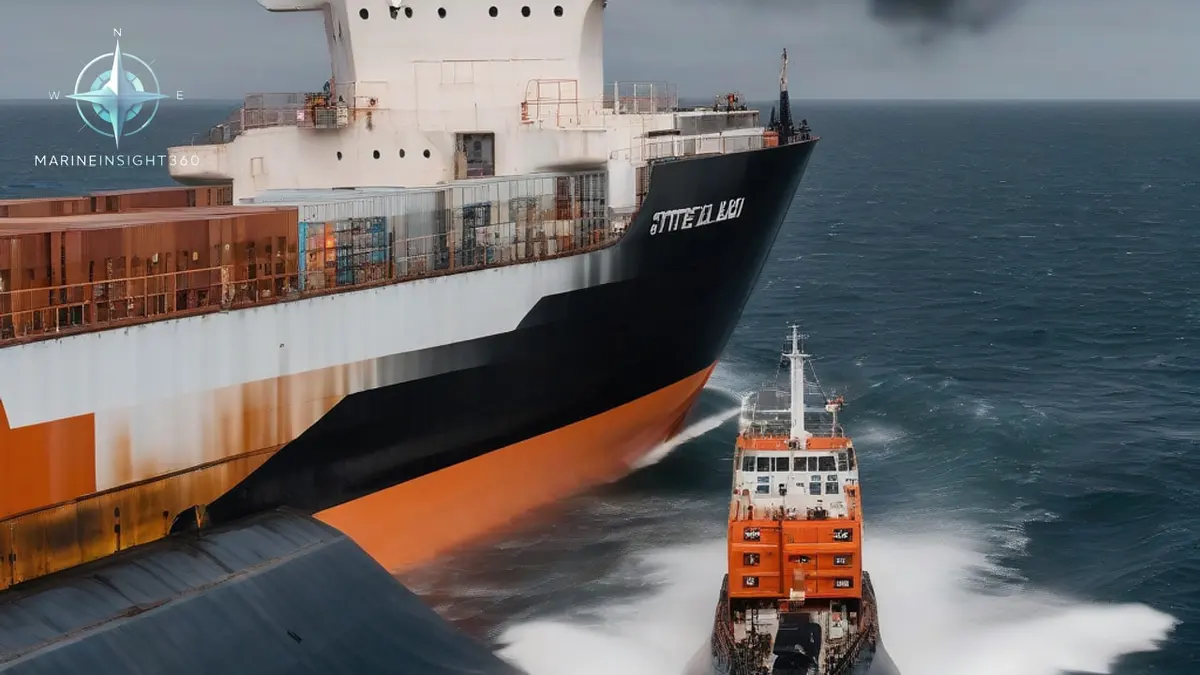
When does a boat become a ship? There is no single legal line. No international convention defines the boundary; instead, mariners use a mix of tonnage thresholds, capability tests and stubborn tradition. The most honest short answer: a vessel becomes a ship when it is large enough to carry its own boats and certified to trade in open ocean.
The collision regulations sidestep the question entirely. COLREGs simply defines a vessel as every kind of water craft used, or capable of being used, for transportation on water, which is why professionals reach for the word vessel whenever precision matters.
The tonnage thresholds where a boat becomes a ship in practice
Regulation attaches by size, and those attachment points serve as working boundaries. The IMO ship identification number scheme covers seagoing merchant ships of 100 gross tonnage and above, and the requirement to carry AIS starts at 300 gross tonnage for ships on international voyages.
The heaviest obligations arrive around 500 gross tonnage, where SOLAS construction and equipment requirements apply to cargo ships trading internationally. The Load Line Convention keys on length instead, applying from 24 meters (79 ft). Below those lines a skipper runs a boat in the eyes of most regulators; above them, the paperwork of a ship begins.
Gross tonnage measures enclosed volume, not weight. Two vessels of identical length can fall on opposite sides of a threshold because one encloses more space, which is why naval architects treat the labels as a continuum rather than a wall.
Many administrations also run separate codes for commercial craft under 24 meters, covering workboats, charter vessels and small passenger craft. Those codes exist precisely because such vessels are not ships, yet still need rules.
The ladder of thresholds a vessel climbs as it grows
Rather than one line, there is a staircase. The accumulation of certificates is what makes a vessel feel like a ship to the people running her.
- 24 meters in length: the Load Line Convention bites, and tonnage measurement under the 1969 Tonnage Convention applies on international voyages. The vessel stops being measured by a national small craft code and starts being measured by treaty.
- 100 gross tonnage: the IMO number scheme picks her up, and she acquires a permanent identity that follows her through every change of name, flag and owner.
- 150 gross tonnage for oil tankers, 400 for other ships: MARPOL Annex I certification and an Oil Record Book. The engine room now keeps a legal log of every bilge and sludge transfer, where a false entry is a criminal matter.
- 300 gross tonnage: AIS on international voyages, so she appears by name on every other bridge in the area.
- 400 gross tonnage: MARPOL Annex VI certification, where fuel changeover records and sulphur limits enter daily practice.
- 500 gross tonnage: the big one. SOLAS construction, machinery and life-saving requirements, the ISM Code with its safety management system and audits, and the ISPS Code with a security officer and plan.
Manning follows the same logic. STCW sets separate competency tiers for masters and chief mates on ships of 500 to 3,000 gross tonnage, and on ships of 3,000 and above. For engineers it switches on propulsion power instead, with the senior tiers keyed to main propulsion machinery of 3,000 kW and more. An officer can hold a certificate valid on one vessel and insufficient on a slightly larger one, which is the clearest practical answer to where the boundary sits.
The traditional tests mariners actually use
- The carrying test: a ship can carry a boat, but a boat cannot carry a ship. Lifeboats, rescue boats and tenders are the boats a ship carries.
- The crew test: a ship is run by a certificated master and officers holding STCW qualifications, the international standard for seafarer training, keeping a formal watch system.
- The water test: ships are built for open-ocean passages with the fuel, stores and stability documentation to match; boats work harbors, rivers, lakes and coastal waters.
- The size test: as a folk rule, anything much over 60 meters (197 ft) reads as a ship to most seafarers.
The exceptions that break every rule
Submarines are always boats. The habit dates from their early days as small harbor-defense craft and survives even for nuclear vessels longer than a football field; calling a submarine a ship marks you as an outsider in any navy.
Great Lakes bulk carriers run the other way. Lakers approaching 300 meters (984 ft) are called boats by their crews and their trade, purely by regional tradition, despite out-measuring most ocean-going ships.
Yachts muddy the water from a third direction. A 90 meter (295 ft) superyacht is a ship in every regulatory sense, certificated master included, yet her owner will call her a boat without hesitation, and large trawlers remain fishing boats in everyday speech no matter their tonnage.
Why the distinction matters beyond wordplay
The threshold a vessel sits on decides her safety certificates, manning scale, survey regime and inspection exposure. Crossing from boat to ship in regulatory terms adds class surveys, mandatory equipment and port state control attention, which is why some operators deliberately build to just under a threshold.
Short-sea coasters designed to sit just under 500 gross tonnage are a recognised type, carrying the deadweight of a larger vessel in the enclosed volume of a smaller one, because staying under the line avoids a whole tier of certification. The naval architecture is shaped by the certificate, not the other way round.
Insurance and charter parties care too. Recording tonnage and length accurately, rather than arguing over labels, is what keeps a casualty claim or an off-hire dispute out of arbitration.
A practical rule of thumb serves for everything else: use vessel when unsure, ship when the tonnage and certificates say so, and boat for anything you could hoist aboard something bigger. The Marine Insight 360 Glossary defines the tonnage, length and certification terms used above.
Sources and further reading
- International Convention on Tonnage Measurement of Ships, 1969 (IMO)
- International Convention on Load Lines, 1966 (IMO)
- International Convention for the Safety of Life at Sea (SOLAS), 1974 (IMO)
What to read next
Recommended Reading
Container Tracking: How Shippers Actually Follow a Box Across the Ocean
How container tracking works, from free carrier lookups to visibility platforms: what each tool layer does, what it costs, and how to pick for your volume.
How to Improve a RightShip Safety Score: What Actually Moves the Number
The RightShip Safety Score runs 1 to 5 and rebuilds as data arrives. Where scores are lost, what fixes them, and how long improvement takes.
How to Become a Shipbroker: Desks, Qualifications and Pay
How to become a shipbroker: which desks hire, how the ICS qualifying exams work, how commission and bonus pay is structured, and mistakes that stall careers.