
How to Update Nautical Charts: Paper Corrections, ENC Updates and the SOLAS Duty
A working method for updating paper charts and ENCs on board: weekly Notices to Mariners, temporary notices, ECDIS update checks and what inspectors look for.
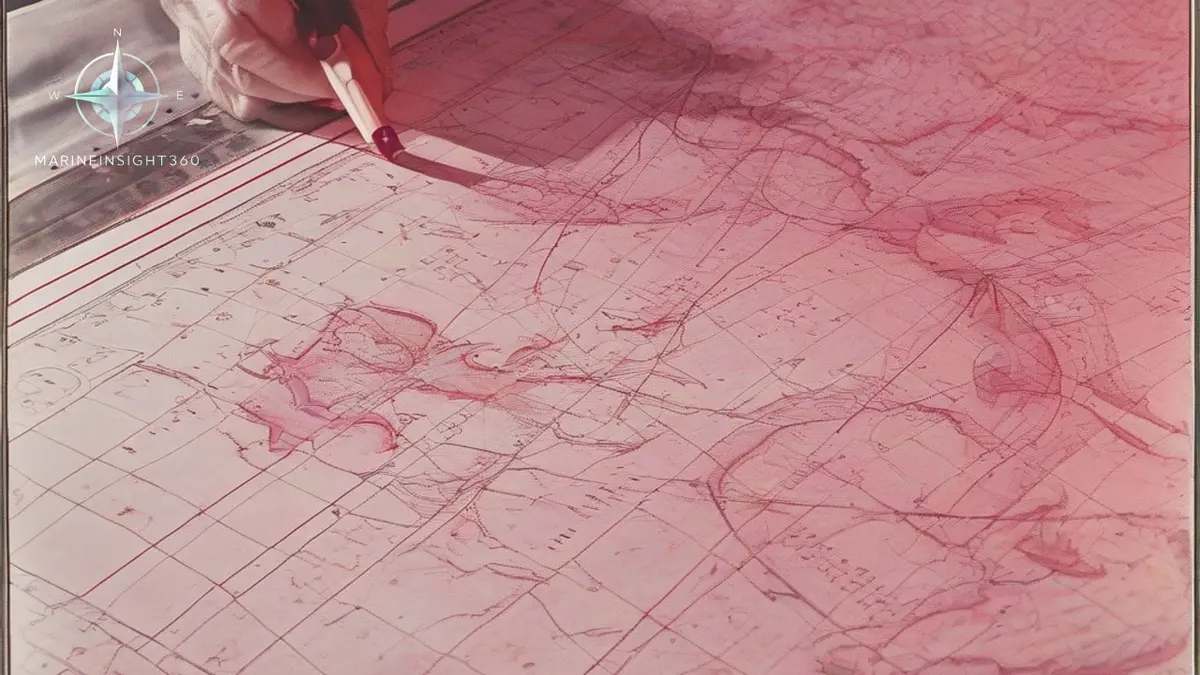
How to update nautical charts on board means running three streams in parallel. Weekly Notices to Mariners carry the permanent corrections. Temporary and preliminary notices cover short-lived changes. Navigational warnings arrive by NAVTEX or satellite during the voyage itself. SOLAS Chapter V requires every ship to carry charts and publications that are adequate and up to date for the intended voyage. A folio with missing corrections is a detainable deficiency.
Paris MOU, US Coast Guard and AMSA inspectors check the correction log early in a visit.
The method below is written for a second officer holding both a paper backup folio and an ECDIS running electronic navigational charts, which is the normal arrangement on merchant ships today.
Correcting paper charts, in the order that works
Weekly Notices to Mariners from a hydrographic office contain all corrections, alterations and amendments to that office's chart and publication series. The Admiralty series is the most widely carried worldwide and is published weekly, with equivalent national services covering home waters.
- Open the weekly edition and go to the index of charts affected. Compare it against the ship's chart folio index and mark only the charts actually carried.
- Enter each applicable notice number in the chart correction record against the affected chart, before doing any work. This is what makes an interrupted job recoverable.
- Work the correction on the chart in magenta ink, using the supplied tracing or block where one is provided. Blocks are pasted, not drawn.
- Write the year and notice number in the bottom left margin of the chart, in sequence after the previous entry.
- Initial and date the correction record entry.
- Enter temporary and preliminary notices in pencil, keep them on a separate list, and erase them the week they are cancelled.
New editions are not corrections. When a new edition is issued, the old chart is withdrawn from use and the replacement is brought up to date from its print date using the cumulative list of notices.
When a chart is bought or received, check its print date against the cumulative list and apply every notice issued since. A brand new chart delivered to the ship is not automatically corrected.
Updating ENCs and keeping ECDIS legal
ENC updating is synchronized with the same notice cycle, but the mechanics are different. Update files are issued weekly by the distribution service, arrive by DVD or over the ship's data link, and are applied to the base cells in strict sequence. An update applied out of order is rejected, and the cell then sits at an older state until someone notices.
The checks that matter each week:
- Open the ECDIS chart or update status display and confirm the last applied update number and date for the cells covering the intended voyage.
- Confirm the base cell edition. A new edition of a cell has to be loaded separately, exactly like a new edition of a paper chart.
- Check the permit or licence file expiry. Permits expire on a date, and expired cells stop updating without any dramatic warning.
- Read the update log for rejected or failed items rather than assuming a successful load.
- Verify that manually entered corrections, such as an urgent navigational warning added as a mariner's object, are still present after the automatic update.
Port state control officers use the ECDIS chart listing to check that ENCs are being kept up to date in accordance with SOLAS Chapter V, so the update status screen is effectively part of the ship's documentary evidence.
Navigational warnings are part of the update chain
Between weekly cycles, changes reach the ship as NAVAREA and coastal warnings by NAVTEX and satellite safety service, plus local port and pilot notices. Anything affecting the intended track has to be plotted on the chart in use or entered as a manual ECDIS update, and retained until the warning is cancelled or absorbed into a permanent notice.
A common failure is treating printed NAVTEX messages as read-and-file traffic. If a warning moves a buoy or reports a wreck on the planned route, it belongs on the chart and in the passage plan, not only in the NAVTEX log.
How to schedule the work so it does not collapse
Correction work is usually the second officer's responsibility, and the realistic time cost is a few hours a week for an average folio. Two habits keep it manageable. Do the corrections the week they arrive, because a backlog of four weeks takes far longer than four single weeks. And correct the charts for the next trade before the fixture is confirmed, since charts stowed for a future voyage still count as part of the folio.
What inspectors actually look at
- The chart correction record: last notice number applied, against the current date.
- Whether the charts for the actual voyage being made are held and corrected, not just the home trade.
- The ECDIS update status screen and permit validity.
- Temporary and preliminary notice list, and whether cancelled ones were removed.
- Whether the ECDIS software and presentation library are at the standard the ship's certification assumes.
- Backup arrangements, whether a second ECDIS or an updated paper folio.
The mistakes that cause detentions
Correcting charts the ship no longer carries while missing charts it does. Applying ENC updates out of sequence and clearing the error message. Letting an ENC permit lapse in the middle of a voyage. Leaving temporary notices in place after cancellation, which makes an inspector doubt the whole record. And relying on an automatic ENC load without ever opening the status display to confirm it worked.
Build the weekly check into the same slot every week and record it. Our Navigation and Seamanship section covers passage planning and ECDIS settings that depend on this data being current.
Sources and further reading
- ADMIRALTY: About Notices to Mariners
- Notices to Mariners: What They Are and How to Use Them
- ECDIS ENC Correction
- SOLAS Chapter V: Safety of Navigation
What to read next
Recommended Reading
How Are Electronic Charts Updated? ENC Corrections on ECDIS
Electronic charts are updated by weekly ENC correction files from hydrographic offices, applied in ECDIS. How the cycle works and where updates fail.
What Is Nautical Engineering? Fields, Roles and Career Routes
Nautical engineering covers the design and operation of ships and their machinery. How marine engineering, naval architecture and ocean engineering differ.
What Is DDP? Delivered Duty Paid Explained for Shippers
DDP means Delivered Duty Paid, the Incoterms 2020 rule placing maximum obligation on the seller. What it covers, the VAT trap, and when it is the wrong choice.