
Inside the Arleigh Burke Destroyer: What an 80th Keel Laying Represents
The US Navy lays the keel of its 80th Arleigh Burke destroyer. What a DDG-51 is, how Flight III differs, and how merchant crews should handle one at sea.
What an Arleigh Burke destroyer is
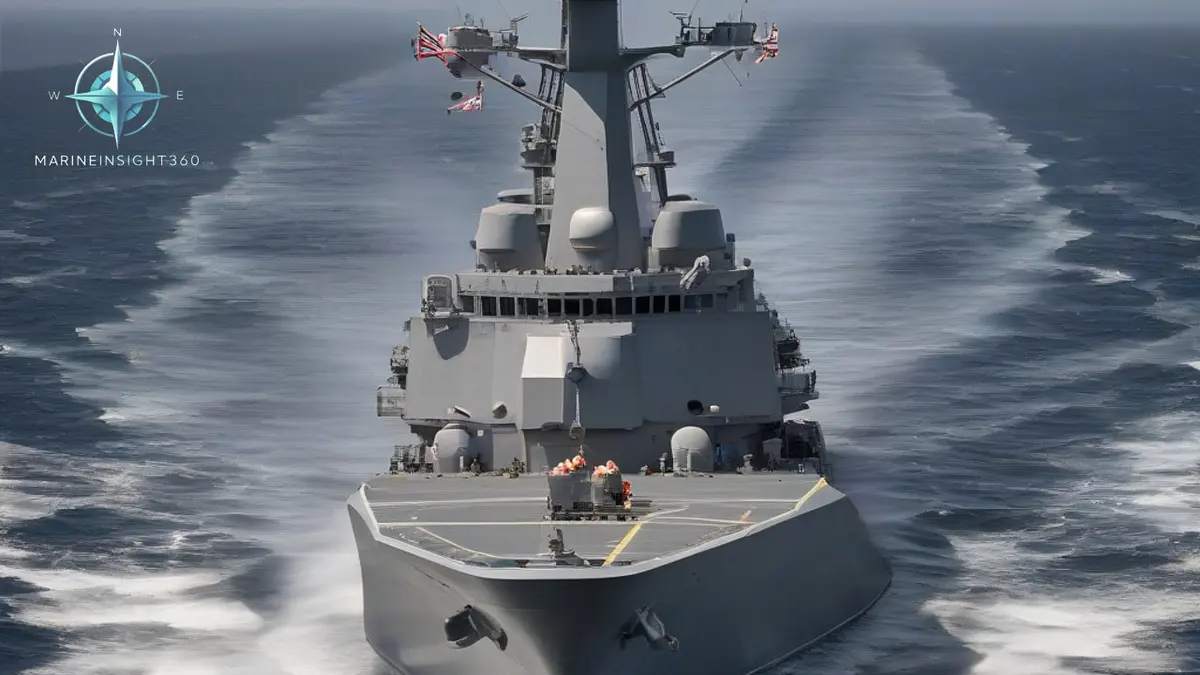
A yard notice reading 'US Navy lays keel of 80th Arleigh Burke destroyer' sounds routine. The number is the story. The Arleigh Burke class, designated DDG-51, is the longest production run of any US Navy surface combatant. Each hull is a guided missile destroyer of roughly 155 m (509 ft) length overall and about 20 m (66 ft) beam.
It was the first US Navy class designed from the keel up around the Aegis Combat System; the Ticonderoga-class cruisers carried Aegis first, on a hull adapted from the Spruance class. The lead ship entered service in 1991, and construction has run at two yards since 1988.
For merchant crews the class is simply the grey ship most likely to be sharing a chokepoint with them. Burkes carry out escort, presence and air defense tasking, which puts them in the Strait of Hormuz, the Bab el Mandeb approaches, the Malacca and Singapore Straits and the eastern Mediterranean, all places where commercial traffic is dense and sea room is short.
Flights I, II, IIA and III: what actually changed
The early flights
Flight I and Flight II ships were built without a helicopter hangar, carrying only a flight deck and refueling facilities. They were designed around the SPY-1D phased array radar, the sensor that defined Aegis for a generation.
Flight IIA
Flight IIA added a twin helicopter hangar and the supporting aviation facilities, which changed the stern arrangement and made the ships considerably more useful in surface search and anti-submarine work. Most of the class falls into this group.
Flight III
Flight III is the substantial redesign. It carries the AN/SPY-6(V)1 Air and Missile Defense Radar and the Aegis Baseline 10 combat system in place of SPY-1D, with the electrical generation and cooling capacity needed to run them. Length overall is quoted at 155.3 m (509.5 ft), and published displacement figures sit around 9,700 long tons, with some sources quoting about 9,200 tons full load.
The heavier air defense capability is what allows Flight III to take over the role the retiring Ticonderoga class cruisers have held.
What a keel laying means on a modern warship
The ceremony is older than the construction method. Modern destroyers are assembled from large pre-outfitted modules, so by the time a keel is authenticated a great deal of steel is already cut and joined. The milestone sequence a shipyard actually works to runs roughly: start of fabrication, keel laying and authentication, launch or float-off, builder's trials, acceptance trials with the Navy's inspection board, delivery, and finally commissioning. Years separate the first of those steps from the last.
The two builders are General Dynamics Bath Iron Works in Maine and HII Ingalls Shipbuilding in Mississippi, which have shared DDG-51 construction since the program began. Work is allocated in multi-year blocks, and a 2023 award covered six Flight III ships for Ingalls and three for Bath Iron Works across a five year deal.
Why the Navy is still building a design from the 1980s
Two replacement efforts did not deliver at scale. The Zumwalt class was truncated to three ships, and the next generation DDG(X) remains a design effort rather than a hull in the water. Meanwhile the Ticonderoga class cruisers that carried the fleet's air defense command role are retiring. Continuing the Burke line keeps two experienced yards in continuous work and puts SPY-6 radars to sea now rather than in the 2030s.
The trade-off is a hull form conceived in the 1980s carrying systems that demand more power, cooling and topside weight than the original margins assumed.
How merchant crews should handle a warship encounter
Warships are power-driven vessels under the Collision Regulations and owe the same duties as anyone else, but the practical picture is more complicated.
- They may genuinely be restricted. A destroyer conducting flight operations, replenishment at sea or towed array work may be restricted in her ability to maneuver and will display the relevant lights and shapes. Give her the room the signal asks for.
- Never pass between ships in a replenishment. Two ships steaming close abeam with a connected rig cannot alter for you. Pass well clear astern.
- Expect the challenge. Warships routinely call merchant vessels on VHF Channel 16 for identification. Answering with name, flag, last port, next port and cargo de-escalates faster than silence does.
- In US waters, keep the distance. A Naval Vessel Protection Zone extends 500 yards around US naval vessels. Proceed at minimum safe speed within that zone and do not close within 100 yards without permission from the naval vessel or the Coast Guard.
- AIS may be off. A warship operating with AIS silent will not appear on your display. Radar and a proper lookout stay the primary tools in a naval operating area.
Why the class matters to commercial shipping
Burkes are the hulls that escort tankers through contested chokepoints, hold the missile defense stations covering shipping lanes, and staff the multinational task forces that merchant operators report into. A steady build rate is the reason there are enough of them to cover more than one crisis at a time.
Masters routing through the Gulf, the Red Sea or the South China Sea should read the class alongside the reporting arrangements for those areas, covered in the Shipboard Operations section of Marine Insight 360.
Two Arleigh Burke destroyers ran into merchant ships in 2017. USS Fitzgerald collided with the containership ACX Crystal off Japan in June, and USS John S McCain collided with the tanker Alnic MC near the Singapore Strait in August. Seventeen sailors died across the two casualties. The NTSB investigated the McCain collision and published a marine accident report on it.
For a merchant bridge team the lesson is that the grey ship may not be handling as well as it looks. Both 2017 cases turned on failures on the destroyer's own bridge, one of them a mishandled transfer of steering control in dense traffic, and neither merchant vessel had warning. Treat a naval unit in a separation scheme as a close quarters situation and confirm intentions on VHF early.
Sources and further reading
- Arleigh Burke-class (DDG 51) Destroyers, US
- Navy Awards Ingalls 6 Flight III Arleigh Burke Destroyers, Bath Iron Works 3 as Part of 5-Year Deal
- DDG-51 Program Marks Start of Construction Milestones at BIW, HII
- DDG-51 Arleigh Burke - Shipbuilding
What to read next
Recommended Reading
Cadeler 20MW Wind Turbine Installation Vessel Keel Laid: Inside a Next-Generation WTIV
The keel laying of Cadeler's 20MW wind turbine installation vessel explained: crane capacity, deck area, jack-up limits and what the milestone means.

What Is a Duct Keel? The Pipe Tunnel Inside a Ship's Double Bottom
A duct keel is a watertight pipe tunnel in a ship's double bottom. How it is built, what runs through it, and the enclosed space risks crews must manage.
What Is the Keel in a Ship? Types, Function and Keel Laying
The keel is the backbone of a ship, running along the centerline of the bottom. Flat plate, bar and duct keels compared, plus why the keel laying date matters.