
Cadeler 20MW Wind Turbine Installation Vessel Keel Laid: Inside a Next-Generation WTIV
The keel laying of Cadeler's 20MW wind turbine installation vessel explained: crane capacity, deck area, jack-up limits and what the milestone means.
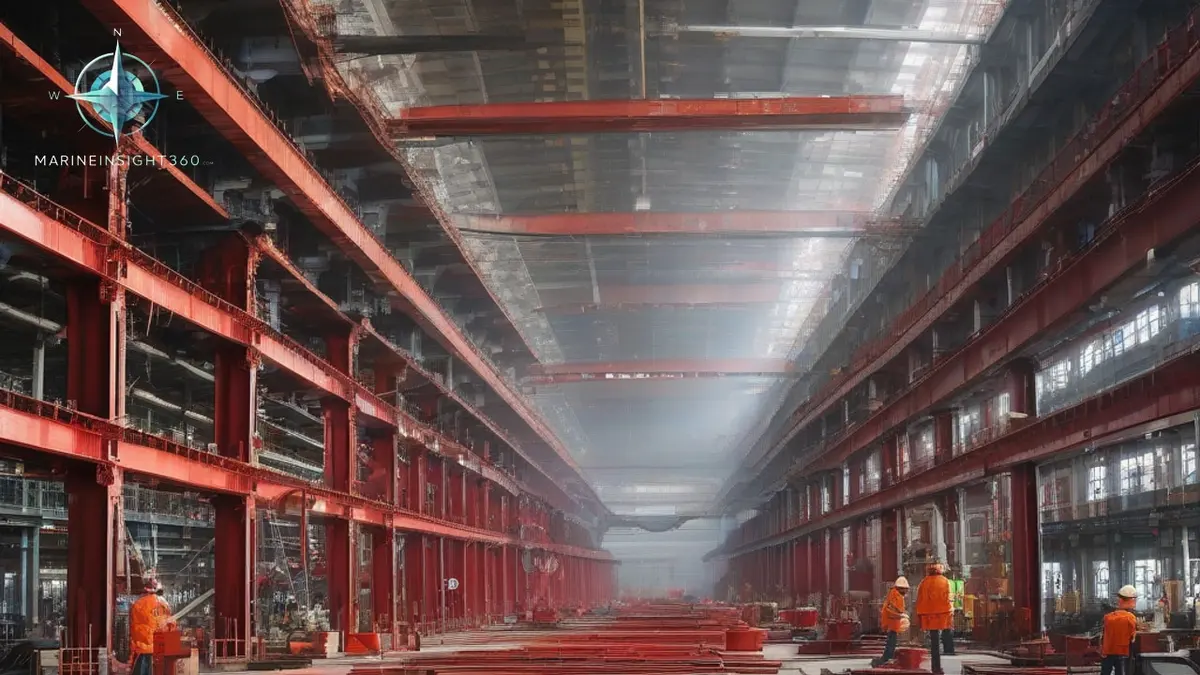
With the Cadeler 20MW wind turbine installation vessel keel laid at Hanwha Ocean in South Korea, a contract has become a hull. The ship is named Wind Maker and was ordered as Nessie. She is a GustoMSC NG-16000X jack-up, rated to install turbines of up to 20 megawatts in water depths to 65 meters (213 ft). Her 2,600-tonne leg-encircling crane comes from Huisman. Her main deck runs to 5,400 square meters (58,100 sq ft).
That pairing decides how many complete turbine sets she can carry per trip to a Dutch or UK North Sea field.
Keel laying is more than a photo opportunity. Under IMO practice the keel-laying date fixes which set of SOLAS, MARPOL and class requirements the ship is built to, so it locks the regulatory baseline for the vessel's whole life.
What the headline numbers actually control
Offshore wind newbuild announcements are full of tonnages that mean little without context. Three figures decide whether a wind turbine installation vessel (WTIV) can service a given project.
- Crane capacity at radius. A 2,600-tonne leg-encircling crane is not simply lifting a 2,600-tonne object. What matters is the load it can hold at the radius and height needed to place a nacelle on a tower whose hub sits well above 150 meters. Leg-encircling designs mount the crane around one jack-up leg, which puts the load path into the leg and the seabed rather than the hull, allowing far higher lifts than a deck-mounted crane of similar size.
- Deck area and deck strength. At 5,400 square meters, Wind Maker is sized to carry multiple full turbine sets per load-out. Each avoided return trip to the marshalling port saves a day or more of vessel time, and installation campaigns are costed in vessel days.
- Jacking depth. The 65 meter limit defines the geographic envelope. Beyond that, projects move to floating foundations, and the installation method changes from jacking up to dynamically positioned float-over and tow-out work.
Why 20MW turbines forced a new generation of vessels
Turbine growth has outrun installation tonnage for a decade. A jack-up sized for 6 to 8 MW machines cannot lift a 20 MW nacelle to the required height, cannot carry the blade lengths without overhang problems, and often cannot reach the water depths chosen for newer arrays. Rather than modify older units indefinitely, owners like Cadeler have ordered purpose-built hulls.
The vessel was ordered in 2021 by Eneti, which merged with Cadeler in 2023, and delivery was targeted for the first quarter of 2025 with a sister vessel following. Cadeler has since taken delivery of further next-generation units including Wind Pace, and continued launching additional WTIVs through 2025.
How a jack-up WTIV actually works on site
The working cycle is unfamiliar to most deep-sea mariners. The vessel transits to position under her own power, holds station on dynamic positioning while the legs are lowered to the seabed, then jacks the hull clear of the water on those legs. Preloading follows, where seawater ballast is used to load each leg beyond its expected working load to confirm the seabed will not punch through. Only once preloading is proved does the crane start lifting.
The failure modes crews train for
Punch-through, where a leg suddenly penetrates a weak soil layer, is the classic jack-up hazard and is why geotechnical survey data for every location is studied before arrival. Scour around the leg footprints, leftover footprint holes from a previous jacking position, and rapid weather deterioration during a lift are the other recurring problems. Installation windows are set by wave height and, critically, by wind speed at hub height rather than at deck level.
What it means for careers and for the North Sea supply chain
Each new WTIV creates demand for a specific mix of certificates: STCW deck and engineering competency plus dynamic positioning certification, jack-up and crane operations experience, offshore survival training such as GWO or OPITO, and in many cases an offshore endorsement recognized by the project's coastal state. Crews rotate rather than sail long contracts, and pay structures resemble offshore energy rather than merchant shipping.
For the wider supply chain, a vessel that can carry more complete sets and lift heavier nacelles shortens installation campaigns. That has knock-on effects on marshalling port selection, quay strength requirements, heavy-lift crawler crane availability ashore and the scheduling of cable-lay spreads. Ports competing for offshore wind work are being judged on load-bearing quay capacity and laydown area as much as on water depth.
Readers following newbuild programmes and offshore support tonnage can track further vessel reviews in our Ships and Vessels section, where jack-up, cable-lay and service operation vessel designs are covered as they enter service.
Sources and further reading
- Keel Laid for Cadeler's 20 MW Wind Turbine Installation Vessel
- Cadeler Takes Delivery of Large Wind Turbine Installation Vessel
- Wind Pace - Cadeler
- Vessel Review: Wind Ally, Cadeler's new turbine installation jackup
What to read next
Recommended Reading
What Is a Duct Keel? The Pipe Tunnel Inside a Ship's Double Bottom
A duct keel is a watertight pipe tunnel in a ship's double bottom. How it is built, what runs through it, and the enclosed space risks crews must manage.
Inside the Arleigh Burke Destroyer: What an 80th Keel Laying Represents
The US Navy lays the keel of its 80th Arleigh Burke destroyer. What a DDG-51 is, how Flight III differs, and how merchant crews should handle one at sea.
Amazon's Offshore Wind Power Deals and the Maritime Work Behind Them
Amazon has contracted most of the output of a German offshore wind farm. What corporate power deals mean for offshore vessels, ports, crews and navigation.