
Iran and Russia Conduct Joint Naval Exercises: What Merchant Crews Should Expect
Iran and Russia held joint naval exercises in the Gulf of Oman and northern Indian Ocean. Here is how merchant crews plan, report and transit around them.
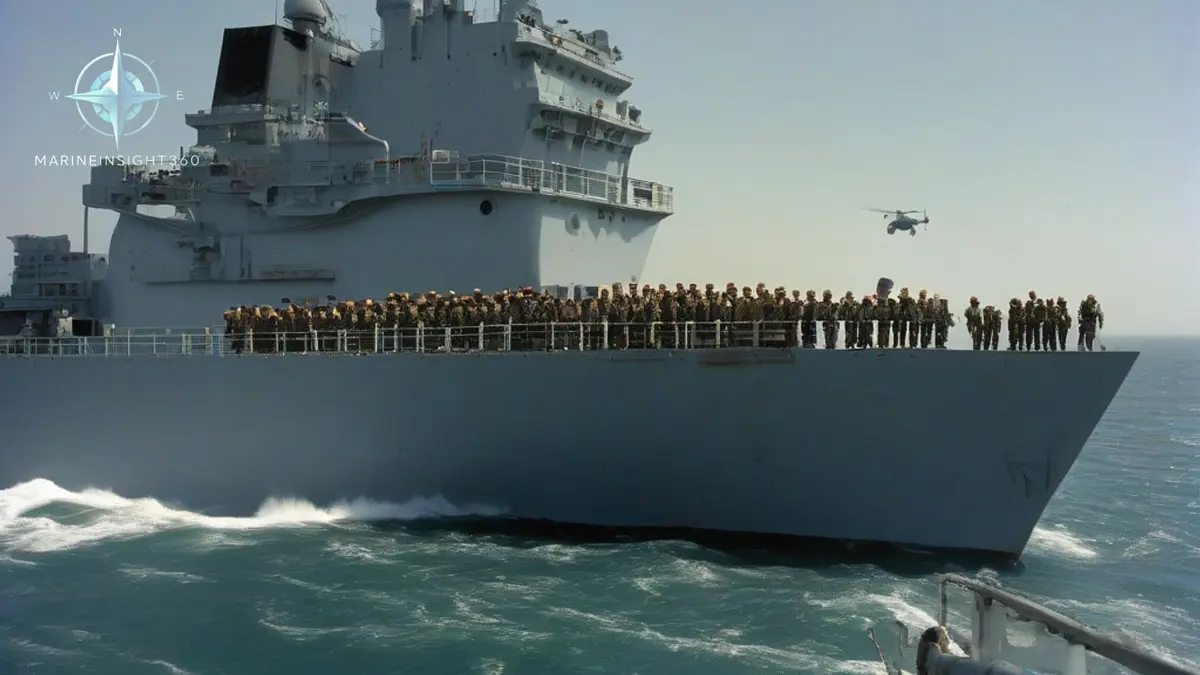
What Merchant Crews Should Expect from Iran–Russia Joint Naval Exercises
When Iran and Russia conduct joint naval exercises, the immediate question for a merchant bridge is: where is the exercise, when will it run, and what could be asked of the ship if challenged? The February 2026 drills covered the Gulf of Oman and the northern Indian Ocean, with activity also reported around the Strait of Hormuz. Russian corvette Stoiky arrived at Bandar Abbas, and the Iranian warship Alvand participated. Missile‑armed craft, helicopters, landing craft and special‑operations teams joined them.
Scenarios included anti‑piracy work and freeing a seized vessel. Ships on European, Japanese and South Korean charters transit the same waters daily, and UKMTO reporting lines remain the practical channel for anything unusual.
How to Find the Exercise Area and When It Is Active
Exercise areas are announced through the worldwide navigational warning service. In this region that means NAVAREA IX warnings and local NAVTEX broadcasts, supplemented by coastal‑state notices to mariners. Treat them in this order:
- NAVAREA and NAVTEX messages give the geographic box, the active period and the nature of the activity, including live firing.
- Print the messages, plot the boxes on the chart or ECDIS, and keep the message on the bridge until the period expires.
- UKMTO advisories remain the standard reporting and advisory channel for merchant traffic in the Gulf of Oman, Arabian Sea and Gulf.
Voluntary reporting into the UKMTO system means someone ashore knows where the ship is if the situation changes. Flag‑state and manager circulars often add charterer instructions and insurance conditions that are stricter than the navigational warning itself.
Operational Effects Crews Actually Notice
Radio and Satellite Navigation Interference
Elevated GNSS jamming and spoofing has been a recurring feature of periods of heightened naval activity in this region. Crews should cross‑check position by radar parallel index, visual bearings and depth rather than trusting a single GPS input, and should be alert to a position that jumps or a speed over ground that does not match engine revolutions. Set ECDIS alarms for position source loss and know how the ship reverts to dead reckoning.
Unfamiliar VHF Challenges
Warships from more than one navy operating in the same water means more challenges on VHF Channel 16 and on bridge‑to‑bridge working channels. Answer factually, give ship name, flag, last port, next port and cargo type, and log the exchange with time and position. Do not speculate, do not offer opinions on the conflict, and do not alter course under instruction from an unidentified caller without informing the company and, where relevant, UKMTO.
Compressed Sea Room
Exercise boxes push merchant traffic into narrower corridors, which raises close‑quarters risk between merchant ships rather than with warships. That is the collision risk to plan for. Increase bridge manning, brief the helmsman on manual steering readiness, and treat the corridor like a traffic separation scheme even where none is charted.
What a Bridge Team Should Have Ready Before Entering the Area
- Plotted exercise area on ECDIS with an alarm on approach, and an alternative route clear of it.
- Current NAVAREA IX and NAVTEX messages, printed and initialled by every watchkeeper.
- A written challenge‑response script agreed with the master, so responses are consistent regardless of who has the watch.
- Manual position fixing at set intervals, independent of GNSS.
- Company and UKMTO contact details posted at the conning position, not buried in a folder.
- A clear standing order on when the master must be called, written low enough that no watchkeeper hesitates.
Reading the Political Signal Without Over‑Reading It
Russia’s defence ministry framed the exercise as work to ensure the safety of civilian navigation, while Iranian commanders described it as a demonstration intended to deter unilateral action in the region. Separate Iranian Revolutionary Guard Corps drills ran in the Strait of Hormuz at around the same time.
Analysts have generally read the combined activity as signalling rather than preparation for a specific operation, and the naval capability exercised together remains modest compared with the forces routinely deployed by other navies in the same water.
For an operator, the useful conclusion is that joint drills are a scheduling and communications problem, not usually a reason to cancel a voyage. What raises real cost is the surrounding tension: war risk premiums, additional charterparty conditions, and crew agreements that give seafarers the right to decline transit into designated areas. Those consequences arrive whether or not the exercise itself affects the ship.
Next Steps for Shipping Professionals
Crews planning Gulf and Arabian Sea passages will find related routing and reporting guidance in our Navigation and Seamanship section. For real‑time updates, monitor UKMTO advisories and maintain a robust reporting routine.
Recommended Reading
Iran's Controlled Maritime Zone in the Strait of Hormuz: What It Means for Merchant Ships
Iran says vessels must seek authorization to transit the Strait of Hormuz. What the controlled maritime zone means for passage rights, GNSS loss and planning.
Do Merchant Marines Wear Uniforms? What Crews Actually Wear at Sea
Merchant marines do wear uniforms, but not all day and not on every ship. How stripes, epaulettes and department insignia work, and what crews wear on watch.
Iran's New Maritime Oversight Zone Across the Strait of Hormuz: What It Means for Merchant Ships
Iran has defined a maritime oversight zone across the Strait of Hormuz. What the redrawn routing, IRGC coordination and reporting mean for merchant ships.