
Iran's Controlled Maritime Zone in the Strait of Hormuz: What It Means for Merchant Ships
Iran says vessels must seek authorization to transit the Strait of Hormuz. What the controlled maritime zone means for passage rights, GNSS loss and planning.
What Iran has announced
Iran says it has created a controlled maritime zone covering the Strait of Hormuz. It is administered by a body Tehran calls the Persian Gulf Strait Authority. Under the announcement, vessels are expected to coordinate with that authority and obtain authorization before transiting. The authority published the limits on social media. The eastern boundary runs from Kuh-e Mubarak in Iran to a point south of Fujairah in the United Arab Emirates.
The western boundary runs from the tip of Qeshm Island to Umm al Quwain.
The declaration followed months of escalation, including strikes on Iran in February and a ceasefire that took effect on 8 April without a permanent settlement behind it. For shipowners the operative question is not the politics. It is whether a transit can be planned, insured and executed safely under a regime that most flag states do not recognize.
Why the legal position matters on the bridge
The Strait of Hormuz is a strait used for international navigation. Under the UN Convention on the Law of the Sea, ships of all states enjoy the right of transit passage through such straits, and coastal states may not hamper or suspend it. Iran signed UNCLOS but has not ratified it and has long argued for a narrower reading than the convention text supports.
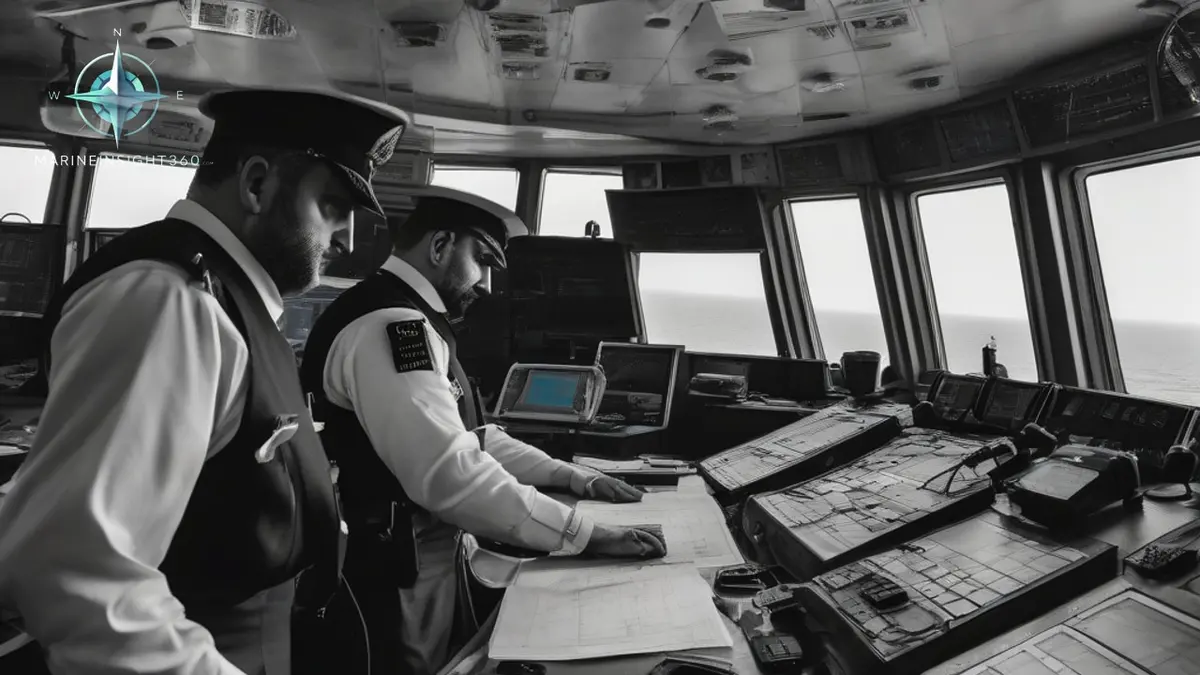
No master will settle that argument at sea. What matters at the conning position is that an instruction from a shore authority may carry an implied threat of interference, and that complying, refusing or delaying each carry their own risk. Instructions should come from the company in writing before the transit begins, not be improvised over VHF at three in the morning.
Industry guidance published in May 2026
Industry bodies issued dedicated guidance on the safe management of vessel transit through the Strait of Hormuz in May 2026, complementing the existing best management practices for maritime security. It is built around voyage specific threat and risk assessment rather than a fixed checklist, because conditions in the strait now change faster than any standing procedure can track.
That guidance describes an environment that can include kinetic threats, electronic interference, uncertain reporting and compressed or unpredictable traffic flow. When a transit window opens after a period of closure, ships bunch together. Forced reductions in closest point of approach and limited sea room for avoiding action follow, and collision and grounding risk climbs sharply during those surges.
Navigating when GNSS cannot be trusted
Position spoofing and jamming are routine around Hormuz. Satellite positioning should not be relied on as the primary fix for the transit. Shorten fix intervals and validate position from independent inputs: radar ranges and parallel index lines on charted features, visual bearings, echo sounder against charted depth, and a dead reckoning position maintained throughout.
- Pre-plan parallel index lines and clearing bearings for the whole approach, not only for the traffic separation scheme.
- Cross-check the chart display against the radar overlay continuously and log any discrepancy with a time.
- Brief the team that AIS data from other vessels may be false, and that a radar contact outranks a symbol on a screen.
- Treat track control steering with suspicion whenever the position input is suspect.
Reporting, watchkeeping and crew protection
Register the transit with the relevant reporting authorities and keep their advisories current on board rather than filed. Increase lookouts, control access to the bridge and machinery spaces, test communications before entry, and rehearse the response both to an approach by small craft and to an instruction to alter course. Crew welfare belongs in the same risk assessment: a team that has transited under threat several times in one rotation is fatigued, and fatigue shows up first in watchkeeping errors.
Commercial consequences run in parallel. War risk premiums, additional breach clauses and the owner right to decline an unsafe voyage order all turn on documented assessment. A master who records the assessment, the company instruction and the reasoning behind each decision protects the crew and the owner position long after the transit is over.
Why it matters beyond the Gulf
A large share of the world seaborne oil trade passes through Hormuz, along with much of the liquefied natural gas moving out of Qatar. A control regime does not have to close the strait to change the market. Authorization steps and unpredictable delay move waiting time, insurance cost and crew availability first, and those feed straight into freight rates.
Operators trading to Gulf ports should assume voyage planning for this region now needs a named person ashore, a live advisory feed, and a decision tree agreed before the ship is fixed.
Spoofing does not announce itself as a fault. The ECDIS shows a position that looks plausible and no alarm trips. The first sign is a radar overlay that no longer fits the coastline. Track control steering then chases the false fix and walks the ship off the planned line. Vessels in the Gulf have been observed reporting positions well inland, which is the signature of a spoofed fix rather than a receiver defect.
The commercial failures follow a pattern. A ship that entered a listed area without giving notice to war risk underwriters can find cover in dispute after the event. A boarding that was not logged with times, positions and VHF channel leaves nothing to support a later claim. Crews who transit repeatedly in one rotation accumulate fatigue, and fatigue shows up as missed lookout handovers and late alterations.
Sources and further reading
- SAFETY4SEA: Iran establishes controlled maritime zone in the Strait of Hormuz
- Iran International: Iran's new strait authority announces controlled maritime zone at Hormuz
- ICS: Industry Guidance on Vessel Transit through the Strait of Hormuz
- US MARAD Maritime Advisory 2026-004: Persian Gulf, Strait of Hormuz and Gulf of Oman
What to read next
Recommended Reading
Iran's New Maritime Oversight Zone Across the Strait of Hormuz: What It Means for Merchant Ships
Iran has defined a maritime oversight zone across the Strait of Hormuz. What the redrawn routing, IRGC coordination and reporting mean for merchant ships.
Iran's Strait of Hormuz Maritime Zone Claim and What It Means for Shipping
Iran claims regulatory control over the Strait of Hormuz. Here is what transit passage law says, how traffic has collapsed, and what masters should do.
Iran's Threat to Burn Ships in the Strait of Hormuz: What It Means at Sea
Iran has threatened to burn ships in the Strait of Hormuz and mined the corridor. What the threat means for transit planning, war risk cover and crews.