
Iran's New Maritime Oversight Zone Across the Strait of Hormuz: What It Means for Merchant Ships
Iran has defined a maritime oversight zone across the Strait of Hormuz. What the redrawn routing, IRGC coordination and reporting mean for merchant ships.
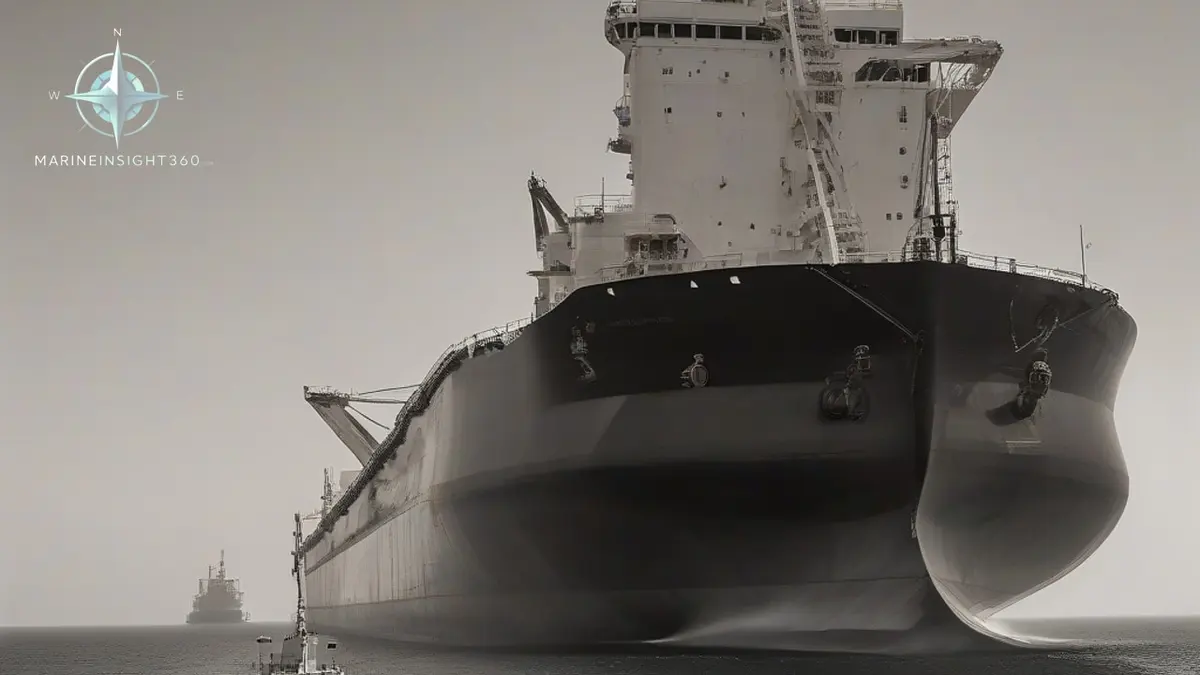
What the new maritime oversight zone across the Strait of Hormuz claims
Iran's self-declared Persian Gulf Strait Authority has published a geographic definition of the maritime oversight zone it claims across the Strait of Hormuz. It is the clearest statement yet of a permission-based transit regime. The waterway normally carries around 20 percent of the world's seaborne oil every day. Vessels are directed to use designated routes and to coordinate with the Islamic Revolutionary Guard Corps Navy. That is a claim of administrative control over a strait used for international navigation.
It matters well beyond the ships transiting this week.
The routing has changed and the IMO scheme is suspended
The traffic separation scheme that governed Hormuz for decades was proposed jointly by Iran and Oman and adopted through the IMO's ships' routeing system. It is currently suspended, with no clear signal of a return to normal routing.
Iran's Ports and Maritime Organization has issued a redrawn traffic separation scheme, citing the war situation in the Gulf and the risk of collision with anti-ship mines. Under it:
- Inbound traffic is routed between the islands of Qeshm and Larak, a lane overseen by the IRGC.
- Outbound traffic passes just south of Larak, inside Iranian waters and within easy reach of IRGC escorts, boardings and vessel identity verification.
- The United States has established an enhanced security area south of the original scheme, and some vessels are transiting through Omani territorial waters south of it instead.
As of mid-August 2026, Iran and Oman were reported to be close to finalizing a bilateral arrangement covering routing coordinates, Iranian oversight of navigation and security, a disputed fee structure, and an explicit Iranian ban on vessels with United States or Israeli links.
Why a coastal state cannot simply gate an international strait
Hormuz is a strait used for international navigation joining two areas of high seas, and the law of the sea treats such straits differently from ordinary territorial waters. The regime of transit passage gives ships continuous and expeditious passage that a bordering state may not suspend, hamper or make conditional on permission. A fee charged for the right to pass, or a ban keyed to a vessel's ownership connections, sits squarely against that principle.
Ratification complicates the legal argument. Iran signed the convention but has not ratified it, and the United States is not a party either, although both accept large parts of it as customary law. That dispute will run for years. Masters and operators have to make decisions this week.
What masters and operators should actually do
- Report in. Register the transit with UKMTO under its voluntary reporting area procedures and read the current joint maritime information centre advisory notes before the passage plan is signed off. They carry the routing status that changes fastest.
- Check the ownership question before fixing. The stated ban criteria reach ownership, management, charterer and prior port calls, not just flag. Screening has to run the whole chain.
- Plan for a boarding. Brief the crew on how an armed boarding will be handled, who speaks, where documents are held, and what happens to the citadel plan when the boarders are a state actor rather than pirates.
- Harden and prepare. Extra lookouts, engine on standby, manned steering gear, reduced sea room procedures, fire and damage control parties closed up, and an AIS policy decided before the approach rather than during it.
- Settle the commercial cover first. Notify war risk underwriters, confirm additional premium and any breach clause notice period, and check the charterparty war risk clause for the right to refuse the voyage.
- Handle the crew properly. Collective agreements covering high risk areas commonly carry a bonus, a doubled compensation entitlement and a right to refuse to sail. Consent obtained in advance is worth more than an argument at the pilot station.
The mine threat changes the navigation problem
A stated mine risk narrows a strait that is already tight. Routing outside a declared lane stops being a free choice, and the deep water available to a laden VLCC is limited to begin with. Under-keel clearance planning, the loss of room for large avoiding alterations, and naval traffic operating without AIS all push in the same direction: earlier decisions, lower speed, and a bridge team larger than the minimum.
Why this matters beyond one strait
A permission-based Hormuz would set a precedent that any state bordering a chokepoint could copy, and the commercial consequences reach every importer of crude and LNG in Europe, Japan and Korea. The practical answer for now is discipline: current UKMTO guidance, a screened ownership chain, a war risk position agreed before fixture, and a passage plan written for a suspended traffic separation scheme rather than for the lanes still printed on the chart.
The navigational failures in a suspended scheme are predictable. Ships bunch when a window opens, and closest point of approach shrinks to a cable or less. A laden VLCC needs sea room measured in miles to alter substantially, so late action is no action. Squat in the shallower parts of the strait eats under-keel clearance that the loading plan assumed was there.
Dark transits produce their own casualties. A ship running without AIS is invisible to the plot of every other bridge in the lane. Radar alone in a confused traffic picture is how a near miss becomes a collision. Boardings fail differently. A crew drilled only for pirates may lock down the citadel against an armed state boarding party, which turns a document check into a standoff.
Sources and further reading
- Iran Draws New Maritime Oversight Zone Across Strait of Hormuz
- Iran Publishes Redrawn Traffic Scheme for Strait of Hormuz
- IMO: Middle East and the Strait of Hormuz
- Industry Transit Advice, Persian Gulf, Strait of Hormuz and Sea of Oman
What to read next
Recommended Reading
Iran's Controlled Maritime Zone in the Strait of Hormuz: What It Means for Merchant Ships
Iran says vessels must seek authorization to transit the Strait of Hormuz. What the controlled maritime zone means for passage rights, GNSS loss and planning.
Iran's Strait of Hormuz Maritime Zone Claim and What It Means for Shipping
Iran claims regulatory control over the Strait of Hormuz. Here is what transit passage law says, how traffic has collapsed, and what masters should do.
Iran's Threat to Burn Ships in the Strait of Hormuz: What It Means at Sea
Iran has threatened to burn ships in the Strait of Hormuz and mined the corridor. What the threat means for transit planning, war risk cover and crews.