
Do Merchant Marines Wear Uniforms? What Crews Actually Wear at Sea
Merchant marines do wear uniforms, but not all day and not on every ship. How stripes, epaulettes and department insignia work, and what crews wear on watch.
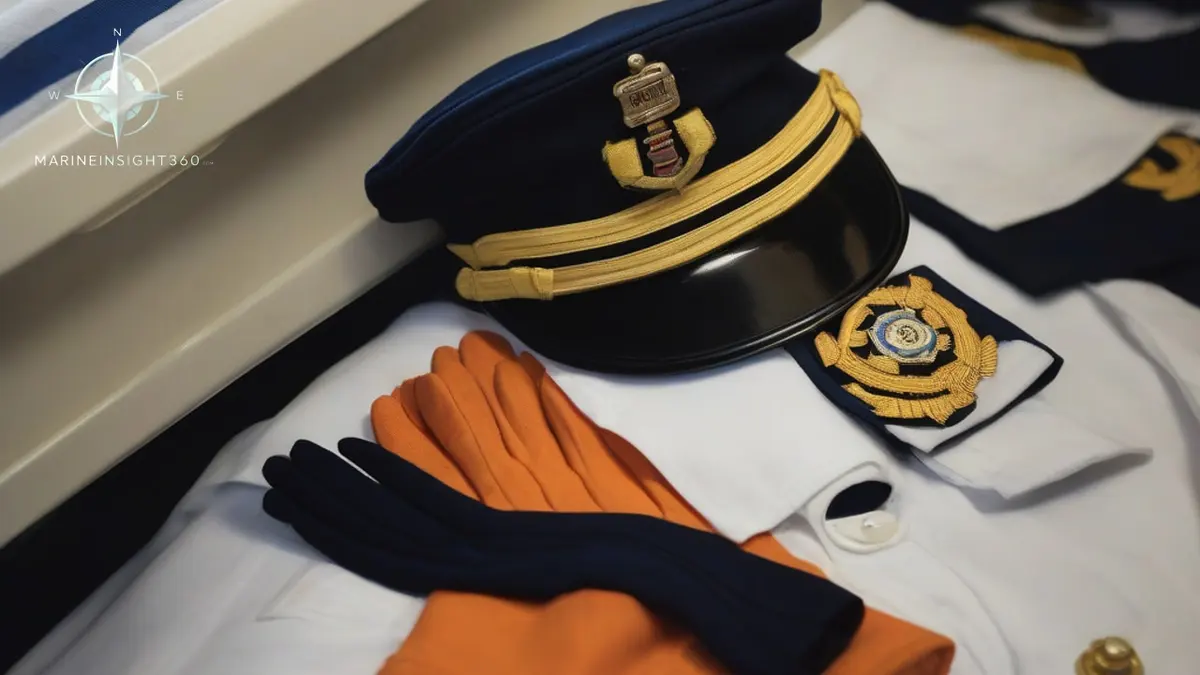
Do merchant marines wear uniforms? Yes, though the full uniform is worn far less of the time than films suggest. Officers on most commercial ships hold one and wear it for arrival and departure, for port state and class inspections, for pilot boardings, official visits and formal dinners, and on passenger ships for any public duty.
For routine work at sea and in the engine room the working dress is a boiler suit and personal protective equipment, not a white shirt and shoulder boards.
The other point worth understanding early is that merchant mariners are civilians. Uniform in the merchant service is largely a matter of company policy, tradition and the trade the ship works in, not military regulation. A tanker running a shuttle route may see uniform worn twice a month. A cruise ship crew wears it every working hour.
How merchant navy stripes and insignia work
The stripe system is broadly consistent across the English speaking merchant services, worn as sleeve lace on a jacket or as shoulder boards on a white shirt.
- Four stripes. Master, and in the engine department the chief engineer
- Three stripes. Chief mate, and the second engineer
- Two stripes. Second mate, and the third engineer
- One stripe. Third mate, and the fourth engineer
- Half stripe or plain board. Cadets and trainee officers, with company specific markings
The device sitting above the stripes identifies the department rather than the rank. On American vessels the deck department wears a fouled anchor, engineers wear a propeller, and the steward department has historically used crossed quills. Electro-technical officers, medical staff and pursers carry their own devices. That is why two officers with the same number of stripes can be doing completely different jobs, and why reading the device matters more than counting gold.
Cruise lines extend the same system across the hotel side. Hotel directors, chief pursers, food and beverage managers and doctors all wear graded boards, which is how passengers can identify who to approach without knowing the organizational chart.
What the standard uniform consists of
A typical merchant navy officer uniform kit includes:
- Navy or black trousers with a white short sleeve shirt, worn with shoulder boards, for normal duty dress
- A navy or black tie with a long sleeve shirt for more formal occasions
- A navy jacket or reefer with sleeve lace and a peaked cap carrying the company or service badge
- Tropical whites, a white shirt and white trousers or shorts, worn in warm climates and on passenger vessels
- Black shoes, plus a boiler suit or coverall as everyday working dress
Companies specify the details, and the cap badge, the shoulder board backing color and the button pattern are usually company property rather than an industry standard.
When merchant marines wear uniforms and when they do not
The pattern across the merchant fleet splits by trade.
Passenger ships. Full uniform, all the time, for every department. Passengers need to identify crew instantly in normal operation and in an emergency, so uniform discipline on cruise ships and passenger ferries is the strictest in the industry.
Tankers, bulk carriers and container ships. Working rig dominates. Coveralls, safety shoes, helmet, gloves and eye protection are the actual daily clothing, and uniform comes out of the wardrobe for port entry, inspections, agent and surveyor visits, and photographs. Many companies require the officer of the watch to be in uniform shirt on the bridge in port.
Offshore support and specialist vessels. Often uniform free apart from branded shore rig, with heavy emphasis on the offshore PPE standard instead.
Cadets and academies. Uniform is compulsory and heavily enforced. Cadets at maritime academies in the US, UK, Australia and Europe wear uniform ashore as well as afloat, which is where most of the habit is formed.
Why the working clothes matter more than the uniform
The clothing that actually protects a mariner is the working rig, and its specification is a safety management issue rather than a style one. Coveralls need to be flame retardant on tankers and antistatic in cargo areas. Long sleeves stay rolled down in the engine room because hot surfaces and rotating machinery do not forgive bare skin. Safety shoes carry a toe cap and an anti-slip sole for wet steel decks.
Occupational safety and health obligations under the Maritime Labour Convention 2006 and the ship safety management system under the ISM Code place the duty on the company to provide that equipment and on the seafarer to use it. A boiler suit is not optional dress; it is regulated protective clothing.
Does US Merchant Marine uniform differ from the UK Merchant Navy?
The systems are close cousins with different vocabulary. The US uses the terms Merchant Marine and merchant mariner, and licensing runs through the Merchant Mariner Credential. The UK uses Merchant Navy and Certificate of Competency issued by the Maritime and Coastguard Agency. Rank stripes and the general uniform pattern are broadly interchangeable.
One American distinction is worth knowing. US Merchant Marine officers who qualify for United States Maritime Service appointments may wear USMS shoulder marks and sleeve stripes appropriate to their rank and branch, which introduces additional devices such as the wreathed anchor for a master and a three bladed propeller for an engineer holding equivalent rank. That is a service appointment, separate from the commercial company uniform.
What to buy before your first ship
Do not buy a full uniform kit before you know the employer. Companies supply or specify shoulder boards, cap badges and jacket buttons, and a generic set often has to be replaced. Buy good safety shoes, several coveralls and a decent set of working gloves first, then order the dress items once the joining instructions arrive. Our Careers section covers joining requirements, documentation and what to pack for a first contract.
Sources and further reading
- Merchant Navy Uniform with Marine Epaulettes
- Merchant Navy Uniform Guide: Ranks, Insignia and Standards
- Stripes on Ship Crew Uniforms: Decoding their meaning
- Cruise Ship Staff and Epaulettes on their Work Wear
What to read next
Recommended Reading

Container Tracking: How Shippers Actually Follow a Box Across the Ocean
How container tracking works, from free carrier lookups to visibility platforms: what each tool layer does, what it costs, and how to pick for your volume.
Chinese and Russian Warships Sail Around Japanese Islands: What Merchant Crews Need to Know
Chinese and Russian warships sail around Japanese islands on joint patrols. The straits involved, the passage rules that apply and safe bridge practice.
Iran and Russia Conduct Joint Naval Exercises: What Merchant Crews Should Expect
Iran and Russia held joint naval exercises in the Gulf of Oman and northern Indian Ocean. Here is how merchant crews plan, report and transit around them.