
MS Estonia: What Sank the Ferry and What It Changed
The MS Estonia sank in the Baltic in September 1994 with 852 lives lost. What the bow visor failure showed, and how ro-ro ferry rules changed.
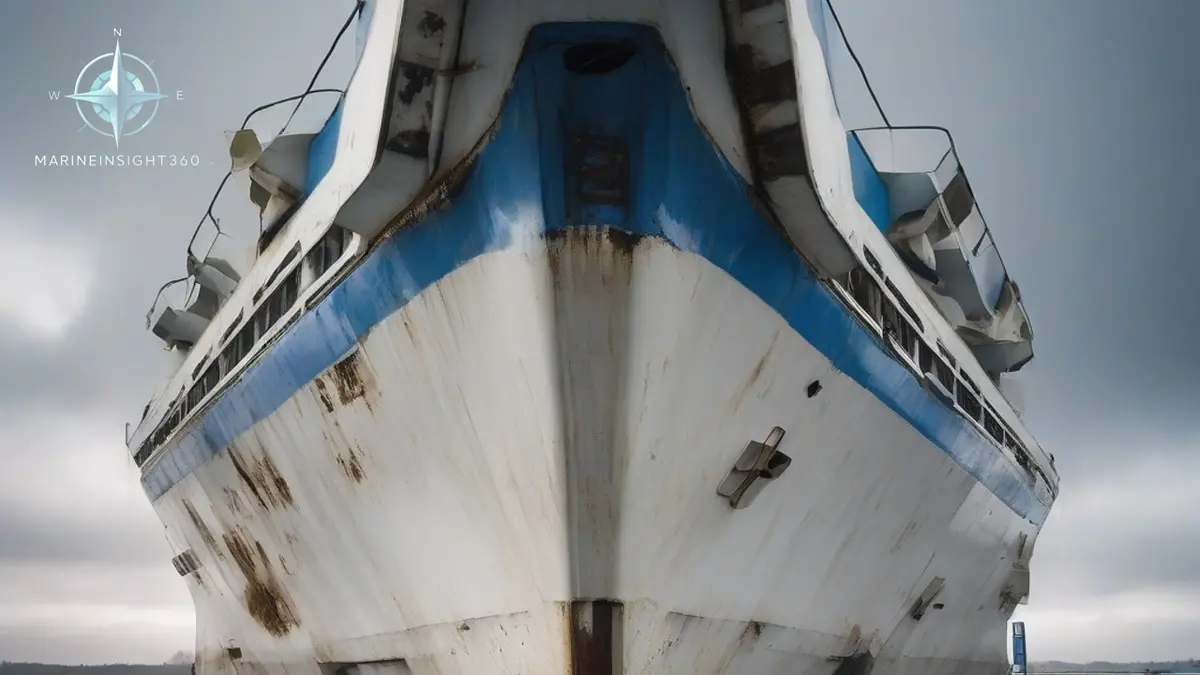
The MS Estonia was a ro-ro passenger ferry on passage from Tallinn to Stockholm. She sank in the northern Baltic Sea in the early hours of 28 September 1994. Of the 989 people on board, 852 died and 137 survived. It remains one of the deadliest peacetime maritime disasters in European waters. The cause was the failure of the bow visor in heavy weather.
The sequence was short, and that is why so few people got out. The visor tore away and pulled the bow ramp partly open, water entered the car deck, free surface across that undivided deck destroyed transverse stability, and the ship took a heavy starboard list and sank less than an hour after the first distress call.
What happened on the night of 28 September 1994
The ferry sailed from Tallinn on the evening of 27 September and met a westerly gale in the open Baltic, with a significant wave height reported at around four meters (13 ft). Those are ordinary autumn conditions on that route. The ship was making close to full speed with the sea on the bow.
Crew below decks reported metallic banging from the bow area before the failure. The visor attachments gave way under repeated wave impact, the visor hinged forward and off, and it dragged the ramp behind it. Water then reached the vehicle deck at a rate no drainage arrangement could absorb.
Why the bow visor failed
A bow visor is a hinged shell that lifts clear so vehicles can drive straight through the bow, and it takes direct wave impact while being held by locking devices at the sides and bottom.
The 1997 joint investigation by Estonia, Finland and Sweden found the locking devices were not strong enough for the loads a ship of that size meets in a Baltic gale, and that the design load assumptions, the approval process and the survey regime had all missed the shortfall.
The findings were explicit that this was a systemic failure rather than one broken part or one bad decision on the bridge. The chain ran from an inadequate regulatory framework through design and construction, then through weak oversight, deviations in certification, and the working practices and safety culture of the industry at the time.
Free surface on an open vehicle deck
The physics that sank the Estonia is the reason ro-ro passenger ships are treated as a special case in stability rules. A vehicle deck is wide, undivided and high in the ship. Water on it does not stay where it enters: it runs to the low side, shifts the center of gravity off the centerline, increases the heel, and pulls still more water to the low side.
A few hundred tonnes on a vehicle deck can do what several thousand tonnes in a double bottom cannot. Once the deck edge submerges, the ship is no longer recovering. The list also made stairways and alleyways effectively impassable, so most passengers in cabins below the vehicle deck never reached the boat deck.
What the reopened investigation found
Underwater footage released in 2020 showed damage on the starboard hull that had not been described before, and public pressure led Estonia, Finland and Sweden to reopen the case. Sweden amended the law protecting the wreck site so survey work could be carried out. Investigators ran new seabed surveys, raised the bow ramp in 2023 and carried out fresh computational modeling.
The conclusion did not change the original finding. Examination of the recovered ramp and the modeling were consistent with the 1997 conclusion that the visor failed under wave loading, the ramp then opened, and ingress through the bow led to capsize. Alternative explanations, including water entering through a rupture or other opening on the starboard side, were found to be inconsistent with the calculations, the witness statements and the physical evidence collected.
What changed in ro-ro passenger ship rules
- Damage stability. The 1995 SOLAS conference tightened survivability standards for existing ro-ro passenger ships and set a compliance timetable for them.
- Water on deck. The 1996 Stockholm Agreement added a regional water-on-deck standard for ro-ro passenger ships in north west European and Baltic waters, requiring them to survive a specified depth of water on the vehicle deck.
- Door monitoring. Indicator lights and television surveillance of bow, inner and stern doors became standard, so the bridge can see the actual condition of the closures rather than assume it.
- Evacuation. Requirements covering evacuation analysis, fast rescue boats, marine evacuation systems and immersion suit provision were strengthened.
- Safety management. The ISM Code, adopted in 1993, became mandatory for passenger ships in 1998, placing a documented safety management system and a designated person ashore behind every operation.
What the case still teaches working crews
Three lessons keep their value. A closure device is a structural member: a bow visor, a stern ramp or a watertight door is part of the hull envelope and deserves the same inspection discipline as a hull plate. Unusual noise from the bow in heavy weather is a reportable event, not a nuisance to be tolerated until the sea moderates.
And an accepted design load can be wrong, which is why damage reports and near misses need to travel back to class and flag rather than being closed out on board.
The wreck lies in roughly 80 meters (262 ft) of water in the northern Baltic and is protected as a grave site by treaty between Estonia, Finland and Sweden.
Next step: if your ship operates with bow, stern or side closures, confirm that the door indicator and surveillance system is tested at the interval set in the safety management system and that each test is recorded. The Marine Insight 360 Knowledge Base covers ro-ro stability and closure inspection in more detail.
The bodies behind those changes are worth naming. The 1995 amendments and the wider ro-ro safety work were adopted at the IMO, and the Stockholm Agreement was a regional undertaking by north west European administrations. Enforcement then sits with flag states and, at the berth, with port state control officers under the Paris MoU. They check door indicator systems and watertight closures on ro-ro passenger ships.
Class carries part of the load as well. Societies such as DNV, Lloyd's Register and Bureau Veritas approve the structural design of bow and stern closures and survey them in service. The joint investigation was blunt that this approval and survey chain had not caught the shortfall. Door securing arrangements now attract specific attention at survey rather than being treated as fittings.
Sources and further reading
- Swedish Accident Investigation Authority: assessment of new information on the sinking of M/V Estonia
- SAFETY4SEA: Investigation concludes that MS Estonia sank due to failure of bow section
- IIMS: MV Estonia investigation closed as incident due to bow failure
- ERR News: Official investigation finds no new causes in 1994 Estonia ferry sinking
What to read next
Recommended Reading
The Kursk Submarine Disaster: What Happened and What It Changed in Submarine Rescue
How the Kursk submarine was lost in the Barents Sea in August 2000, what the investigation found, and how the disaster reshaped submarine escape and rescue.
The Real Titanic: What Actually Happened and What It Changed at Sea
What the real Titanic was, why her watertight compartments failed, and how the 1912 loss produced SOLAS, lifeboat rules and the Ice Patrol.
How an Engine Room Explosion Sank the Russian Cargo Ship Ursa Major
The Russian ship Ursa Major sank after an engine room explosion. What causes engine explosions at sea, how they sink ships, and the defenses that work.