
The Kursk Submarine Disaster: What Happened and What It Changed in Submarine Rescue
How the Kursk submarine was lost in the Barents Sea in August 2000, what the investigation found, and how the disaster reshaped submarine escape and rescue.
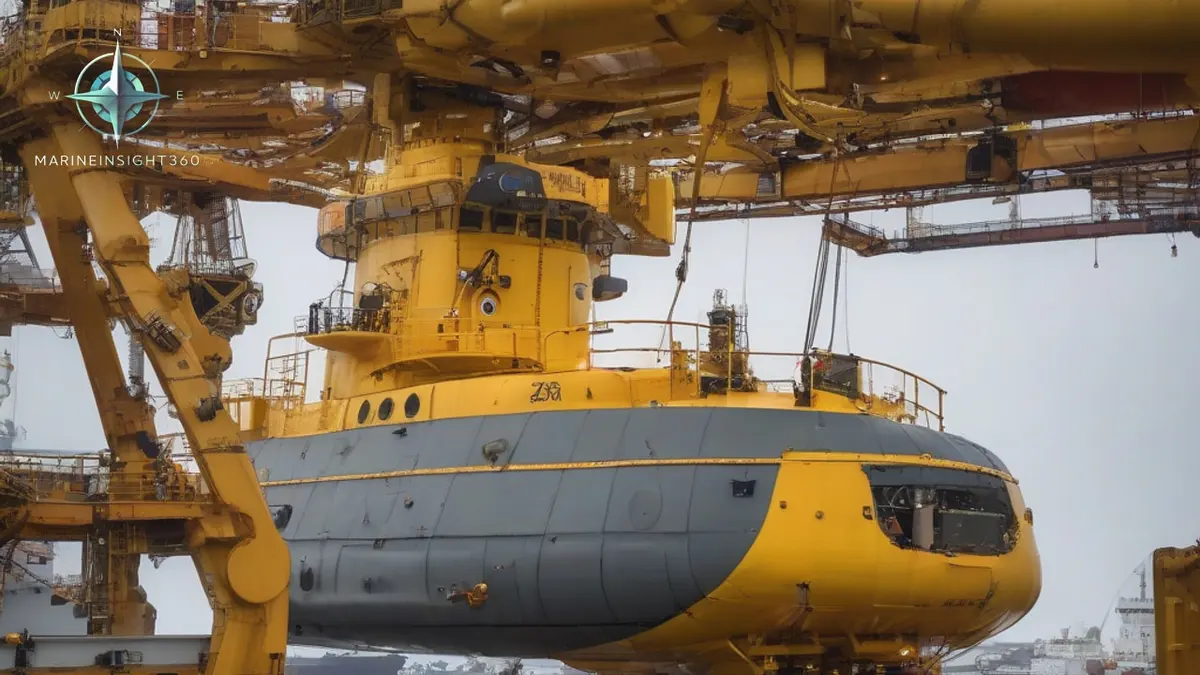
What happened to the Kursk submarine
The Kursk submarine, Russian Navy hull K-141, sank in the Barents Sea on 12 August 2000 during a fleet exercise, killing all 118 people on board. Two explosions in the forward compartments destroyed the bow. Seismic stations recorded the first at roughly 1.5 on the Richter scale, and a second and far larger event about two minutes later at roughly 4.2.
The boat was an Oscar II class nuclear powered cruise missile submarine commissioned in 1994, among the largest submarines ever built and one of the newest units in the Northern Fleet. She was preparing to fire a practice torpedo when the sequence began.
The cause: a practice torpedo and high test peroxide
The official investigation concluded that a practice torpedo failed inside its tube. The weapon was propelled by high test peroxide, a concentrated hydrogen peroxide fuel, and a faulty weld or seal allowed it to leak. High test peroxide decomposes violently on contact with many metals and organic materials, releasing oxygen and heat at a rate that a sealed tube cannot contain.
That first blast started a fire in the torpedo room. Within about two minutes the heat set off the warheads of the remaining weapons, and the second explosion tore apart the first compartments and the command post. Most of the crew died immediately. Twenty three men survived in the after compartments, gathered in compartment nine, and left written notes before they died.
Why the rescue failed
The response has been criticized ever since, and the failures were operational rather than mysterious.
- Delay in recognizing the loss: the exercise continued after the explosions were detected, and a full search did not begin promptly.
- Rescue assets in poor condition: the fleet's own submersibles suffered battery and equipment problems and repeatedly failed to seal onto the escape hatch.
- Sea state and damage: the hatch area and the boat's angle made mating difficult with the equipment available.
- Foreign assistance declined: offers of help were turned down for several days. Norwegian divers, working with British support, opened the after escape hatch on 21 August and found compartment nine flooded.
The wreck was raised in 2001 by a Dutch led salvage consortium, without the shattered bow section, and taken to a dock near Murmansk for examination and recovery of the remaining crew.
What the industry took from the Kursk
The clearest lesson was that no navy can run submarine rescue alone. A stricken boat needs a rescue vehicle on site within about 72 hours, and no single fleet keeps assets close enough to every operating area to guarantee that.
Two structures followed. The International Submarine Escape and Rescue Liaison Office was established to coordinate assistance between navies, hold contact details and equipment data, and run the notification chain when a submarine is missing. Separately, the NATO Submarine Rescue System, funded jointly by the United Kingdom, France and Norway, entered service as an air portable rescue vehicle with an intervention capability, designed to be flown to a port near the incident and mobilized on a ship of opportunity.
Standardization matters as much as hardware. Rescue vehicles can only mate with hatches whose seat dimensions and pressure ratings they are built for, which is why hatch geometry, escape suit design and atmosphere data are shared internationally and exercised regularly.
The propellant question
High test peroxide has a long and unhappy record. The Royal Navy lost the submarine Sidon in 1955 to an explosion in a peroxide fuelled torpedo and abandoned that propellant afterwards. Most navies moved to electric or Otto fuel torpedoes for the same reason. The Kursk investigation put a heavily instrumented modern boat into the same category of loss for the same underlying chemistry.
What merchant crews should know
Merchant vessels share water with submarines in exercise areas, and a merchant ship is sometimes the closest surface unit to an incident. A few practical points apply.
- Exercise areas and submarine transit routes are promulgated in navigational warnings and notices to mariners. Read them at the passage planning stage rather than on the day.
- Navies publish signal conventions for submarines operating or in trouble, including colored smoke and pyrotechnics released to the surface. Pyrotechnics rising from the sea with no vessel in sight should be reported to the nearest rescue coordination centre immediately.
- A submarine indicator buoy or an unexplained oil and air disturbance is a distress indication. Mark the position, note the time, report it, and stand by clear of the area rather than manoeuvring over it.
Why the case still gets taught
The Kursk is studied less for the explosion than for the 48 hours after it. The technical failure was survivable for part of the crew. What removed their chance was delayed recognition, unmaintained rescue equipment, and a decision structure that treated outside help as a last resort rather than a first call. Those three failures recur in casualty reports across the industry, on submarines and merchant ships alike.
For related reading on emergency response and drills, see the Maritime Safety section.
For merchant crews the checkable part is the reporting chain. Submarine exercise areas and hazards reach the bridge through the worldwide navigational warning service, coordinated by the IMO and the International Hydrographic Organization and issued as NAVAREA and coastal warnings. A ship sighting pyrotechnics or a submarine indicator buoy reports to the responsible rescue coordination centre, which in United Kingdom waters is run by the MCA.
The practical contribution of a merchant ship is a good position and silence. Rescue teams work from an accurate datum, and machinery and propeller noise from surface craft interferes with sonar search and with underwater telephone contact. Stopping engines, holding off, logging the time and passing the position to the coordination centre is worth more than closing the area to look.
Sources and further reading
What to read next
Recommended Reading
Typhoon Class Submarine: The Biggest Boats Ever Sent Under the Sea
The Soviet Typhoon class submarine remains the largest ever built: twin pressure hulls, 20 missile silos, and why nothing since has matched its size.
The Real Titanic: What Actually Happened and What It Changed at Sea
What the real Titanic was, why her watertight compartments failed, and how the 1912 loss produced SOLAS, lifeboat rules and the Ice Patrol.
MS Estonia: What Sank the Ferry and What It Changed
The MS Estonia sank in the Baltic in September 1994 with 852 lives lost. What the bow visor failure showed, and how ro-ro ferry rules changed.