
Naval Architecture: From Hull Form to Class Approval
Naval architecture explained for mariners and engineers: the six design problems, the design spiral, class and statutory approval, tools and career routes.
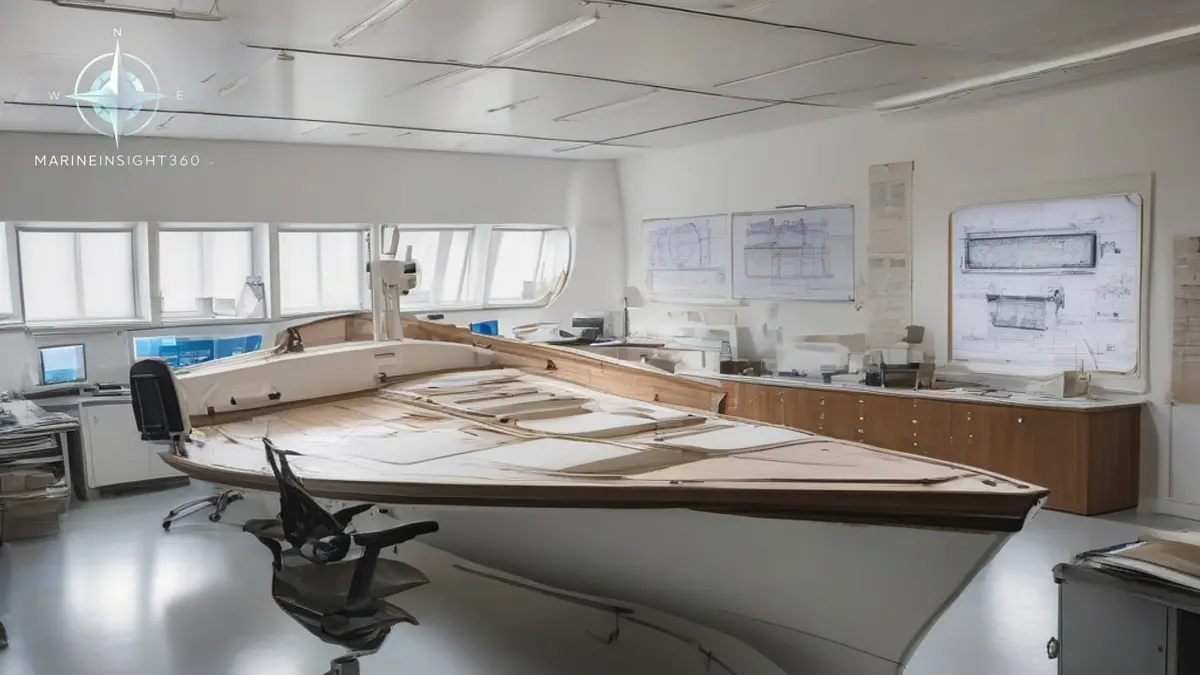
Naval architecture is the engineering discipline that designs ships and floating structures. It covers hull form, stability, structural strength, resistance and propulsion, seakeeping and the general arrangement of everything on board. A naval architect answers one question in many forms: will this hull carry the intended payload, at the intended speed, safely, legally and economically, in the sea states it will actually meet?
The Royal Institution of Naval Architects, founded in London in 1860 to advance the art and science of ship design, still frames the field that way. Design is a balancing act between competing demands, not the optimization of any single number.
The six problems every ship design has to solve
- Hydrostatics and stability : displacement, trim, intact and damage stability, and the loading conditions the ship will be operated in.
- Resistance and propulsion : hull form fairing, wake field, propeller and rudder design, and the power needed to hold service speed with a fouled hull in a seaway.
- Structure : scantlings, hull girder bending, local loads from cargo, slamming and green water, and fatigue at structural details.
- Seakeeping and maneuvering : motions, accelerations, slamming and turning performance, which decide whether crew can work and cargo stays put.
- General arrangement and capacity : cargo volume, tank layout, access, escape routes and machinery space that a fitter can actually work in.
- Regulatory compliance : statutory and class requirements, which shape the design from the first sketch rather than being checked at the end.
The design spiral and why the sequence matters
Ship design is iterative by nature. A weight estimate sets displacement, displacement sets hull form, hull form sets resistance, resistance sets installed power, and installed power changes machinery weight, which sends you back to the weight estimate. Each loop tightens the numbers.
The expensive mistakes come from freezing something too early. Locking the general arrangement before damage stability has been checked is the classic one, because the fix is usually a bulkhead move that disturbs the entire layout. Deferring the loading computer and stability booklet work until after delivery is another.
Rules, conventions and the relationship with class
Statutory requirements come from IMO instruments implemented by the flag state: SOLAS for safety construction and subdivision, the Load Line Convention for freeboard, MARPOL for pollution prevention, and the Tonnage Convention for measurement. Intact stability follows the IMO Intact Stability Code, while damage stability for most cargo and passenger ships is assessed probabilistically under SOLAS Chapter II-1.
Classification society rules cover structural scantlings, machinery and systems, and they run in parallel with the statutory work. In practice, a naval architect spends a large part of a newbuilding project in plan approval: submitting drawings and calculations, answering comments and reissuing.
Efficiency regulation now sits alongside all of that. Design efficiency requirements apply to new ships, and in-service requirements under MARPOL Annex VI have pushed hull form, propeller and energy saving device decisions into the earliest design stages.
Tools of the trade
Hydrostatics and stability software carries the daily load. Computational fluid dynamics is used for hull form comparison, appendage design and propeller wake work. Finite element analysis handles structural checks beyond rule scantlings, particularly around openings, brackets and fatigue details.
Physical testing has not gone away. Towing tank resistance and self-propulsion tests, cavitation tunnel work and seakeeping tests still validate numerical results on significant projects, and full-scale speed and maneuvering trials close the loop at delivery.
Where naval architects work
Shipyards, independent design consultancies and classification societies employ the largest numbers. Owners keep naval architects in technical and newbuilding departments, and flag administrations employ them as surveyors and rule-makers. Offshore energy, small craft and yacht design, salvage and marine warranty survey all draw on the same skills.
Much of the work is not newbuilding at all. Conversions and retrofits, ballast water and exhaust treatment installations, lengthening, alternative fuel conversions, damage assessments and stability approvals after modification make up a steady share of professional practice.
Becoming a naval architect
The route starts with an accredited bachelor or master degree in naval architecture or an approved engineering subject. Professional registration follows through RINA or IMarEST, which look for an accredited academic qualification, a structured period of training, experience in a responsible position, and an overall span of education, training and responsible experience after age 18.
In the United States, professional standing usually runs through the Professional Engineer license, and marine engineers and naval architects are tracked together in federal occupational data.
The distinction worth learning early is simple. The naval architect owns the ship. The marine engineer owns the plant inside it. Our Knowledge Base sets out how those two roles divide a newbuilding project in practice.
Plan approval is where design optimism gets tested. Class surveyors at DNV, Lloyd's Register or ABS return drawings with comments, and repeated rejection of the same structural detail is a familiar cost overrun on a newbuilding. The recurring items are undersized brackets, hard spots where a stiffener ends without a soft toe, and openings cut into a deck without compensation.
In service the errors surface as fatigue cracks at hatch corners and bracket toes. Vibration complaints follow when propeller tip clearance was trimmed to gain diameter. Lightship weight growth during construction is the quiet one. A few hundred tonnes of extra steel and outfit removes deadweight the charter was priced on, and the inclining test at delivery makes it undeniable.
Sources and further reading
- What is Naval Architecture - Royal Institution of Naval Architects
- IMarEST - Naval Architecture
- Naval architect job profile - Prospects
- Marine Engineers and Naval Architects - U.S. Bureau of Labor Statistics
What to read next
Recommended Reading

Typhoon Class Submarine: The Biggest Boats Ever Sent Under the Sea
The Soviet Typhoon class submarine remains the largest ever built: twin pressure hulls, 20 missile silos, and why nothing since has matched its size.
Naval Architecture and Marine Engineering: Two Disciplines, One Ship
Naval architecture and marine engineering split a ship between hull and machinery. Here is what each discipline owns, the degree route and career paths.

Waterspouts: How They Form and How to Steer Clear at Sea
Waterspouts come in fair weather and tornadic forms. How they build, the five stage life cycle, and the NOAA rule for steering clear of one.