
NEURA and HD Hyundai Begin Real-World Testing of Shipbuilding Robots
NEURA Robotics and HD Hyundai are testing humanoid and quadruped robots in a live shipyard, aiming at the welding and inspection work yards cannot staff.
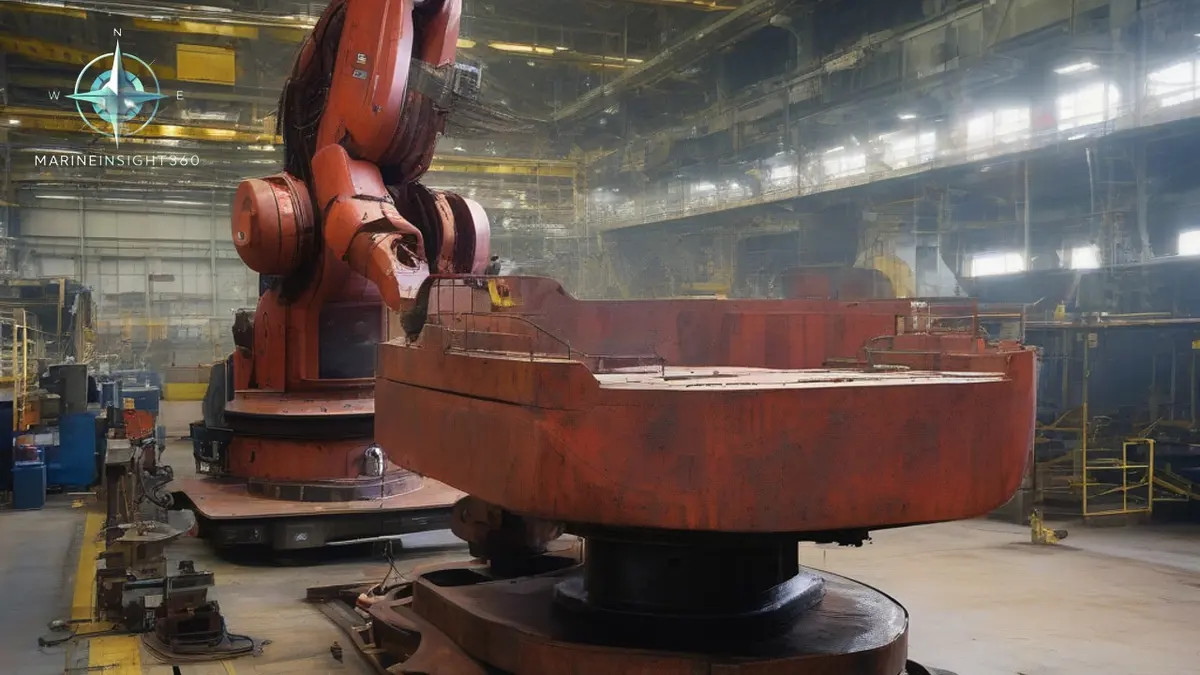
NEURA Robotics and HD Hyundai have begun real world testing of shipbuilding robots, putting quadruped and humanoid machines into a working South Korean yard rather than a laboratory. The partnership pairs the German firm NEURA with HD Hyundai Samho and HD Hyundai Robotics. It was signed at the Automatica trade fair in Munich.
The first tasks under test are welding and inspection. Those two jobs consume the most skilled labor hours in a modern yard. Their weld records must also satisfy class societies such as DNV, Lloyd's Register and ClassNK before a hull is handed over to a European or US owner.
The roles split cleanly. NEURA contributes its cognitive robotics technology, including its 4NE1 humanoid, to the development and commercialization of humanoid systems for shipbuilding. HD Hyundai Samho provides the demonstration environments and validates whether the robots are practically applicable. HD Hyundai Robotics supplies technical support, including path-learning data and performance validation drawn from its welding automation experience.
Why shipyards are harder for robots than car plants
Automotive assembly gave industrial robots their first mass application because the work repeats, the parts are identical and the fixtures never move. A shipyard offers none of that.
- Every block is different. Panel and curved-block geometry changes by hull and by position, so a taught path is rarely reusable.
- The workspace is unstructured. Robots have to work around scaffolding, staging, temporary lighting and cable runs that move daily.
- Access is poor. Double bottoms, ballast tanks and void spaces are confined, poorly ventilated and reached through manholes.
- Position welding dominates. Much of the weld length is vertical or overhead rather than flat, which is exactly where automation has historically struggled.
Legged and humanoid platforms are being tried because they can move through a yard built for people, including stairs, hatches and uneven staging, without rebuilding the yard around the machine.
Welding and inspection are the right first targets
Welding
Welding is the largest single labor input in hull construction and the hardest trade to recruit for. A robot that lays consistent fillet welds in awkward positions removes a bottleneck and a health exposure at the same time, since welders work in fume, heat and confined space.
Inspection
Inspection suits a quadruped well. Tank and void space entry requires gas testing, a standby man and a permit under enclosed space entry rules. A machine that carries a camera and a thickness gauge into a space before anyone enters shortens the job and removes its highest-risk element.
What has to be proved before this reaches production
Field testing is not adoption. Several questions decide whether these machines become standard yard equipment.
- Weld quality to class standards. Output must satisfy an approved welding procedure specification and survive non-destructive testing, with robotic work traceable in the same records as a human welder's.
- Cycle time against a skilled hand. A robot that welds slower than a certified welder only pays if it can work unattended through a second shift.
- Reliability in a yard environment. Yards are wet, dusty, magnetic and full of grinding sparks. Sensor performance in that environment is a harder problem than the motion control.
- Safe collaboration. Machines sharing staging with people need a functional safety case, not just software interlocks.
What it means for owners and site teams
The nearer-term effect is on consistency rather than price. Yard schedules slip when skilled welders are short, and rework after failed weld inspections is a common cause of delay in block assembly. Automating part of the weld length reduces variance in both.
For newbuilding supervision teams the practical change is in the evidence trail. If robots lay a share of the welds, superintendents should establish early how robotic work is identified on the weld map, how the yard qualifies the procedure, and how repairs are recorded. Those questions belong in the building contract and the inspection and test plan, not in a conversation at block erection.
Where this sits in the wider automation trend
Korean yards have run welding gantries, panel lines and robotic sub-assembly cells for years. What is different here is mobility: taking the robot to the work instead of designing the work around a fixed cell. If that succeeds it applies to repair yards and drydocks as well as newbuilding, where fixed automation has never been viable because every job is bespoke.
Follow the demonstration results rather than the announcement. The metric that matters is the share of total weld length delivered robotically on a real hull, and whether it passes class inspection without lifting the repair rate.
Sources and further reading
- NEURA Robotics, HD Hyundai Samho and HD Hyundai Robotics partnership
- HD Hyundai Tests Out a Humanoid Welding Robot in a Real Shipyard - The Maritime Executive
- NEURA Robotics partners with HD Hyundai on shipbuilding robots - The Robot Report
- Neura teams up with HD Hyundai to test humanoids for shipbuilding - Drives & Controls
What to read next
Recommended Reading
Are Sea Serpents Real? The Animals Behind Sailors Sightings
No verified sea serpent has ever been documented, but oarfish, giant squid, decaying carcasses and sea mirages explain most sightings. Here is the evidence.

The Real Titanic: What Actually Happened and What It Changed at Sea
What the real Titanic was, why her watertight compartments failed, and how the 1912 loss produced SOLAS, lifeboat rules and the Ice Patrol.
How to Become a Mariner: The Two Real Routes to Sea
Two routes into a seagoing career: entry-level rating or officer cadet. Credentials, medicals, STCW courses, timelines and real costs in the US and UK.