
Container Tracking Systems: How a Box Is Identified and Followed
How container tracking systems identify a box by its ISO 6346 number, link it to a booking and bill of lading, and report carrier and terminal status events.
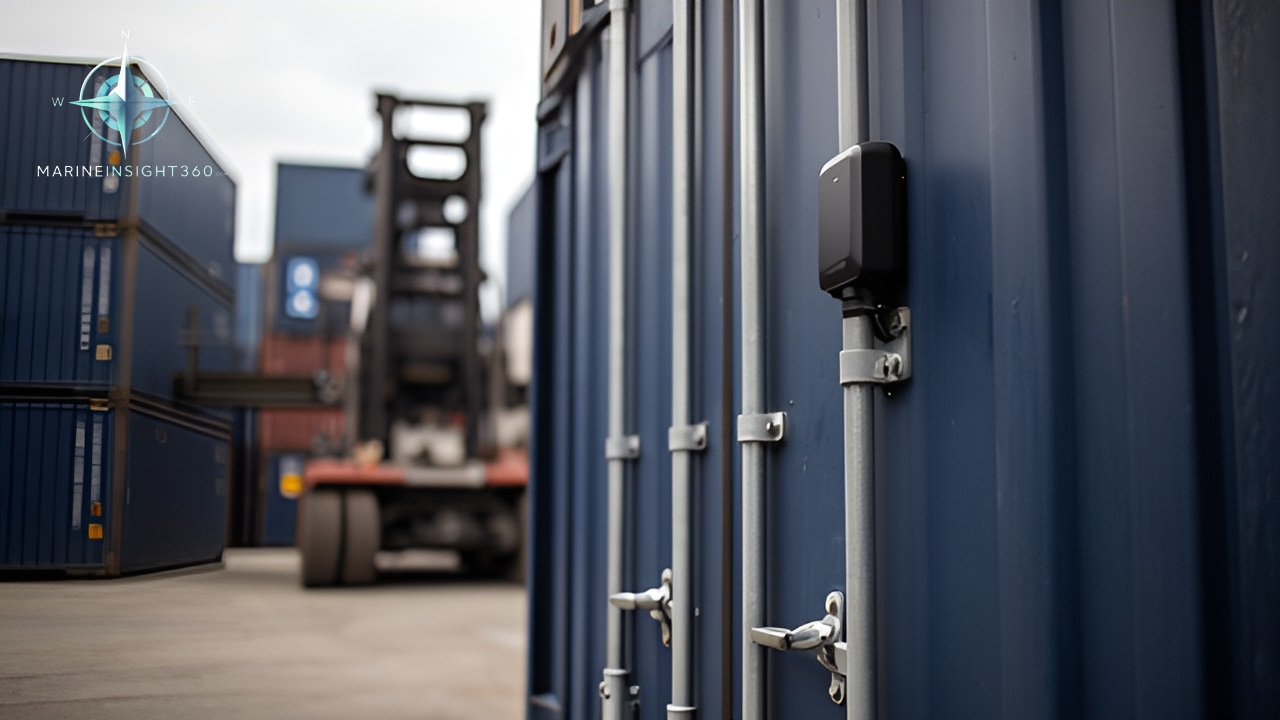
A container tracking system follows a shipping container by matching one of three references, the container number, the booking number or the bill of lading number, against status messages sent by shipping lines, terminals and rail operators. Most of what a tracking screen shows is a list of events, each with a place and a time, plus an estimated arrival taken from the carrier's vessel schedule.
A live position on a map, where one appears, usually comes from the ship's AIS signal or from a tracking device fitted to the box.
This article explains the references and events behind that screen. For a comparison of free carrier lookups and paid visibility platforms, see our piece on how shippers follow a box across the ocean.
How a container number is built
Every intermodal container carries an identification code laid down in the international standard ISO 6346. It is marked on both ends, both sides and the roof, and it has eleven characters, for example CSQU 305438 3.
- Three letters for the owner code, which the owner registers with the Bureau International des Containers (BIC) in Paris.
- One letter for the equipment category: U for a freight container, J for detachable equipment such as a clip-on generator set, and Z for a trailer or chassis.
- Six digits for the serial number, chosen by the owner.
- One check digit.
The check digit lets software catch a mistyped number before it searches. Each letter is given a value from 10 to 38, skipping 11, 22 and 33, and each digit keeps its own value. The ten values are multiplied in turn by 1, 2, 4, 8 and so on up to 512, the results are added, and the total is divided by 11. The remainder is the check digit, and a remainder of 10 is written as 0.
For CSQU 305438 the total is 6,185, which leaves a remainder of 3, so the full number is CSQU 305438 3. When a tracking tool rejects a number as invalid, one character has usually been copied wrongly from the paperwork.
Next to the number sits a four-character size and type code. 22G1 is a 20 ft general purpose box, 42G1 a standard 40 ft box and 45G1 a 40 ft high cube. Tracking systems use it to show which kind of equipment is on the booking; our article on the main types of shipping container covers what each one carries.
Booking and bill of lading references
The container number identifies the box. The shipment is identified first by the carrier's booking number, issued when the shipper reserves space, and later by the bill of lading number. One booking or one bill of lading can cover many containers, so a search by either brings up every box on that shipment.
Which reference to use depends on where you sit. A shipper usually has the booking number first, because no container is assigned until the empty is collected from the depot. A consignee usually receives the bill of lading number with the shipping documents. If a freight forwarder or NVOCC has issued a house bill, the shipping line's system will not recognise that number. You need the forwarder's own tracking or the master bill number that the line issued to the forwarder. The difference between the two is explained in our guide to the types of bill of lading.
Where tracking data comes from
Carrier and terminal messages
Most events reach a tracking system as electronic messages between companies. Terminals report gate movements and loading or discharge to the shipping line, traditionally with UN/EDIFACT messages such as CODECO for gate-in and gate-out and COARRI for loading and discharge. Carriers pass status updates on to customers with messages such as IFTSTA or through web APIs.
The Digital Container Shipping Association (DCSA), set up in 2019 by several of the largest container lines, publishes a common track and trace standard so that an event called "loaded" means the same thing whichever line reports it.
Vessel position from AIS
Vessel position is a separate feed. Under SOLAS Chapter V, Regulation 19, AIS must be carried by ships of 300 gross tonnage and upwards on international voyages, cargo ships of 500 gross tonnage and upwards not on international voyages, and all passenger ships. A container ship's AIS transmits its identity, position, course and speed, which shore stations and satellites pick up. Tracking platforms combine that position with the carrier's record of which vessel the box was loaded on, which gives a good estimate of where the container is at sea. The same position data powers the free ship tracking websites.
AIS follows the ship, though. If the box was rolled to a later sailing or left on the quay, the map will show it at sea until the carrier's events catch up.
Devices on the container
The third source is a device fitted to the container itself. Refrigerated containers have reported temperature and position for years through carriers' remote monitoring systems. Tracking of dry boxes is newer: Hapag-Lloyd began fitting tracking devices to its dry container fleet in 2022 and in 2024 launched a service that shows customers the GPS position of their boxes. Cargo owners can attach their own battery-powered trackers to high-value loads.
These units report over mobile networks or by satellite, and coverage at sea depends on the system.
Common status events and what they mean
Carriers word their events slightly differently, but a typical export to import move produces this sequence.
| Event | What has happened |
|---|---|
| Empty released or gate out empty | The shipper's haulier has collected an empty box from the depot for packing. |
| Gate in full | The packed container has been received at the origin terminal. |
| Loaded on vessel | The box has been lifted aboard the named ship. |
| Vessel departed | The ship has sailed from the port of loading. |
| Transhipment discharged and loaded | The box has been moved from one ship to another at a hub port. |
| Vessel arrived | The ship has arrived at the port of discharge. |
| Discharged | The box has been lifted off the ship into the terminal. |
| Gate out full | The consignee's haulier or a rail operator has taken the box out of the terminal. |
| Empty returned | The unpacked box is back at the carrier's depot, which closes the move. |
Two points catch people out. A "vessel arrived" event says nothing about whether the box can be collected: it may still be in the ship, and customs or terminal holds can keep it in the yard after discharge. And the ETA shown is the carrier's schedule estimate, which moves whenever the ship is delayed at an earlier port or waits at anchor outside a congested terminal.
Why a tracking result can be wrong or missing
- The number was entered with a typing error or without its check digit.
- A house bill number was searched on the shipping line's website.
- The ship belongs to an alliance partner. The booking still has to be tracked with the carrier that issued the bill of lading.
- Events at small ports and inland depots are entered late or not at all.
- The box was rolled or transhipped onto a different ship and the planned route has not been updated.
Choosing where to track a container
For a handful of shipments, the shipping line's own website is the most direct source. It holds the booking and receives the terminal messages first. Aggregator platforms collect the same carrier feeds across many lines and add vessel positions and delay alerts, which suits a forwarder or importer with boxes on several carriers at once. Whatever the tool, the events come from the same parties: the carrier, the terminal and the haulier or railway that moves the box.
When a platform and the carrier disagree, check the carrier's own record first, because the platform is passing on carrier and terminal data and may lag behind it.
Recommended Reading
Top 10 Ship Tracking Websites to Find Your Ship Accurately
Rapid technological advances have recently greatly improved vessel monitoring and live ship tracking free.

Container Tracking: How Shippers Actually Follow a Box Across the Ocean
How container tracking works, from free carrier lookups to visibility platforms: what each tool layer does, what it costs, and how to pick for your volume.
Ship Earthing Systems: Insulated Networks, Bonding and Earth-Fault Monitoring
Why ships use insulated electrical systems, how earth faults are found, high-voltage resistance earthing, bonding, tanker rules and shore power.