
Ship Earthing Systems: Insulated Networks, Bonding and Earth-Fault Monitoring
Why ships use insulated electrical systems, how earth faults are found, high-voltage resistance earthing, bonding, tanker rules and shore power.
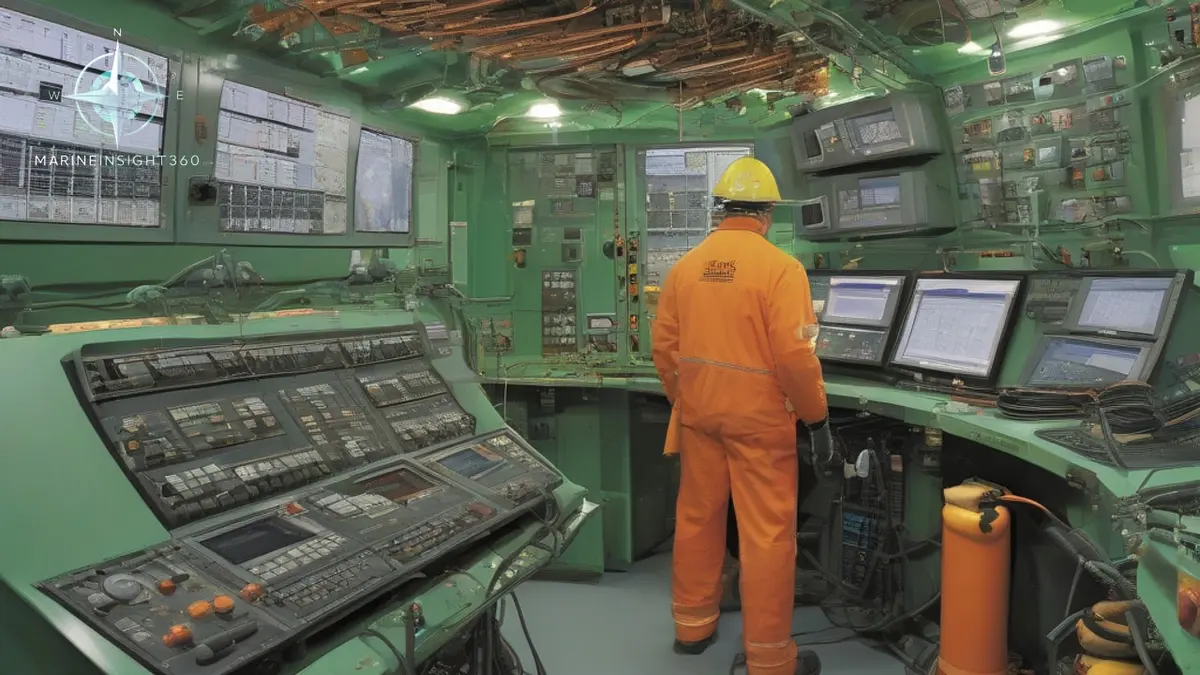
Earthing on a ship means connecting electrical equipment to the steel hull, which serves as the ship's "earth". It keeps metal parts that people can touch at the same voltage as the hull, gives fault current a safe path, and drains static and lightning charges. But unlike most buildings ashore, most ships do not earth their main low-voltage supply at all.
This guide explains why, how high-voltage systems differ, what bonding and earth-fault monitoring do, and the special rules for tankers and shore connections.
Earthing and bonding: two different jobs
- System earthing decides whether the neutral point of the generator or transformer is connected to the hull, and how. It controls what happens when a live conductor touches earth.
- Protective earthing (bonding) connects the metal frames and enclosures of equipment to the hull, so that if insulation fails, the frame cannot sit at a dangerous voltage. Every ship needs this, whatever its system earthing.
Why most ships use an insulated system
The typical low-voltage distribution on a merchant ship, for example 440 V at 60 Hz, is an insulated (IT) system : no conductor is deliberately connected to the hull. The reason is continuity of supply. If one phase develops an earth fault, no large current flows and no breaker trips, so the steering gear, pumps and lighting keep running. The ship can find and clear the fault at a convenient time.
The risk is the second fault. If a different phase goes to earth before the first fault is cleared, the result is a phase-to-phase short circuit through the hull, with heavy current and tripping. That is why insulated systems must be monitored.
Earth-fault monitoring
Insulated systems are fitted with an insulation monitoring device or earth-fault lamps on the main switchboard, which show the insulation resistance to earth and raise an alarm when it falls.
- Earth lamps: one lamp per phase, each connected between its phase and earth. With healthy insulation they glow equally; a lamp that dims or goes out shows which phase is earthed.
- Insulation monitors: inject a small signal and display insulation resistance in megohms, with alarm set points.
To find a fault, engineers isolate circuits one at a time, with permission and with essential services covered, until the reading recovers. Common causes are water in junction boxes and deck lights, damaged cables, and insulation breaking down in motors and heaters.
High-voltage systems
Ships with large electrical loads, such as cruise ships, LNG carriers and offshore vessels, generate at high voltage, typically 6.6 kV or 11 kV. These systems are usually earthed through a resistor at the generator neutral. A high-resistance earth limits the fault current to a few amperes, so a first earth fault can still be alarmed rather than tripped, while avoiding the dangerous overvoltages that can build up in a fully insulated HV system.
Neutral earthing resistors are inspected and tested as part of the HV maintenance plan.
The hull is not a return conductor
The hull is the earth reference, but it must not carry the working current of the distribution system. SOLAS chapter II-1, regulation 45, bans the hull return system outright on tankers, and on any other ship of 1,600 gross tonnage and above bars it for power, heating and lighting. The Administration may approve narrow exceptions, such as impressed-current cathodic protection and limited, locally earthed systems. Each circuit has its own return conductor.
Bonding in practice
- Motors, switchboards, consoles and portable equipment have an earth conductor or bonding strap to the hull.
- Equipment on anti-vibration mounts needs a flexible bonding strap, because the mounts insulate it from the structure.
- Cable armour and screens are earthed according to the maker's instructions; navigation and radio equipment often have specific earthing points to control interference.
- Non-metallic masts carry lightning conductors connected to the hull by the shortest practical route.
Tankers and gas carriers
On tankers, where flammable vapour may be present, the rules on earthed systems are stricter, and metal pipes, hoses and fittings in the cargo area are bonded so that static charge cannot build up and spark. At the cargo manifold, ISGOTT and IMO port-safety recommendations call for an insulating flange, or one length of non-conductive hose, in the cargo hose string or loading arm.
It breaks the electrical path between ship and terminal so that stray currents cannot spark when hoses are connected or disconnected. A ship-to-shore bonding cable does not provide that break, and gangways or crane wires can bypass the flange, so they need watching too.
Shore power
When a ship connects to high-voltage shore power, the ship and shore earthing systems are joined, and the connection standard IEC/ISO/IEEE 80005-1 requires equipotential bonding and safety interlocks so that the connection cannot be made or broken live.
Frequently asked questions
Why do ships not earth the neutral like houses do?
So that a single earth fault does not trip essential equipment such as steering gear. An insulated system keeps running with one fault, and the monitoring tells the engineers to find it.
What happens if an earth fault is ignored?
A second fault on another phase becomes a short circuit through the hull, which can trip essential services, damage equipment and start a fire.
Is the ship's hull "earth"?
Yes. The steel hull, in contact with the sea, is the earth reference for all electrical equipment on board.
Related guides
Recommended Reading
Container Tracking Systems: A Comprehensive Guide
Searates container tracking is a big headache for most businesses. Fulfilling the global demand for quality goods means automating and improving the monitoring of all kinds of processes.
Ship Navigation Equipment: The 30 Systems on a Modern Bridge
The ship navigation equipment a modern bridge carries, grouped by job: position fixing, collision avoidance, charts, communications, safety recorders and more.
LNG Propulsion Systems: A Complete Technical Guide
How LNG-fuelled ships work: low- and high-pressure dual-fuel engines, fuel storage and supply under the IGF Code, emissions, methane slip and bunkering.