
Singapore Registry of Ships: Who Can Register and What the Flag Expects
How the Singapore Registry of Ships works: ownership and paid-up capital rules, the 1,600 GT and 17-year thresholds, class societies and flag state control.
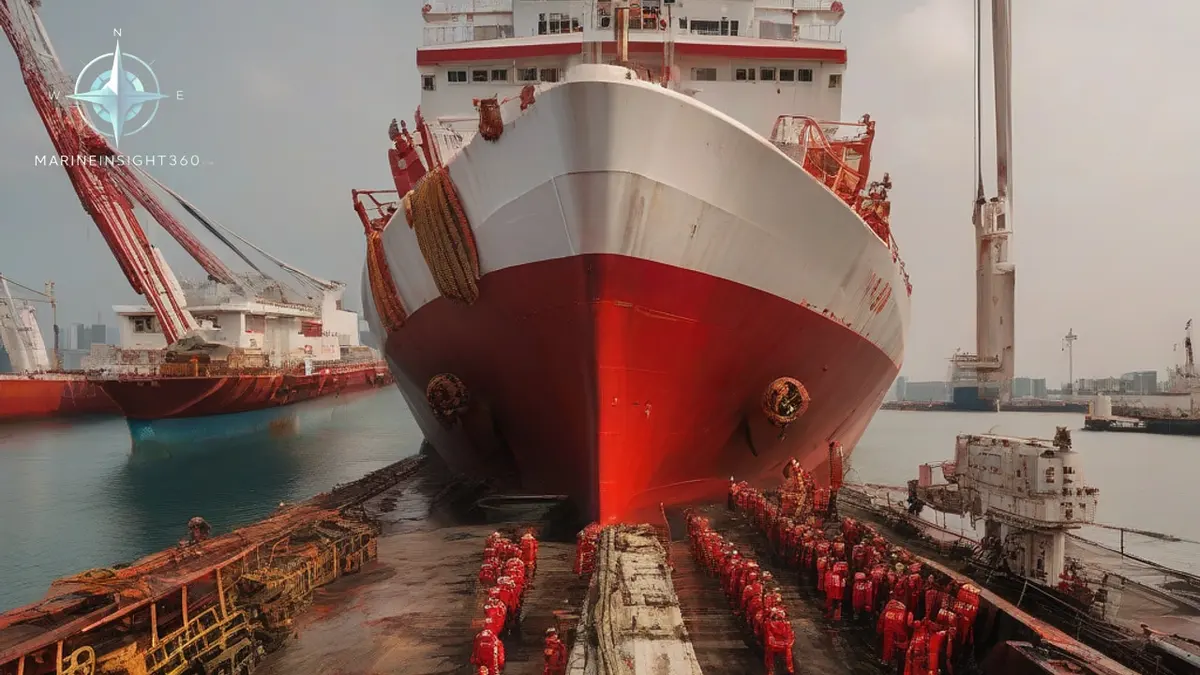
The Singapore Registry of Ships is the flag administration run by the Maritime and Port Authority of Singapore. It registers vessels under the Singapore flag and then polices their compliance. A foreign-owned company can register there if it holds at least 50,000 Singapore dollars in paid-up capital. The ship must be self-propelled and at least 1,600 gross tonnes. Vessels under 17 years old are normally accepted when classed with one of eight recognised classification societies.
Almost every ship type qualifies apart from fishing vessels, hydrofoils and wooden vessels.
Who is eligible to register a ship in Singapore
Ownership is the first gate. The registry is open to Singapore citizens and Singapore-incorporated companies. It is also open to foreign-owned companies, provided they establish a Singapore company that meets the capital threshold. The 50,000 Singapore dollar minimum paid-up capital requirement and the 1,600 gross tonne self-propelled requirement apply together on that foreign-owned route. A small workboat owned through a foreign parent will not clear the bar. A handysize bulker will.
Offshore units are explicitly in scope. Oil rigs, floating platforms and offshore support vessels can be registered alongside conventional merchant tonnage. That is one reason the flag is common across the offshore and gas sectors operating out of Southeast Asia.
Age, class and convention requirements
Singapore runs a quality-flag policy rather than an open-door one, and the entry criteria show it.
- Age. Ships under 17 years old are normally accepted without additional conditions. Older tonnage is not automatically excluded but attracts closer scrutiny and additional survey requirements.
- Class. The vessel must be classed with one of the eight classification societies the registry recognises. A ship arriving from a society outside that list has to transfer class as part of the registration process.
- Conventions. The ship must comply with the relevant IMO instruments, including SOLAS 1974, the International Convention on Load Lines 1966, the International Convention on Tonnage Measurement of Ships 1969 and MARPOL 73/78.
That combination matters commercially. A registry with a low port state control detention record keeps its ships off targeting lists. That shortens inspections and reduces the chance of a delay that lands on the charterer.
What flag state control actually means day to day
Flag state control is the other half of the arrangement, and it is where the registry earns or loses its reputation. As the flag administration, MPA is responsible for making sure Singapore-registered ships comply with international and national rules. Those rules cover maritime safety and security, protection of the marine environment, and the social, living and working conditions of the crew.
In practice a Singapore-flagged ship can expect flag inspections in addition to class surveys and port state control. Casualties and serious incidents are investigated by the flag. Where a ship is detained abroad, the flag administration becomes an active party in resolving the deficiencies before the ship sails.
Crews notice this as a higher documentary standard. Safety management system records, hours of rest records and maintenance evidence are expected to be current and accurate, not reconstructed before an inspection.
The paperwork, and how it has been simplified
Registration used to be a notarisation-heavy process. The registry has since eased that burden, accepting copies of documents for new registrations and reducing notarisation requirements for documents signed overseas. For an owner transferring a ship between flags on a tight sale and purchase timetable, that change removes days of courier and legal time from the closing sequence.
A typical transfer package still runs to a defined checklist. That means proof of ownership and the bill of sale, the builder certificate for a newbuilding, and tonnage and load line documentation. It also means class confirmation, evidence of insurance, and the company details establishing eligibility. Owners bringing a ship in on delivery day should have deletion arrangements agreed with the outgoing registry, because a ship cannot hold two nationalities.
What the flag means for seafarers
Serving on a Singapore-flagged ship affects certification rather than nationality. STCW is the international convention setting minimum training and certification standards for seafarers. Under it, an officer holding a certificate of competency issued by another administration needs a flag endorsement recognising that certificate before serving in a certificated capacity.
Officers moving from a UK Maritime and Coastguard Agency certificate or a US Merchant Mariner Credential onto Singapore-flagged tonnage go through this step. Having the endorsement in place before the joiner travels is the operator's job.
Where the registry fits in the wider picture
Singapore's registry sits alongside its bunkering, ship management and arbitration businesses. Owners often choose it for that cluster rather than for the registration process alone. The trade-off is straightforward. The flag charges a real compliance standard and expects the ship to meet it, and in return the ship carries a nationality that attracts less friction in port. For an owner weighing registries, the honest comparison is not fee against fee but total delay risk against fee.
Anyone planning a transfer should start with the MPA registration checklist and confirm class eligibility first. A class transfer is the item most likely to move the timetable.
Sources and further reading
- Singapore Registry of Ships - Maritime and Port Authority of Singapore
- Pre-Requisites for Ship Registration - MPA Singapore
- Flag State Control - MPA Singapore
- Simplified documentation requirements for vessel registration with the Singapore Registry of Ships - Stephenson Harwood
What to read next
Recommended Reading

Cashew in the Bunkers: Why Ships in Singapore and Rotterdam Hit Engine Failures
Ships bunkering in Singapore and Rotterdam hit sludging, injector and turbocharger failures traced to cashew nutshell liquid blended into marine fuel.

Is the Bahamas a Reputable Flag State? What the Inspection Record Shows
How the Bahamas registry performs on Paris MOU and Tokyo MOU white lists and QualShip 21, and what the flag means for crew, owners and charterers.
MPA Harbor Craft License: Operating Workboats in Singapore Port
What the MPA harbor craft license covers in Singapore, the license categories, documents required, port limit manning rules and temporary permits.