
Strait of Hormuz Blockade: What Closure Really Means for Merchant Ships
How a blockade of the Strait of Hormuz actually stops merchant traffic: war risk insurance, UKMTO reporting, AIS decisions and the pipelines that bypass it.
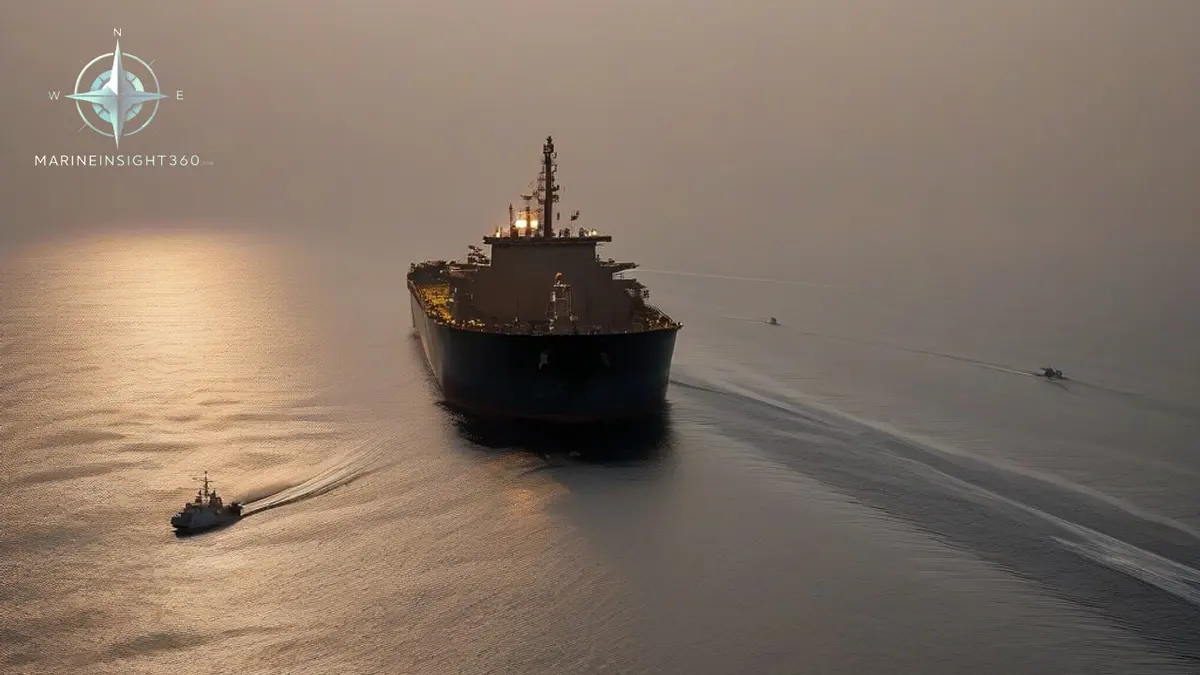
What a Strait of Hormuz Blockade Means for Merchant Shipping
A blockade in the Strait of Hormuz does not physically close the water; it closes the commercial conditions that allow a merchant vessel to use the passage. War‑risk insurance, charterers, crews and flag states all must agree before a ship can transit. When any of these links breaks, traffic collapses long before a warship turns a tanker around.
Why the Strait Is a Global Shipping Bottleneck
The strait is 21 nautical miles (39 km) wide at its narrowest. The traffic separation scheme defines inbound and outbound lanes two miles (3.7 km) wide, separated by a two‑mile zone, all within Omani and Iranian territorial waters. Roughly 20 % of the world’s oil supply and a large share of LNG move through the strait. Ships loading at Ras Tanura, Basrah, Kharg Island or Ras Laffan must pass through the same gap; there is no alternative sea route.
Insurance Is the First Line of Defense
War‑risk cover for Gulf transit is written as a percentage of a vessel’s insured hull value and is added to the freight premium. Underwriters can cancel or reprice hull war policies on short notice, so a voyage fixed today can become unaffordable before the ship leaves port. In 2024, rates that were just under 0.25 % of hull value before the conflict rose to 3–10 %.
For a 100 million‑dollar tanker, the cost jumped from about 250 000 USD per transit to between 3 and 10 million USD. Charterparty war‑risk clauses give owners the right to refuse the voyage or recover the extra premium, shifting the decision from the bridge to the chartering desk.
Traffic Volume and Market Reactions
Before the conflict, an average of 178 ships transited the strait daily. Since the fighting began, traffic has fallen sharply. The visible effects mirror any chokepoint tightening: tonnage piles up at Fujairah and outside the Gulf, lay‑cans slip, freight rates spike on the routes that remain open, and cargoes are redirected to buyers who can take delivery elsewhere.
Planning a Transit in a Blockaded Strait
- Report to UKMTO and MSCIO before entering and throughout the transit. If AIS is switched off, report position every two hours. Keeping AIS on is recommended unless a competent authority directs otherwise.
- Limit AIS data to identity, position, course and speed if you choose to keep it on.
- Maintain a VHF Channel 16 watch and expect directed hails, including instructions to alter course.
- Preserve VDR data, ECDIS screenshots and log extracts whenever an anomaly occurs.
When GNSS and AIS Are Unreliable
Position spoofing and jamming are now routine in the Gulf. Treat satellite position as one input, not the sole source. Cross‑check with radar range and bearing to charted features, run parallel indexing along the Omani coast, keep the echo sounder on and compare it with charted depth, and have the second officer fix visually at fixed intervals.
Mine‑risk reporting remains relevant inside and adjacent to the traffic separation scheme, so staying within swept and well‑used water is safer than improvising a route.
Overland Alternatives and Their Limits
- Saudi Arabia’s East‑West pipeline moves crude across the peninsula to Yanbu on the Red Sea.
- The UAE’s line from Habshan to Fujairah bypasses the strait but serves only the UAE.
- Both pipelines move only a fraction of the crude that normally passes Hormuz and carry no LNG.
- Qatar’s gas exports have no bypass, so a Hormuz disruption hits the gas market harder and faster than the oil market.
What Operators Should Have Ready
- Current war‑risk quotation with cancellation and breach clauses read, not assumed.
- Charterparty war‑risk clause checked against the actual voyage orders.
- Crew position agreed in advance, including the seafarer’s right to decline a voyage into a designated warlike operations area.
- Bunkers and stores planned so the ship is not forced into a transit by an empty tank.
- Updated ship security plan, citadel arrangements and drill records.
In short, a closure is a commercial event first and a naval one second. Operators who track the insurance market as closely as the news wires see the impact days earlier than those who do not.
Further Reading
- UKMTO Guidance on Safe Management of Vessel Transit through the Strait of Hormuz
- BIMCO Safe Management of Vessel Transit through the Strait of Hormuz
- World Economic Forum article on war‑risk insurance in the Strait of Hormuz
- The National article on shipping insurance surges amid Strait of Hormuz attacks
For connected route-risk and trade coverage, continue with the maritime markets hub.
Recommended Reading
Iran's Strait of Hormuz Maritime Zone Claim and What It Means for Shipping
Iran claims regulatory control over the Strait of Hormuz. Here is what transit passage law says, how traffic has collapsed, and what masters should do.
The Strait of Hormuz and the Limits of Maritime Law
Transit passage under UNCLOS, why Iran and the United States disagree, and what masters actually do when a legal right meets a warship in the Strait.
USS Gerald R. Ford Explained: What the Largest Aircraft Carrier Means for Merchant Traffic
Size, propulsion and strike group makeup of USS Gerald R. Ford, its Middle East deployment, and what a carrier group means for nearby merchant ships.