
USS Gerald R. Ford Explained: What the Largest Aircraft Carrier Means for Merchant Traffic
Size, propulsion and strike group makeup of USS Gerald R. Ford, its Middle East deployment, and what a carrier group means for nearby merchant ships.
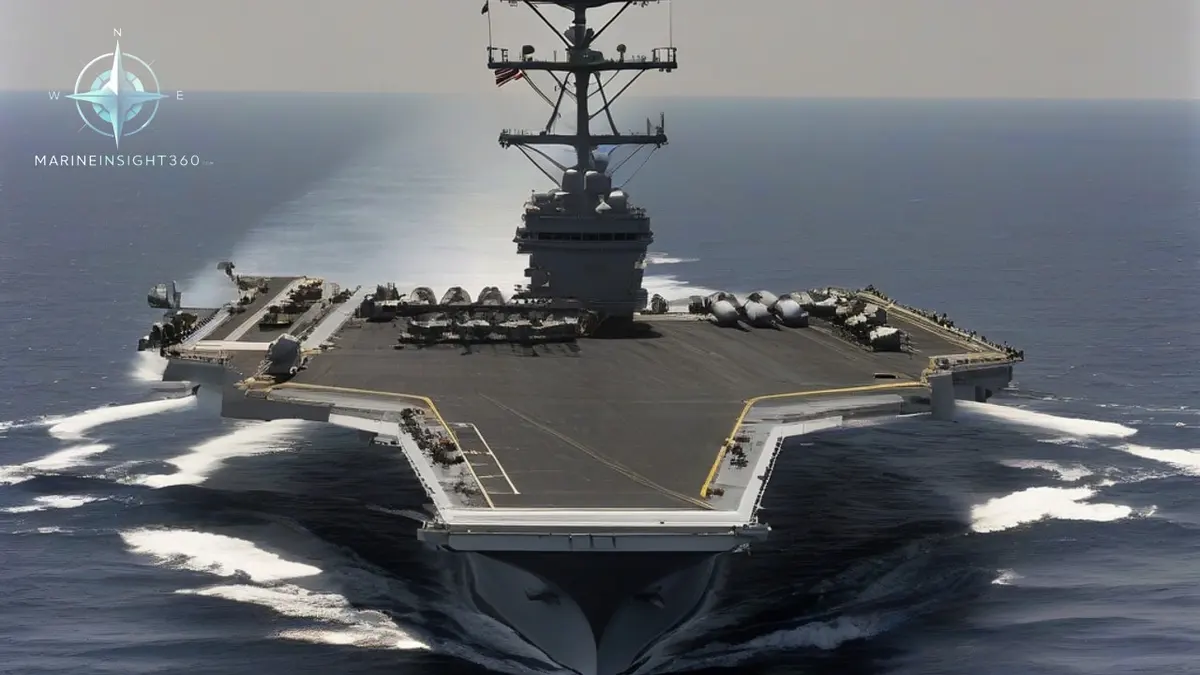
What the USS Gerald R. Ford is and why its Middle East deployment matters
The USS Gerald R. Ford is the lead ship of the US Navy Ford class and the largest aircraft carrier afloat. It displaces more than 100,000 tons on a hull about 337 meters (1,106 ft) long. The Navy redeployed it toward the Middle East in early 2026 as conflict with Iran intensified, putting a second carrier strike group into the region alongside the USS Abraham Lincoln.
Owners in the United States, Europe and Japan route their Gulf and Red Sea transits on UKMTO reporting. A second strike group changes the daily routine on those bridges.
For merchant crews the consequence is practical rather than political: a denser naval presence, more military traffic on the same routes, and tighter communications discipline across the Gulf, the Red Sea and the Eastern Mediterranean.
The numbers behind the largest carrier afloat
- Displacement: more than 100,000 tons, the heaviest warship in service.
- Length: approximately 337 meters (1,106 ft), longer than most 14,000 TEU container ships.
- Beam: 41 meters (134 ft) at the waterline, widening to 78 meters (256 ft) across the flight deck.
- Height: around 76 meters (250 ft) across 25 decks.
- Propulsion: two Bechtel A1B pressurized water reactors driving speeds above 30 knots.
The flight deck overhang is the detail that matters to anyone maneuvering nearby. The beam at the waterline and the beam at deck level differ by more than 35 meters (115 ft), which changes how the ship reads on a visual bearing and how much clearance a passing vessel actually has.
A carrier never sails alone
A carrier strike group is a formation, not a single hull. The Ford operates as the flagship with an embarked air wing and a screen of destroyers. Reported escorts during the February 2026 transit of the Strait of Gibraltar included USS Winston S. Churchill, USS Bainbridge and USS Mahan.
That matters at sea because the formation occupies a large box of water and maneuvers as a unit. Escorts screen well ahead of and abeam of the carrier. A merchant ship that plots a safe closest point of approach against the carrier alone may still be standing into a destroyer station.
What changes for merchant ships when a strike group is in the area
Naval deployments alter the working environment for commercial traffic without anyone issuing an order to the merchant fleet.
- Warning areas and NAVAREA broadcasts. Exercises and flight operations generate navigational warnings that must be plotted before a passage plan is finalized.
- Bridge to bridge challenges. Warships routinely query approaching contacts on VHF. Answer promptly, give vessel name, flag, last port and next port, and comply with any instruction to alter course.
- Restricted maneuvering. A carrier conducting flight operations is tied to a course into the wind and will hold it. Give room early rather than negotiating late.
- Electronic interference. Positioning and communications disruption is a recurring problem in contested waters. Cross check satellite position against radar ranges, visual bearings and the echo sounder.
- War risk and insurance. Underwriters adjust listed areas as a conflict spreads, and the charterparty war risk clause decides who pays for deviation and additional premium.
Where the Ford deployment fits in the wider pattern
Carrier presence in the US Central Command region is maintained by rotation rather than by one permanent ship. The Ford left Norfolk in June 2025, spent part of the deployment in the Caribbean, then moved east through Gibraltar in February 2026 and was operating in the Red Sea by early March. Reporting later indicated it would leave the region and return to Norfolk around mid May 2026.
The rotation is the useful signal for operators. Deterrence presence is sustained, but the specific hull changes, and with it the exercise areas, the reporting expectations and the traffic density on the routes crews actually use.
How merchant officers should handle naval traffic
Warships are subject to the collision regulations like any other vessel, and the rules grant no special standing simply because a hull is grey. The practical position differs from the legal one. A carrier under flight operations, a destroyer on a screening station and a replenishment ship connected alongside are all limited in what they can do.
- Plot naval units early and treat any large contact holding a steady course into the wind as constrained.
- Do not try to cross ahead of a formation. Alter to pass astern of the whole group.
- Log every VHF exchange with a warship, including time, channel and the instruction given.
- Report unusual encounters to the company security officer and to the regional reporting center used on that route.
Ship recognition is a working skill rather than trivia, and carrier groups are among the few contacts where getting the identification wrong changes the maneuver. The Marine Insight 360 Ships and Vessels section covers the naval and commercial hull types crews meet on the main trade routes.
The recurring fault in these waters is not a collision but a position that quietly goes wrong. GNSS jamming and spoofing push the ECDIS fix off by miles, and because AIS broadcasts the same corrupted position, nearby ships plot you where you are not. The usual symptom is a run of position alarms, a chart overlay that no longer matches the radar picture, and a watchkeeper who trusts the screen.
The second failure is procedural. A merchant ship that does not answer a warship's VHF challenge, or that alters late to squeeze between the carrier and a screening destroyer, invites a close quarters situation nobody planned. Warships hold course during flight operations and replenishment. Plot the whole formation, alter early to pass astern of all of it, and answer the first call rather than the third.
Sources and further reading
- USS Gerald R. Ford | Aircraft Carrier, Size, Crew, Deployments
- Gerald R. Ford-class Nuclear-Powered Aircraft Carriers
- USS Gerald R. Ford Now in the Red Sea
- Ford carrier group arrives in Mediterranean
What to read next
Recommended Reading
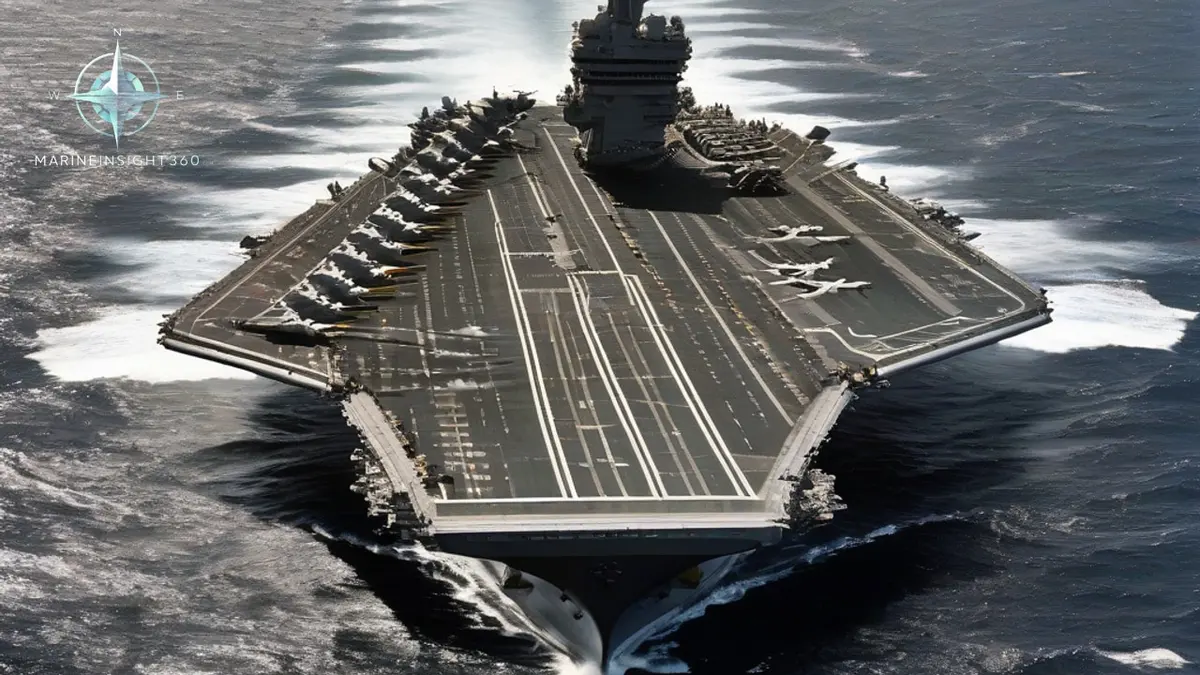
The Biggest Aircraft Carrier: Inside USS Gerald R. Ford
USS Gerald R. Ford is the biggest aircraft carrier afloat at 1,106 ft and over 100,000 tons. Her size, EMALS catapults and how merchant ships meet her.
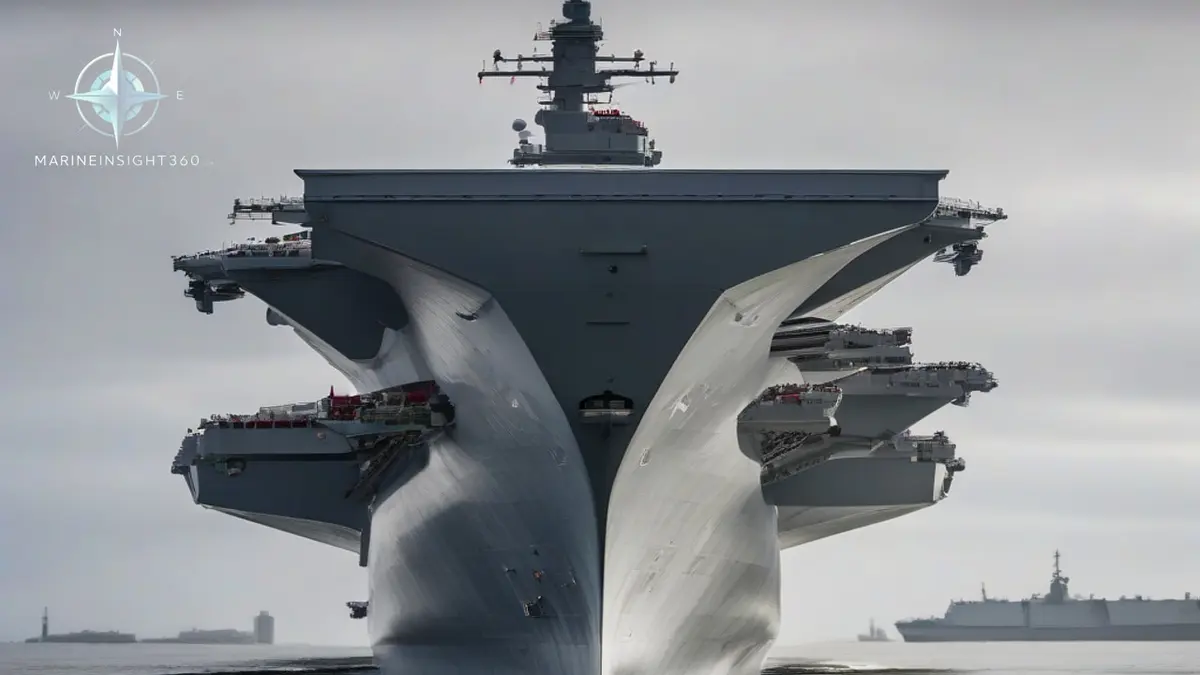
China Is Testing a Mysterious Aircraft Carrier: What the Flat-Deck Ship Tells Us
China is testing a mysterious aircraft carrier with three islands and a full flight deck. What analysts think it is, and how the PLA carrier fleet compares.
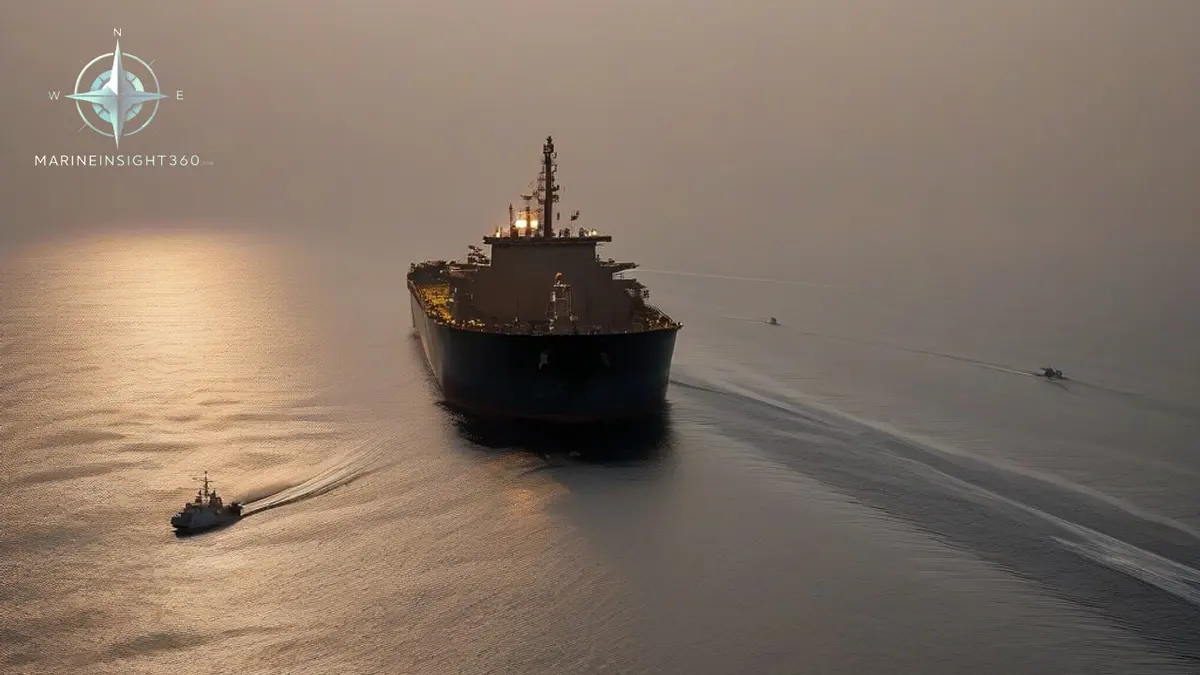
Strait of Hormuz Blockade: What Closure Really Means for Merchant Ships
How a blockade of the Strait of Hormuz actually stops merchant traffic: war risk insurance, UKMTO reporting, AIS decisions and the pipelines that bypass it.