
The Strait of Hormuz and the Limits of Maritime Law
Transit passage under UNCLOS, why Iran and the United States disagree, and what masters actually do when a legal right meets a warship in the Strait.
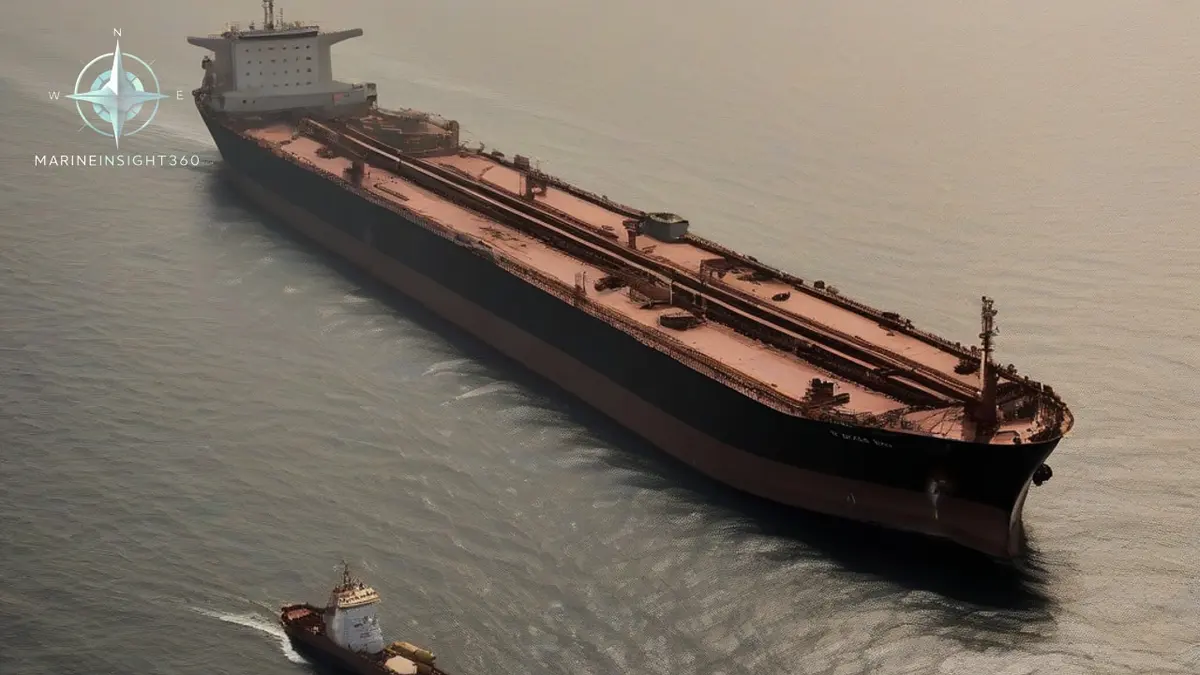
The legal right to transit exists, and it does not stop a boarding
Ships hold a right of transit passage through the Strait of Hormuz that no coastal state may suspend, including in wartime. That right sits in Part III of the UN Convention on the Law of the Sea, the treaty codifying rights and duties at sea, and it covers all ships and aircraft that proceed without delay in their normal mode.
The limit of maritime law is that a right on paper does not prevent a fast craft from closing on the beam.
That gap between entitlement and enforcement is what masters and operators actually manage in the strait.
Transit passage is not innocent passage
The distinction matters because the two regimes give very different protection.
- Transit passage applies in straits used for international navigation. It cannot be suspended, it covers submerged submarines and overflying aircraft, and coastal states may not impede it.
- Innocent passage applies in ordinary territorial seas. It can be suspended temporarily on security grounds, it requires submarines to surface, and it does not extend to aircraft.
The conditions attached to transit passage are narrow. Ships must proceed without delay, transit in their normal mode of operation, and refrain from any threat or use of force against states bordering the strait. A vessel that loiters, conducts a survey or deviates from continuous transit steps outside that protection.
Why the treaty argument never resolves
Neither the United States nor Iran is a party to UNCLOS. The United States position is that transit passage has hardened into customary international law and therefore binds non-parties. Iran argues that a state which never ratified the convention cannot claim its benefits, so non-parties receive only innocent passage, which can be suspended.
The disagreement is not academic. Innocent passage would permit temporary closure of specific lanes and would give a coastal state a defensible basis for demanding notification and inspection. Transit passage would not.
Iran has framed its measures as regulation rather than closure: prior notification, prescribed routing, monitoring and inspection, presented as a way to separate neutral from non neutral traffic. The framing keeps the dispute inside a legal argument instead of an outright blockade.
The geography sets the practical constraint
At its narrowest the strait is roughly 21 nautical miles (39 km) wide, and the traffic separation scheme runs through Omani territorial waters near the Musandam Peninsula. Because the lanes lie inside territorial seas, there is no high seas corridor a master can use to stay clear of coastal state jurisdiction. Every deep draft transit passes within a few miles of a coastline.
That geography is what makes the legal question unavoidable. In a wide strait, ships would simply route around the dispute.
What masters and operators actually do
Legal entitlement is the start of a risk assessment, not the end of it.
- Report through the regional reporting scheme. Voluntary reporting keeps naval forces aware of your position and intentions before an encounter rather than after one.
- Transit continuously. Any stop, drift or unexplained deviation weakens the legal position and attracts attention. Plan bunkers and stores so that no pause is needed.
- Brief the bridge team on challenges. Respond promptly on VHF, give vessel name, flag, cargo type, last port and next port, and log the exchange with time and channel.
- Do not resist a boarding. The place to contest an unlawful stop is through the flag state and the owner lawyers, not on deck at 0300.
- Verify position independently. Positioning interference is common in the area, so cross check satellite position against radar ranges, visual bearings and the echo sounder.
- Check the war risk position. Listed area status, additional premium, breach of warranty cover and the charterparty war risk clause decide who bears the cost of a refusal or a deviation.
The limits of maritime law in the Strait of Hormuz
Maritime law allocates rights between states. It does not give a master a remedy at the moment an armed boarding party comes over the rail. Enforcement depends on other states being willing and able to act, and a merchant ship carries no capacity to enforce anything.
The practical result is that commercial decisions turn on risk premium rather than legal entitlement. Charterers reroute, underwriters reprice, and crews exercise contractual rights to refuse a voyage into a listed war zone. None of that depends on who is right about the convention.
What to watch next
The useful signals are concrete: flag state and protection and indemnity circulars for the strait, changes to listed war risk areas, published navigational warnings, and whether inspection demands are applied to a broad class of shipping or only to specific flags and cargoes. Broad application signals a real change in the operating regime. Selective application usually signals a targeted campaign that most traffic can transit around.
UKMTO runs the voluntary reporting scheme covering the Gulf and the wider Indian Ocean, and it is the practical first call for a merchant ship in the strait. Reports go in by email or phone, and the bridge receives advisories and incident alerts back. The IMO circulates the resulting security guidance to flag states, and war risk underwriters reprice the listed area once the picture changes.
What goes wrong is rarely the legal argument. Positioning interference drags an ECDIS track off the real ground position, so a ship can set toward territorial water it meant to avoid. Vessels are detained with crew aboard for weeks while a case is argued ashore. Charterparties then fail on off-hire and deviation wording that nobody read closely before the fixture.
Sources and further reading
- Legal and Operational Issues in the Strait of Hormuz: Transit Passage Under Fire
- Transit Passage Rights in the Strait of Hormuz
- The Strait of Hormuz, shipping, and law
What to read next
Recommended Reading
Iran's Strait of Hormuz Maritime Zone Claim and What It Means for Shipping
Iran claims regulatory control over the Strait of Hormuz. Here is what transit passage law says, how traffic has collapsed, and what masters should do.
Iran Imposes New Shipping Rules in the Strait of Hormuz: What Transit Now Requires
Iran now demands 48 hours notice, insurance proof and a 40 question form to transit the Strait of Hormuz. How the rules clash with UNCLOS transit passage.
Iran's New Strait of Hormuz Rules: What Transiting Ships Now Face
Iran now wants transit requests 48 hours ahead plus a 40 question ownership and cargo form for Strait of Hormuz passage. What operators and masters must weigh.