
Ship Mast: What the Tallest Structure on Board Actually Does
What a ship mast does on a modern vessel: the lights, antennas and radar it carries, the types you will see, and why the old sailing word never left the fleet.
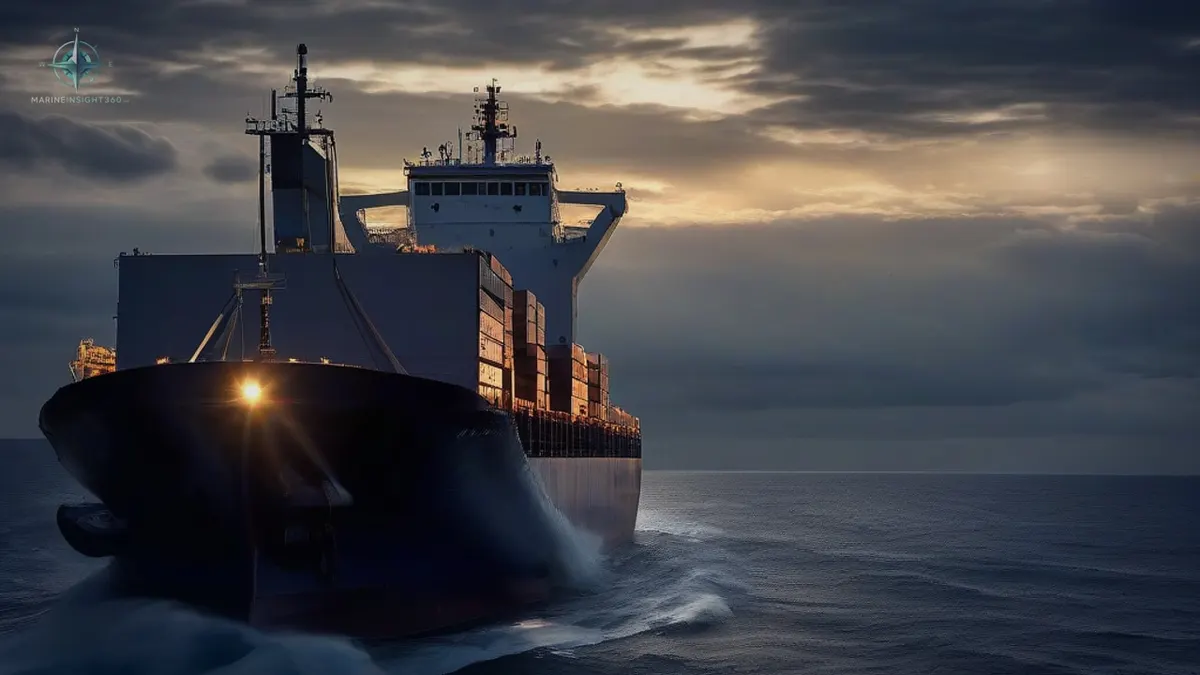
A ship mast on a modern vessel is a steel tower that carries navigation lights, radar antennas, communication aerials, flags and the ship's whistle. Sail power is a century gone from merchant fleets, but the mast never left. Ships still need height, and the mast is where height lives.
Everything a vessel shows or senses works better from altitude. Lights must be visible over waves and deck cargo, radar needs a horizon, and antennas want clear sky. The mast is simply the structural answer to all three demands at once.
What a Modern Mast Carries
- Navigation lights: the white masthead lights whose height and spacing are fixed by the collision regulations. They let other ships read heading at night.
- Radar scanners: mounted high for range and clear rotation, usually on the main mast above the bridge.
- Antennas: VHF whips, GPS domes, satellite terminals and AIS aerials, spaced to avoid interfering with each other.
- Signal fittings: halyards for flag hoists, day shapes like the anchor ball, and the whistle.
- Access: a ladder and platforms, because every fitting up there eventually needs a human with a spanner.
The Masts You Will See
The foremast stands near the bow, often on the forecastle, carrying the forward masthead light and the anchor day shape. The main mast, or radar mast, rises above the wheelhouse and is the ship's electronic crown. Between them, some designs add smaller posts. Kingposts served as crane supports in the general cargo era. Container ships often carry a lattice light tower forward.
Warships stack sensors on enclosed masts designed for radar performance, and sailing yachts, of course, still use the mast for its original job. Each type is the same idea, height for equipment, dressed for a different trade.
Structure: How a Mast Stands
Most modern masts are self-supporting steel or aluminum towers with no rigging at all. They weld to deck structure that spreads their load into the hull. Taller or lighter masts may carry stays, the wire supports inherited from sail. Designers size a mast for wind, ice and the whip of the ship rolling. A mast head swings through arcs that multiply forces at the top. Vibration is the quiet enemy.
A mast that resonates with the main engine's frequency will crack fittings and blur radar pictures until the structure is stiffened.
Why Mast Height Is Sometimes a Problem
The mast usually sets a ship's air draft, the clearance a vessel needs under a bridge. Routes into ports in the United States and Europe run under fixed spans, so ships built for those trades get folding or telescopic masts. River cruise vessels on European waterways go further. They drop the entire mast and wheelhouse to slide under medieval bridges.
Air draft calculations before a transit are a real navigational task, because misjudging one is the kind of error that makes the news.
From Sail to Steel: How the Mast Kept Its Job
The mast is the oldest surviving structure in shipbuilding, and its career change is a neat history of the industry. For millennia it existed to hold sail area. Everything about a vessel, crew size, hull shape, even naval tactics, flowed from that. Steam made sails auxiliary, then decorative, then gone. Ships discovered they still needed somewhere high for lookouts, signal flags and the new wireless aerials.
The fighting top became the crow's nest, and the signal yard survived because flag hoists remained the fastest bridge-to-bridge message for decades. Navies in the United Kingdom and United States kept tall spotting tops through the dreadnought era. Directing gunfire needed height, the same logic radar inherited. Radar's arrival in the 1940s settled the matter permanently: every generation of electronics since has demanded a higher, cleaner perch.
Traditions rode along. Ships still dress overall with flags on national days. Crews still hoist a Christmas tree at the truck in northern ports each December. Shipyards still weld coins under a new mast, a luck ritual older than written naval history. Ask any cadet sent aloft with a grease gun. The oldest structure on board keeps collecting the newest equipment, and somebody still has to climb it.
What to do next
The mast connects to lights, electronics and hull structure, covered in these guides:
Recommended Reading
Container Tracking: How Shippers Actually Follow a Box Across the Ocean
How container tracking works, from free carrier lookups to visibility platforms: what each tool layer does, what it costs, and how to pick for your volume.
The World's Major Sea Routes: Where Global Trade Actually Sails
The sea routes that carry world trade: Asia-Europe, transpacific, transatlantic and the chokepoints they squeeze through, from Suez to Malacca to Panama.
Deadweight Tonnage: The Number That Says What a Ship Can Actually Carry
What deadweight tonnage means, how DWT differs from gross tonnage and displacement, the ship size classes built on it, and why charterers price by the number.