
Deadweight Tonnage: The Number That Says What a Ship Can Actually Carry
What deadweight tonnage means, how DWT differs from gross tonnage and displacement, the ship size classes built on it, and why charterers price by the number.
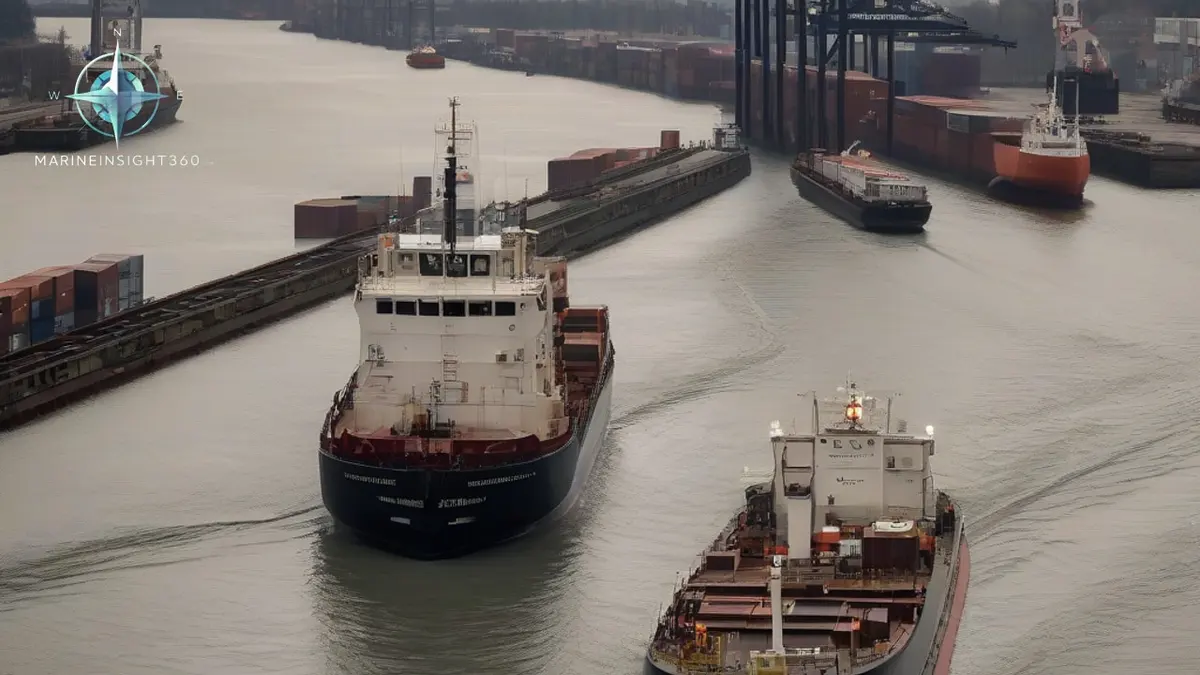
Deadweight tonnage, written DWT, is the total weight a ship can safely carry: cargo plus fuel, fresh water, stores, spares and crew. It is the difference between the ship fully loaded to her marks and the ship stripped empty, and it is the single most commercial number in shipping.
The confusion around tonnage exists because the industry uses one word for three ideas: weight carried, volume enclosed, and weight of the ship itself. Deadweight answers the first, and only the first.
The Definition, Precisely
Take the ship's displacement, the actual weight of ship plus everything aboard, when she floats at her summer load line. Subtract the lightship weight, the empty vessel as built, with machinery but no cargo, fuel or people. What remains is the deadweight: the total lifting capacity. Note what it includes. A tanker quoted at 300,000 DWT cannot load 300,000 tonnes of oil, because several thousand tonnes of that allowance go to bunkers, water and stores.
The cargo share of deadweight is what a charterer really buys.
Deadweight Versus the Other Tonnages
- Gross tonnage, GT: a formula-based measure of the ship's total enclosed volume. It has no units of weight at all, and it drives rules, fees and manning requirements.
- Net tonnage, NT: the same volume idea minus non-earning spaces, a proxy for cargo-carrying volume used in port and canal dues.
- Displacement: the real weight of the ship afloat, the naval measure, and the basis deadweight is calculated from.
- Lightship: the empty ship's own weight, the other half of the subtraction.
A cruise ship shows the trap perfectly: enormous gross tonnage, modest deadweight, because people and cabins fill volume without weighing much. A bulk carrier is the reverse.
The Size Classes Everyone Quotes
The dry bulk and tanker markets sort their fleets by deadweight, and the class names are the industry's everyday vocabulary:
- Handysize and Handymax: roughly 10,000 to 40,000 DWT and 40,000 to 60,000 DWT respectively, the flexible small bulkers.
- Panamax: around 65,000 to 80,000 DWT, sized to the old Panama Canal locks.
- Capesize: 150,000 DWT and up, iron ore and coal haulers too big for the canals.
- Aframax and Suezmax tankers: roughly 80,000 to 120,000 DWT and 120,000 to 200,000 DWT respectively.
- VLCC: very large crude carriers, about 200,000 to 320,000 DWT, the standard long-haul oil ship.
Why the Number Runs the Market
Freight is sold by weight moved, so earning power scales with deadweight, and charter rates are quoted against it. Brokers in London and New York describe ships by DWT before anything else, port restrictions cap the deadweight a berth can accept, and newbuilding contracts specify guaranteed deadweight with penalty clauses if the yard misses. When analysts in the United States or United Kingdom write that the world fleet grew by so many million tonnes, deadweight is the tonne they mean.
It is the closest thing shipping has to a universal unit of commercial capacity.
A Worked Example
Numbers make the definition stick. Take a Panamax bulk carrier with a summer displacement of 92,000 tonnes and a lightship weight of 11,500 tonnes. Her deadweight is the difference: 80,500 DWT. Now watch the voyage plan eat into it. Bunkers for a long leg might take 2,500 tonnes, fresh water and stores another 400, constants and spares a few hundred more.
The cargo the charterer can actually load lands somewhere near 77,000 tonnes, and the final figure moves with the route, since a ship fueling for a Pacific crossing gives up more capacity than one hopping a short sea leg.
Load lines complicate it further in a useful way. The same hull has different permitted drafts by season and zone, winter marks sitting lower than summer, tropical higher, and fresh water higher again to allow for the density change. Each mark changes displacement, and so the working figure for a voyage is not one number but a small family of them, which is exactly why the calculation is redone for every fixture rather than copied from the ship's brochure.
Charterers and brokers argue over precisely these tonnes, because at market freight rates a few hundred tonnes of capacity is real money on every voyage.
What to do next
Capacity connects to ship types and loading in these guides:
Recommended Reading

Container Tracking: How Shippers Actually Follow a Box Across the Ocean
How container tracking works, from free carrier lookups to visibility platforms: what each tool layer does, what it costs, and how to pick for your volume.
Ship Mast: What the Tallest Structure on Board Actually Does
What a ship mast does on a modern vessel: the lights, antennas and radar it carries, the types you will see, and why the old sailing word never left the fleet.
The 7 Types of Cargo Ships That Carry World Trade
The seven types of cargo ships and what each carries: container ships, bulk carriers, tankers, gas carriers, ro-ro, general cargo and reefer vessels.