
Tare Weight in Container Shipping and How to Use It
What tare weight means on a shipping container, where to read it on the CSC plate, how it feeds the SOLAS verified gross mass, and why the stencil can be wrong.
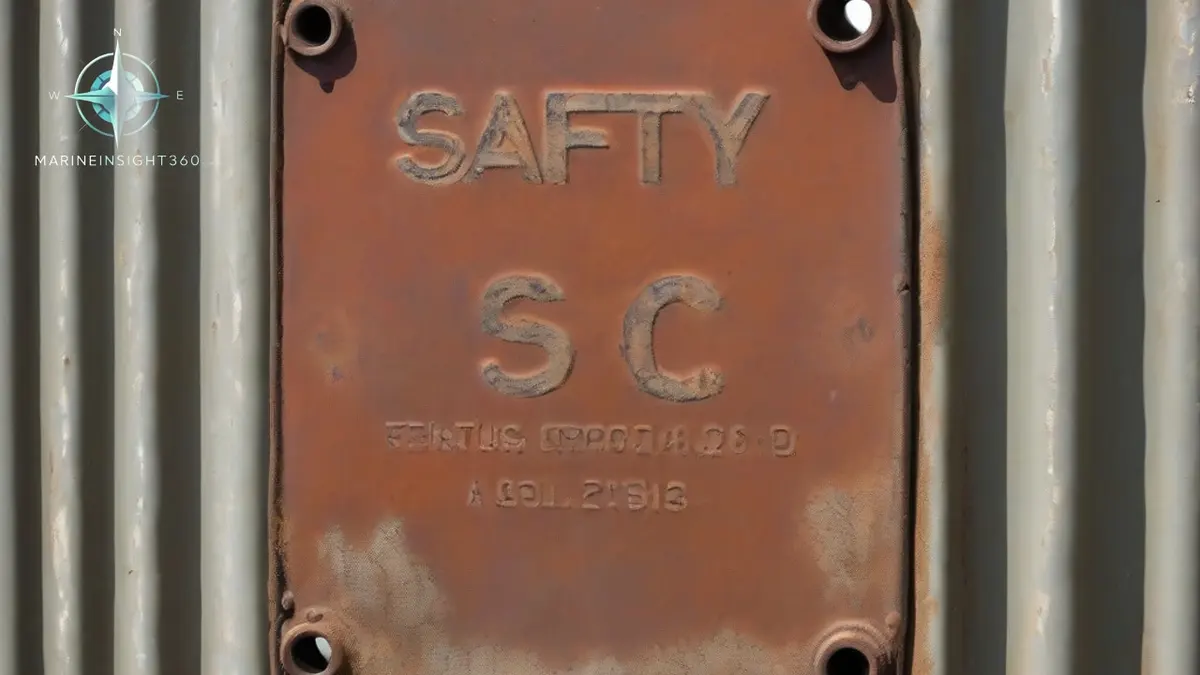
Tare weight is the weight of an empty shipping container with no cargo, dunnage or packing inside it. Subtract tare from the maximum gross weight and you get the payload the box is rated to carry. Add tare to the weight of everything packed inside and you get the verified gross mass that has to be declared to the carrier before loading.
Terminals in the United States, the United Kingdom, the EU and Australia will not load a box without that declaration, because the USCG, the MCA and AMSA all enforce the SOLAS Chapter VI rule directly. Every container weight calculation in liner shipping starts with that one number.
Where to find the tare weight on a container
The authoritative figure is on the CSC safety approval plate, usually fixed to the left-hand container door. CSC refers to the International Convention for Safe Containers, which requires every container in international traffic to carry an approval plate. The plate shows the maximum gross weight, the allowable stacking weight, the racking test load and the tare.
The tare is also stencilled on the door in the block of markings alongside the container number, along with the payload and maximum gross weight. Read the plate rather than the stencil when the two disagree, and photograph both if a dispute is likely.
Typical tare weights by container type
Tare varies with construction, so treat the following as working ranges rather than fixed values. Steel dry boxes from different manufacturers differ by tens of kilograms, and refrigerated units differ far more.
- A 20 ft standard dry container is commonly around 2,200 to 2,400 kg (4,850 to 5,300 lb).
- A 40 ft standard dry container is commonly around 3,700 to 3,900 kg (8,150 to 8,600 lb).
- A 40 ft high cube adds roughly 100 to 200 kg for the extra height.
- A 40 ft refrigerated container is far heavier, typically in the region of 4,500 kg (9,900 lb) or more, because of insulation, the machinery unit and the aluminium floor.
The practical point is that a reefer eats several hundred kilograms of payload before a single carton goes in. Planners who apply a dry-box assumption to a reefer booking end up with an overweight road leg at the far end.
How tare weight feeds the SOLAS verified gross mass
Since 1 July 2016, SOLAS Chapter VI has required the shipper named on the bill of lading to provide a verified gross mass, usually shortened to VGM, for every packed container before it is loaded. No VGM, no loading. The rule followed years of casualties and stack collapses linked to mis-declared weights.
Two methods are permitted:
- Method 1 weighs the packed and sealed container on calibrated equipment. The reading is the VGM, complete, with no separate tare arithmetic needed.
- Method 2 weighs each item of cargo, plus pallets, dunnage, lashing and securing material, then adds the container tare from the CSC plate. National authorities certify Method 2 procedures, and not every jurisdiction allows it for every commodity.
Method 2 is where tare accuracy stops being academic. Every kilogram of error in the tare figure passes straight through into the declared VGM.
Why the stencilled tare can be wrong
Containers spend twenty years in service and change weight along the way. Repairs replace panels with heavier or lighter sections. Plywood floors absorb water and gain mass in humid trades. Previous shippers leave lashing bars, timber and residues behind. Repainting adds a surprising amount over multiple cycles.
Depots are supposed to restencil after a significant modification, and often the plate is updated while the door stencil is not. If your operation depends on Method 2, verify the tare of a sample of boxes on a weighbridge periodically rather than trusting the marking indefinitely.
What goes wrong when the number is wrong
An understated gross mass distorts three separate calculations at once. The ship's stowage plan places the box in a stack position it is not rated for, the vessel's stability condition is computed from figures that do not match reality, and the lashing calculation assumes forces that the securing gear will not actually see.
Investigations into container losses and hull failures have repeatedly found declared weights that differed substantially from actual weights across a large share of the boxes examined. That evidence is what drove the VGM requirement into SOLAS.
The road leg carries its own exposure. Axle weight limits differ by country and by route, and a container that is legal at sea can be illegal on the highway. Fines land on the haulier, and the delay lands on the consignee.
A working routine for getting tare right
Build the check into the process rather than treating it as an exception. Photograph the CSC plate at stuffing and file the image against the booking. Compare the plate tare against the stencil and against the carrier's equipment record. Include pallets, dunnage, desiccant and lashing in the cargo total when using Method 2, because they are cargo for VGM purposes.
Then check the payload headroom before packing rather than after. Maximum gross weight minus tare gives the rated payload, but the binding limit is often the lowest of the container rating, the vessel stack weight limit and the road axle limit at either end. Plan to the lowest of the three and the box will move without a weighbridge argument.
Sources and further reading
- Understanding Verified Gross Mass - Hapag-Lloyd
- Global Compliance with VGM and Tare Weight - MSC
- SOLAS Verified Gross Weight Requirement - Crowley
What to read next
Recommended Reading

Container Tracking: How Shippers Actually Follow a Box Across the Ocean
How container tracking works, from free carrier lookups to visibility platforms: what each tool layer does, what it costs, and how to pick for your volume.
What Is TEU in Shipping? The Unit Behind Every Container Ship Figure
TEU means twenty-foot equivalent unit, the standard measure of container ship and port capacity. Here is how TEU works, how it differs from FEU, and its limits.
The Law and Practice of Container Shipping: A Working Guide
How container shipping law works in practice: which liability regime applies, package limitation, the one-year time bar, VGM duties and deck carriage risk.