
The Law and Practice of Container Shipping: A Working Guide
How container shipping law works in practice: which liability regime applies, package limitation, the one-year time bar, VGM duties and deck carriage risk.
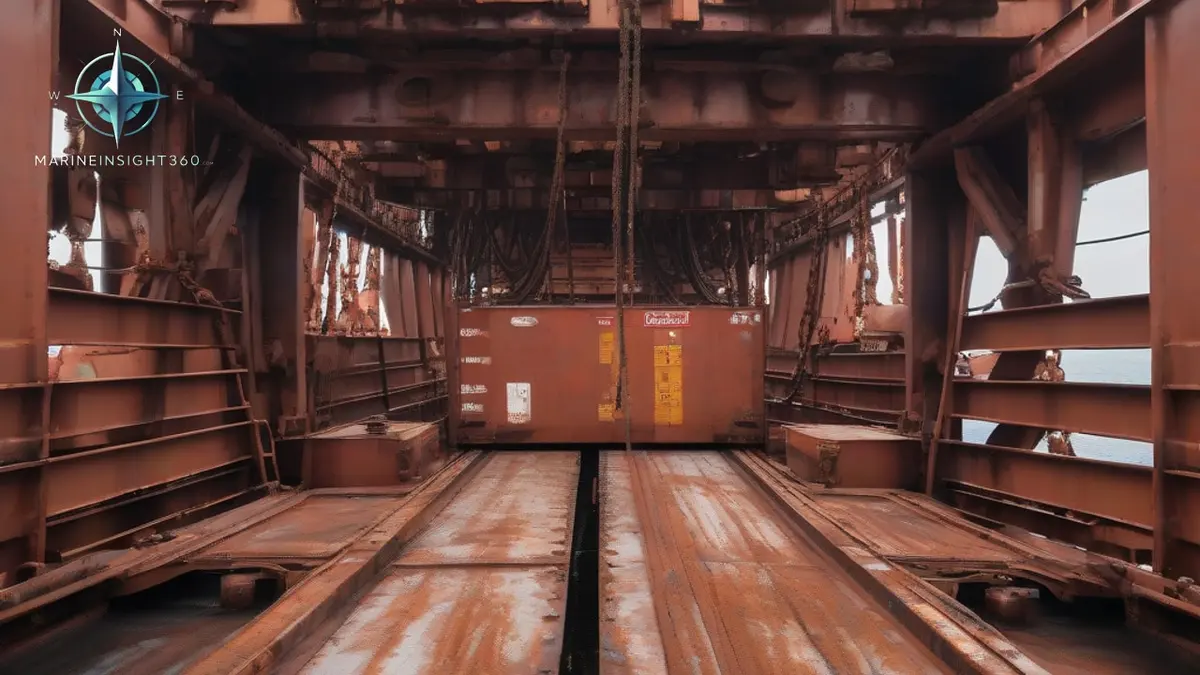
Which regime governs the box you just loaded
The law and practice of container shipping rests on one question asked early: which liability regime applies to this bill of lading. Most container cargo moves under the Hague Rules of 1924 or the Hague-Visby Rules, the 1968 Brussels Protocol that amended them, incorporated either by the law of the country of shipment or by a clause paramount in the contract. That single choice sets the carrier's defences, the money limit on a claim and the deadline for bringing suit.
The Hamburg Rules of 1978 apply in a smaller group of states and are more favourable to cargo. The Rotterdam Rules, agreed in 2008 to cover door-to-door carriage including inland legs, have never entered into force. In United States trade, the Carriage of Goods by Sea Act applies its own package limit. Working out which text governs is the first thing a claims handler does, and it is why bill of lading wording repays careful reading.
What a bill of lading is doing
A bill of lading performs three jobs at once, and confusion between them causes most disputes. It is a receipt for the goods as described and as their apparent condition allowed. It is evidence of the contract of carriage, not usually the contract itself. In negotiable form it is also a document of title, so whoever lawfully holds it can demand delivery.
Sea waybills now carry a large share of container volume because they move faster and cannot be lost in transit. They are not documents of title. Where a shipper was entitled to demand a bill of lading that would have been subject to the Hague-Visby Rules, those rules can still bite even though a waybill was issued instead.
Package limitation and the container problem
Under Hague-Visby as amended by the 1979 SDR Protocol, carrier liability is capped at 666.67 Special Drawing Rights per package or unit, or 2 SDR per kilogram of gross weight, whichever is higher. The original Hague Rules express the figure in gold francs. US COGSA sets 500 dollars per package. On a full container of electronics the gap between those numbers is enormous.
The container itself created the obvious argument: is the box one package, or is every carton inside it a package? Article IV rule 5(c) of Hague-Visby answers by reference to the bill of lading. Where the packages inside the container are enumerated in the bill, that number governs. Where they are not, the container counts as one package.
A description reading "1 container said to contain electronics" and one reading "1 container containing 940 cartons" produce recoveries that differ by orders of magnitude.
Practical drafting points
- Enumerate cartons or pallets in the bill of lading if you are cargo interest.
- Understand what "said to contain" wording costs before accepting it.
- Check whether the goods qualify as a unit in their own right, since an identifiably separate item does not have to be shippable unpackaged to count.
- Declare value where the cargo is genuinely high value and the freight difference is acceptable.
The time bar catches more claims than any defence
Article III rule 6 of Hague-Visby discharges the carrier from all liability unless suit is brought within one year of delivery, or of the date the goods should have been delivered. The Hamburg Rules allow two years. That one-year window runs whether or not the parties are still negotiating, which is why experienced claims handlers request a written time extension long before the anniversary and repeat the request while the file stays open.
Carriers also rely on the notice provisions. Apparent loss or damage must be notified before or at the time of removal, and concealed damage within three days. Missing the notice does not kill a claim outright, but it shifts the evidential burden onto the receiver.
What practice demands on board and ashore
Legal exposure is created by paperwork and stowage long before a lawyer opens the file. Under SOLAS chapter VI regulation 2, as amended in 2016, the shipper must provide a verified gross mass for every packed container and the ship must not load one without it. Dangerous goods must be declared, packed and documented under the IMDG Code, mandatory through SOLAS chapter VII.
Packing itself is addressed by the IMO, ILO and UNECE Code of Practice for Packing of Cargo Transport Units, known as the CTU Code.
On board, the mate's receipt and any clausing of the bill are the ship's protection. A container with a broken seal, a crushed corner post or visible water staining should be claused and photographed at the point of receipt, not argued about later. Officers who let a clean bill go out over damaged units hand away the carrier's strongest defence.
Deck carriage, delay and the costs nobody budgets
Cargo carried on deck under a liberty clause and stated as such on the bill falls outside the Hague-Visby definition of goods, which changes the liability position entirely. On a purpose-built container ship, on-deck carriage is normal and contracts are written to reflect it. On a general cargo ship it is a live risk point.
Delay is treated differently again. Hague-Visby contains no express delay regime, so recovery usually turns on the contract wording and the applicable national law. Demurrage and detention on containers, by contrast, are pure contract: the tariff, the free days and the moment the clock starts are set by the carrier's terms. Reading those terms before a box sits three weeks in a congested yard costs less than arguing about them afterwards.
Readers working through cargo claims will find related material in our Ports and Shipping section, which covers documentation, terminal practice and the operational side of container handling.
Sources and further reading
What to read next
Recommended Reading

Container Tracking: How Shippers Actually Follow a Box Across the Ocean
How container tracking works, from free carrier lookups to visibility platforms: what each tool layer does, what it costs, and how to pick for your volume.
What Is TEU in Shipping? The Unit Behind Every Container Ship Figure
TEU means twenty-foot equivalent unit, the standard measure of container ship and port capacity. Here is how TEU works, how it differs from FEU, and its limits.

Tare Weight in Container Shipping and How to Use It
What tare weight means on a shipping container, where to read it on the CSC plate, how it feeds the SOLAS verified gross mass, and why the stencil can be wrong.