
What Is TEU in Shipping? The Unit Behind Every Container Ship Figure
TEU means twenty-foot equivalent unit, the standard measure of container ship and port capacity. Here is how TEU works, how it differs from FEU, and its limits.
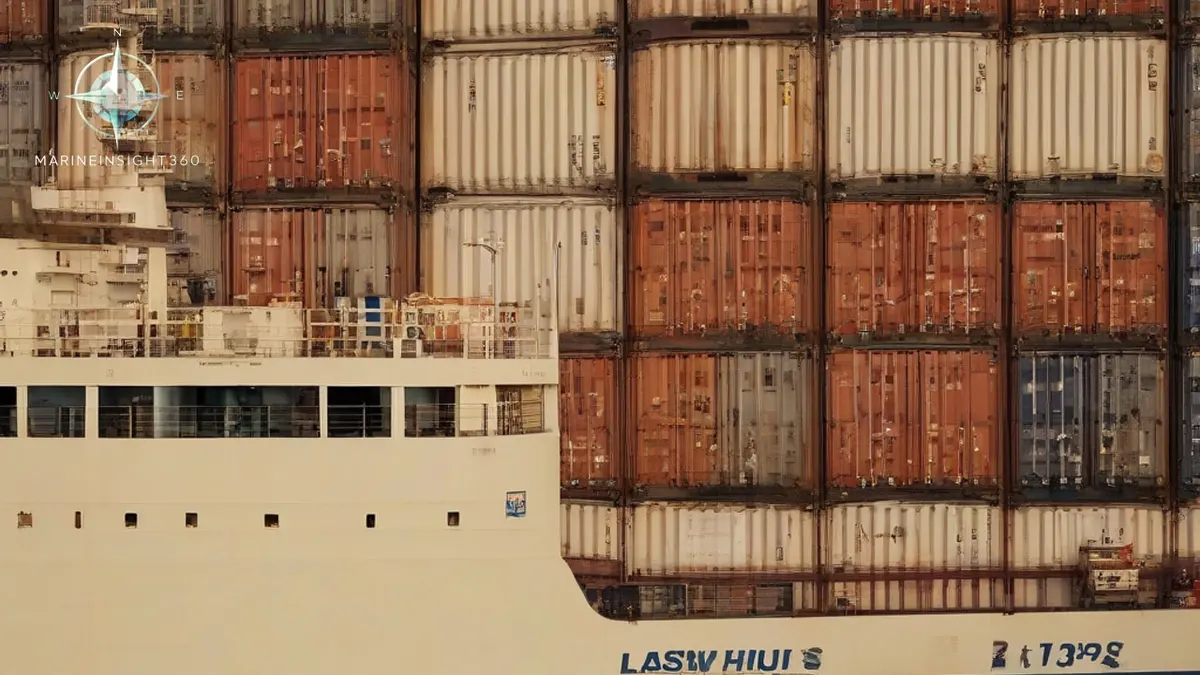
What is TEU in shipping? TEU means twenty-foot equivalent unit, the standard measure of container capacity based on the volume of one 20-foot intermodal container. A 20-foot box counts as 1 TEU and a 40-foot box counts as 2 TEU. A vessel rated at 10,000 TEU can therefore carry 10,000 twenty-foot containers or 5,000 forty-foot containers. Ports use the same unit to report annual throughput, and carriers use it to describe fleet capacity.
The unit exists because containers come in more than one length but terminals, ships and statistics need one common denominator. A 20-foot container has internal dimensions of roughly 20 ft long, 8 ft wide and 8 ft high, and holds between 9 and 11 pallets depending on whether they are standard or Euro pallets.
TEU and FEU: which one the trade actually uses
FEU means forty-foot equivalent unit. One FEU equals 2 TEU. Most containerized cargo in practice moves in 40-foot boxes, because the freight rate per cubic meter is lower and handling one 40-foot box costs the same crane move as one 20-foot box.
The split shows up in how the industry quotes numbers. Ocean freight rates are usually quoted per FEU for a 40-foot box and per TEU for a 20-foot box, while vessel and port capacity are always stated in TEU. A shipper comparing quotes needs to check which unit is being priced, because a rate that looks half the price is often the same rate expressed differently.
What counts as what
- 20 ft standard container: 1 TEU.
- 40 ft standard container: 2 TEU.
- 40 ft high cube, one foot taller: still 2 TEU, because TEU counts length slots, not volume.
- 45 ft container: usually counted as 2.25 TEU in statistics, though many ships and terminals treat it as a 40 ft slot with an overhang.
The high cube point matters. A fleet described as 10,000 TEU carrying mostly high cubes has more cubic capacity than the number suggests, but not more slots.
Why nominal TEU capacity is never the real number
A ship advertised at 14,000 TEU almost never sails with 14,000 boxes on board. Nominal capacity is a slot count and takes no account of weight.
- Deadweight limit. Nominal capacity is usually calculated against a homogeneous cargo weight of about 14 tonnes per TEU. Load heavier boxes and the ship runs out of deadweight before it runs out of slots.
- Stability and stress. Heavy containers must go low, light ones high. A stow that satisfies the slot plan but not the GM and shear force limits is not a stow.
- Lashing limits. Deck stacks are limited by lashing bridge height and by the racking forces the twistlocks can take, which caps the tiers above deck regardless of empty slots.
- Visibility line. SOLAS requires the view forward from the bridge not be obscured beyond defined limits, which restricts stack heights in the forward bays.
- Reefer plugs and dangerous goods segregation. Both constrain where specific boxes can go and strand slots around them.
The gap between nominal and achieved capacity commonly runs to 10 or 15 percent on a weight-limited trade.
How ports use TEU, and where it misleads
Port throughput in TEU counts container moves across the quay, not unique containers. A box that is discharged at a transhipment hub and later loaded onto a second vessel is counted twice, once on each move. That is why transhipment hubs such as Singapore report throughput figures that look enormous relative to the size of their local economies.
Two other quirks are worth knowing. Empty repositioning containers count as full TEU in throughput statistics even though they carry no cargo, and a terminal quoting annual capacity in TEU is describing a crane and yard productivity ceiling, not a physical storage figure.
Ship size classes by TEU
- Feeder and feedermax: up to roughly 3,000 TEU, serving regional ports and short sea routes.
- Panamax: around 4,000 to 5,000 TEU, sized for the original Panama Canal locks.
- Neo-Panamax: roughly 10,000 to 15,000 TEU, sized to the expanded Panama Canal locks at 366 m length, 51.25 m beam and 15.2 m draft.
- Ultra large container vessels: above 18,000 TEU, with the largest ships now exceeding 24,000 TEU and restricted to a handful of deepwater ports on the Asia to Europe trade.
Each step up cuts the cost per TEU carried but narrows the number of ports that can take the ship, which is why cascading larger tonnage down from the mainline trades reshapes regional services every few years.
Using TEU without being misled by it
TEU is a slot count. It says nothing about weight, cubic volume, reefer capability or the trade a ship can serve. When comparing vessels, ask for nominal TEU, TEU at 14 tonnes homogeneous, reefer plug count and design draft together. When comparing ports, ask whether throughput includes transhipment and empties. Those four numbers turn a headline figure into something a chartering or logistics decision can rest on.
The Ports and Shipping section of Marine Insight 360 covers vessel classes and terminal capacity in more detail.
The limits that decide a stow are documents, not estimates. Each packed container's weight comes from the shipper's verified gross mass declaration required under SOLAS Chapter VI. Stack weights, tier limits and lashing patterns come from the ship's Cargo Securing Manual. That manual is approved by the flag administration, or by a class society such as DNV, Lloyd's Register or ABS on its behalf.
Misdeclared weight is the standing failure in the box trade. A container declared light and stowed high raises the ship's center of gravity above what the loading computer was told. The stack then loses the margin the lashing calculation assumed. Investigations into containers lost overboard return to understated weights, undeclared dangerous goods, and twistlocks and lashing rods worn or corroded below their rated strength.
Sources and further reading
- Twenty-foot equivalent unit
- TEU Shipping: Meaning, Capacity and Containers, Freightos
- TEU: Definition, History and Vessel Sizes, Inbound Logistics
What to read next
Recommended Reading
Container Tracking: How Shippers Actually Follow a Box Across the Ocean
How container tracking works, from free carrier lookups to visibility platforms: what each tool layer does, what it costs, and how to pick for your volume.
What Does SS Mean on a Ship? Steamship, and Every Other Prefix Explained
SS on a ship means steamship, a vessel driven by steam engines. What the prefix tells you, why modern ships use MV instead, and what RMS, HMS and USS mean.
What Is a TEU? The Unit That Measures Container Shipping
What is a TEU? How the twenty-foot equivalent unit measures containers, ships and ports, and how to read vessel sizes quoted in TEU.