
The Bilge on a Ship: What Collects There and How It Is Managed
What the bilge is, how bilge water collects and is pumped, and the MARPOL Annex I rules on oily water separators and the 15 ppm discharge limit.
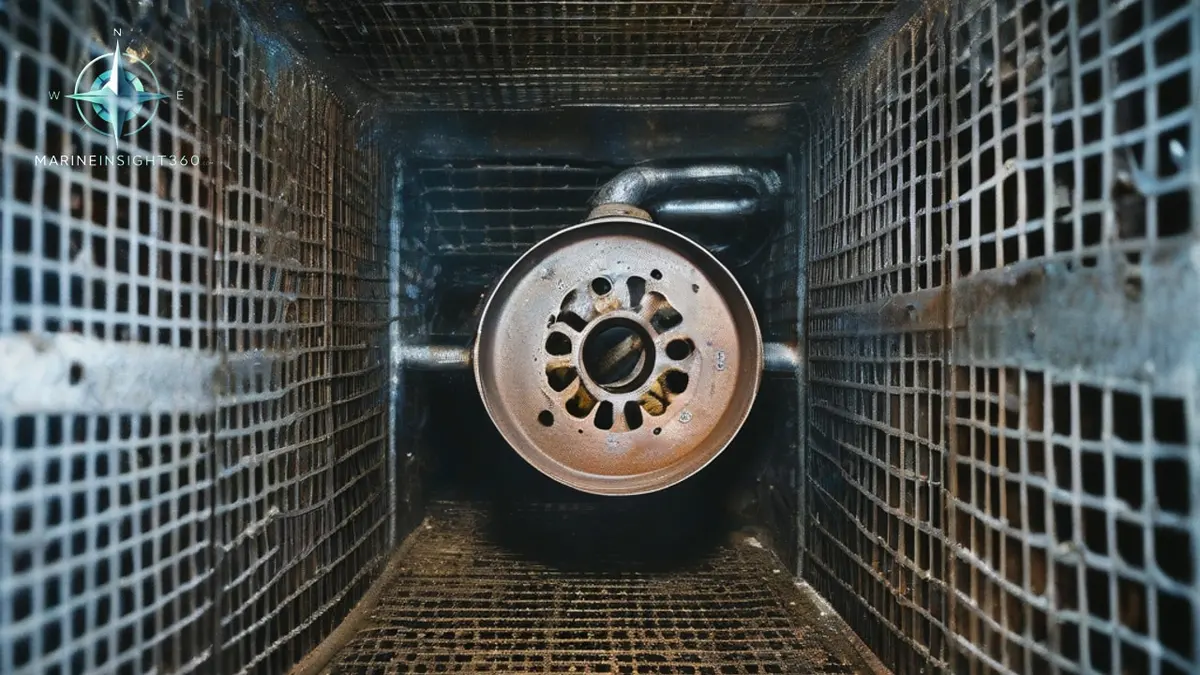
The bilge is the lowest internal part of a ship's hull, where the sides curve in to meet the bottom, and it is where every stray liquid on board finally collects. The bilge water that gathers there is a mixture of leakage, condensation, machinery drainage and washdown. Managing it is a legal obligation under MARPOL Annex I, not simply good housekeeping. Port state control officers in the United States, the European Union and Australia treat the record book as evidence.
The word carries two meanings worth separating. To a naval architect the bilge is a shape: the turn of the bilge is the curved transition between bottom shell and side shell, and the bilge radius is a hull form parameter. To anyone working the ship, the bilge is a set of spaces that have to be kept dry, sounded and pumped.
Where bilge water comes from
Very little of it is seawater ingress. On a well-maintained ship the bilge fills slowly from ordinary sources:
- Condensation running off cold surfaces, particularly in the engine room and around refrigerated or air-conditioned spaces.
- Gland leakage from pumps, stern tube seals and valve packings.
- Fuel, lubricating oil and hydraulic drips reaching machinery drip trays and purifier space drains.
- Boiler and steam system drains, plus small cooling water leaks.
- Tank top and deck washdown water, which carries oil and detergent with it.
- Fresh water from domestic system leaks and sanitary spaces.
Because oil and water arrive together, engine room bilge water is by definition an oily mixture and cannot go over the side untreated.
How a bilge system is arranged
Bilge water drains to bilge wells, small sumps at the aft end of each compartment, usually fitted port and starboard so the space drains on either list. Each well has a suction with a strainer, traditionally a rose box, to keep rags and debris out of the pipework. The suctions connect through non-return valves to the bilge main, which runs to the bilge pumps.
Those non-return valves are the safety feature that matters most. Without them, water flooding one compartment could cross-flood into another through the common bilge main, turning a contained leak into a stability problem. SOLAS requires an efficient bilge pumping system capable of pumping from and draining any watertight compartment under all practical conditions, with independent power arrangements so a single failure does not disable the system.
Two further items belong in the same picture. The emergency bilge suction, often a large direct suction from the engine room bilge to the biggest available pump, exists for serious flooding and bypasses the normal small-bore route. Bilge high-level alarms give the watchkeeper warning before a well overflows onto the tank top.
The 15 ppm rule and the oily water separator
MARPOL Annex I, Regulation 14, requires oil filtering equipment on ships of 400 gross tonnage and above. That equipment must produce an effluent with an oil content not exceeding 15 parts per million before anything is discharged. On ships of 10,000 gross tonnage and above, the system must also include an oil content meter with an alarm and an arrangement that automatically stops the discharge when 15 ppm cannot be maintained.
In service that means a three-stage process. The oily water separator uses gravity separation in a coalescing chamber to remove bulk free oil, a filter or coalescer stage to take out finer droplets, and an oil content monitor sampling the outlet. If the monitor reads above 15 ppm, a three-way valve diverts the flow back to the bilge holding tank instead of overboard. Type approval for this equipment follows IMO resolution MEPC.107(49).
Every transfer, separator run, overboard discharge and sludge landing goes into the Oil Record Book Part I. Port state control officers read that book against tank soundings, separator running hours and the ship's own logs, and mismatches between them are among the most common findings raised.
Bilge holding tanks and shore reception
Separator throughput is modest, so ships carry a bilge holding tank to buffer production between treatment runs. Where discharge is restricted, including the special areas defined under Annex I and much of the coastal trade in Northern Europe and North America, the working practice is to hold bilge water and land it ashore to a port reception facility.
Matching tank capacity to voyage length is a real operational decision on short-sea and coastal ships, where the tank can fill faster than the schedule allows treatment.
Common failures, and what inspectors look for
- Bypass arrangements. Unauthorized piping around the separator, the practice known as a magic pipe, has produced criminal prosecutions and very large fines for operators and named engineers. Blank flanges, seals and unaccounted flexible hoses attract immediate attention.
- A separator that has never run. Zero running hours against a full bilge tank is an obvious contradiction.
- Neglected wells. Wells full of rags, scale and sludge choke the strainers, so the system cannot reach its rated capacity when it is genuinely needed.
- Untested alarms. High-level and 15 ppm alarms need periodic function testing, and the test has to be recorded.
- Detergent in the bilge. Aggressive cleaning chemicals emulsify oil and defeat gravity separation, which is why deck and machinery washdown practice matters to the engineers who then have to treat the result.
Turn of the bilge, bilge keels and hull form
The naval architecture meaning still shows up in daily work. Bilge keels are long fins welded along the turn of the bilge to damp rolling, and they are a common source of hull damage from tug contact or grounding. A tight bilge radius affects how a ship sits on the blocks in drydock and where the docking plan places the side blocks.
Deck officers reading a docking plan and engineers planning tank inspections both need the term in its structural sense.
Keeping the bilge shallow, clean and correctly recorded is the cheapest compliance work on the ship, and it is the part of engine room routine most often judged from the outside. More on machinery space systems is in the Marine Insight 360 Marine Machinery section.
Sources and further reading
- MARPOL Annex I: Prevention of Pollution by Oil (IMO)
- IMO Resolution MEPC.107(49), as amended
- Oily Bilgewater Separators (US EPA technical paper)
What to read next
Recommended Reading
What Is the Bottom of a Ship Called? Keel, Bilge and Bottom Plating Explained
What is the bottom of a ship called? Keel, bilge, bottom plating, double bottoms and bilge keels explained in plain terms for working mariners.
How Do Ship Stabilizers Work? Fins, Tanks, Gyros and Bilge Keels
How do ship stabilizers work? Active fins, anti-roll tanks, gyros, bilge keels and rudder roll damping, and the trade-offs behind each choice.

UAE Suspends Trade With Iran Following Antiship Missile Strike
Find out how the UAE’s trade halt with Iran affects shipping routes, insurance, and port operations worldwide.