
What Is the Bottom of a Ship Called? Keel, Bilge and Bottom Plating Explained
What is the bottom of a ship called? Keel, bilge, bottom plating, double bottoms and bilge keels explained in plain terms for working mariners.
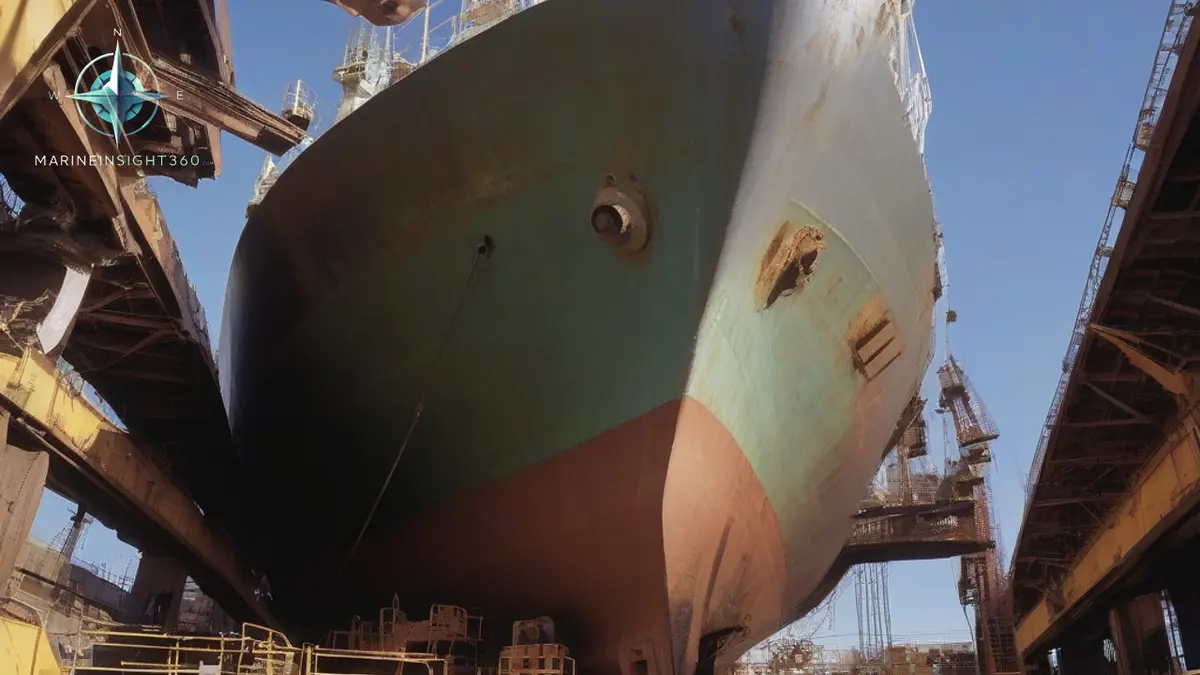
What is the bottom of a ship called? It depends which part you mean. The external spine running fore and aft is the keel. The plating that forms the underwater shell is the bottom plating. The lowest space inside the hull, where water and oil residues collect, is the bilge. Class surveyors and USCG or MCA inspectors use these terms precisely in drydock reports, so mixing them up costs time.
Most merchant ships add one more layer to the picture: a double bottom, a watertight band of space between the outer plating and an inner deck called the tank top. Each of these structures has a distinct job, and mixing the terms up matters in surveys, in drydock and in daily shipboard talk.
The keel: the backbone at the bottom of a ship
The keel is the primary structural member, running along the centerline of the bottom from stem to stern. It carries the longitudinal strength of the hull, distributes weight along the ship's length, and gives the vessel directional grip in the water. Shipbuilding tradition dates a vessel's life from the day the keel was laid, and the phrase survives in shipyard contracts today.
On modern welded ships the keel is usually a flat plate keel: a heavier strake of plating along the centerline backed by an internal girder. Sailing yachts hang deep external keels for stability, but a cargo ship's keel sits nearly flush with the surrounding shell.
The bilge: the lowest space inside the hull
Inside the hull, the bilge is where gravity sends everything: condensation, seawater ingress, tank washings and minor leakages. Bilge wells at the low points collect this mixture, and bilge pumps transfer it to a holding tank for treatment.
Discharge of machinery-space bilge water overboard is tightly controlled under MARPOL, the international convention on pollution from ships. It normally passes through an oily water separator limited to 15 parts per million of oil, and engineers record every transfer in the Oil Record Book, which port state inspectors check closely.
The rounded section of hull where the bottom turns up into the side is called the turn of the bilge, so the same word also names that external curve.
Bottom plating, garboard strake and the flat of bottom
The shell plating across the ship's underside is the bottom plating, and the broad horizontal area amidships is known as the flat of bottom. The strake immediately next to the keel keeps its traditional name, the garboard strake, inherited from wooden shipbuilding where the garboard was the first plank fitted against the keel.
The double bottom: why ships carry two skins
Between the bottom plating and the tank top, most cargo ships have a double bottom roughly 1 to 2 meters (3 to 7 ft) deep. It protects the ship from flooding after grounding damage, provides tank space for ballast water and fuel, and stiffens the whole bottom structure against wave loads.
Oil tankers go further. MARPOL requires modern crude and product tankers to be built with full double hulls, holding the cargo tanks clear of both the bottom and the sides, a rule the industry adopted after high-profile spills from single-hull ships.
Bilge keels: the fins that calm rolling
Fitted low on each side at the turn of the bilge, bilge keels are long, narrow steel fins that resist rolling. They run along much of the midbody, work without moving parts, and add almost nothing to the draft. For most cargo ships they remain the standard roll-damping device, sometimes supplemented by stabilizer fins or tanks.
Why the bottom matters in service
A ship's bottom stays out of sight for years at a time, which is exactly why it gets formal attention. Classification societies require periodic bottom surveys, normally in drydock, covering plating thickness, coatings, anodes and sea chests. Fouling on the bottom plating raises fuel consumption measurably, so hull cleaning and antifouling coatings are routine cost decisions for operators.
On the bridge, the bottom defines under keel clearance, the margin between the deepest point of the hull and the seabed. Passage plans state a minimum figure for it, and the echo sounder verifies it in shallow water.
For more hull and structure terms explained at this level, the Glossary and the Knowledge Base on Marine Insight 360 cover the ship from keel to masthead.
Bottoms fail slowly and then all at once. Drydock surveys find pitting where the ballast tank coating has broken down, anodes wasted to nothing, and plating thinned past its allowance. Steel is renewed before class will endorse the survey. Grounding leaves set-in plating and buckled floors inside the double bottom, damage that is invisible afloat and only measured once the blocks take the weight.
The bilge produces a different failure. Wells clog with rags and scale until a high level alarm is the first sign of a leak. The larger risk is deliberate: bypassing the oily water separator and writing a clean Oil Record Book. US prosecutions of that offense have produced multi-million dollar fines against operators and criminal convictions for the engineers who signed the entries.
Sources and further reading
What to read next
Recommended Reading

What Is a Duct Keel? The Pipe Tunnel Inside a Ship's Double Bottom
A duct keel is a watertight pipe tunnel in a ship's double bottom. How it is built, what runs through it, and the enclosed space risks crews must manage.
Cadeler 20MW Wind Turbine Installation Vessel Keel Laid: Inside a Next-Generation WTIV
The keel laying of Cadeler's 20MW wind turbine installation vessel explained: crane capacity, deck area, jack-up limits and what the milestone means.
The Bilge on a Ship: What Collects There and How It Is Managed
What the bilge is, how bilge water collects and is pumped, and the MARPOL Annex I rules on oily water separators and the 15 ppm discharge limit.