
VLCC and ULCC Tankers: Capacity, Size and How Supertankers Work
VLCC capacity in barrels, tonnes and meters: what separates a VLCC from a ULCC, how supertankers load at sea, and why giant tankers dominate crude shipping.
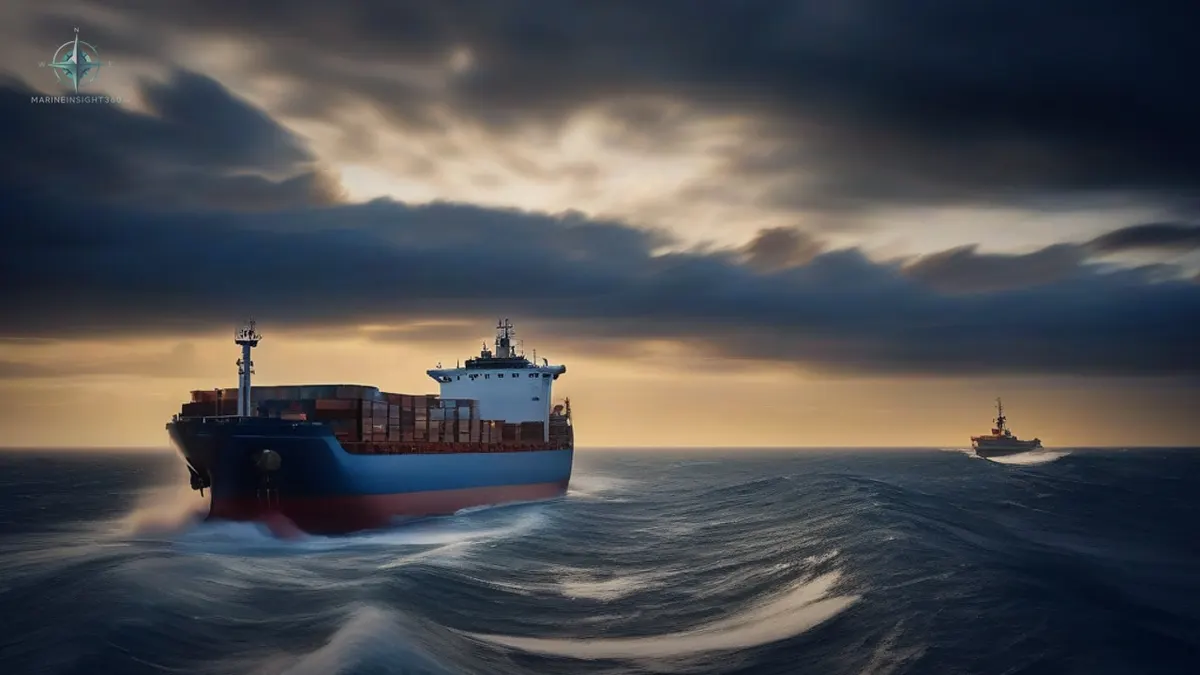
A VLCC, or Very Large Crude Carrier, is an oil tanker of 200,000 to 320,000 deadweight tonnes. Standard VLCC capacity is about 2 million barrels of crude oil per voyage. The ULCC class above it, at 320,000 deadweight tonnes and beyond, carries roughly 3 million barrels but has become rare.
Deadweight tonnage (DWT) measures how much a ship can carry in cargo, fuel and stores combined, so it is the figure the tanker market quotes first. VLCCs sit at the top of the working crude fleet: big enough to move a refinery's feedstock in one lift, small enough to fit the terminals and sea lanes that matter.
VLCC Capacity in Barrels, Tonnes and Meters
- Deadweight: 200,000 to 320,000 tonnes.
- Cargo volume: about 2 million barrels, roughly 318,000 cubic meters (11.2 million cubic feet).
- Length overall: around 330 meters (1,083 ft), longer than three soccer pitches.
- Beam: close to 60 meters (197 ft).
- Loaded draft: about 20 meters (66 ft), which rules out most conventional ports.
- Service speed: around 15 knots (17 mph), with a crew of roughly 20 to 30.
At current market rates a single laden VLCC can carry cargo worth well over a hundred million dollars, which is why charterers watch these ships the way traders watch pipelines.
What Makes a Ship a ULCC Instead
The Ultra Large Crude Carrier starts where the VLCC stops: 320,000 DWT and up, historically reaching past 550,000 DWT. The record holder, Seawise Giant, measured 564,763 DWT and about 458 meters (1,503 ft), the largest ship ever built by length and deadweight.
ULCCs flourished briefly in the 1970s, but their drafts excluded them from most ports and canals, and the market settled on the more flexible VLCC. Only a handful of ULCCs ever operated in recent decades, and the class survives mostly in record books and conversion projects, while hundreds of VLCCs carry the world's long-haul crude today.
The ULCC era answered a question the market stopped asking. Ports, canals and insurers all reward flexibility, and two VLCC cargoes can reach far more gateways than one ULCC cargo ever could.
How a Supertanker Loads and Discharges
A ship drawing 20 meters cannot berth at an ordinary quay. VLCCs load and discharge at offshore terminals, single-point moorings and deep-water jetties, or transfer cargo to smaller tankers by ship-to-ship lightering. Hoses connect the terminal to the ship's cargo manifold, and the shore or ship pumps move the oil.
The cargo itself never sits in one open space. The hull is subdivided into separate cargo tanks served by dedicated pumps and remotely operated valves, so the crew controls hull stress, trim and free surface while millions of barrels move. Ballast water in segregated tanks keeps the ship stable and the propeller immersed on the empty leg.
Routing follows the same logic. A fully laden VLCC is too deep for the Suez Canal, so voyages from the Middle East to the Atlantic basin either lighten cargo before transit or take the long route around the Cape of Good Hope. The class below, Suezmax, exists precisely because it is the largest tanker that can transit Suez fully loaded.
Why the Economics Favor Giant Tankers
Moving crude in one 2-million-barrel parcel costs far less per barrel than moving it in three smaller ones: one hull, one crew, one voyage's fuel. That scale advantage is the entire reason the class exists, and it compounds on the long hauls VLCCs serve, from Middle East and West African load ports to refining centers in Asia, Europe and the US Gulf.
The same size makes VLCCs useful as floating storage. When prompt oil prices fall below future prices, traders charter them to hold crude at anchor and sell it forward, and dozens of ships can disappear from the freight market at once. Storage economics can move tanker rates as sharply as the oil price itself.
Freight earnings swing just as hard the other way. The same Middle East to Asia voyage can pay an owner several times more in a tight market than in a slack one, so owners time drydocking, slow steaming and repositioning around the cycle rather than the calendar.
Safety Rules Written in Steel
Modern VLCCs are double-hulled: two complete layers of steel separate the cargo tanks from the sea, a requirement the International Maritime Organization phased in after the major spills of the 1980s and 1990s. Segregated ballast tanks keep seawater ballast away from cargo spaces, and inert gas systems fill the space above the oil with low-oxygen gas so tank atmospheres cannot ignite.
Crews manage enormous free-surface and stress loads during cargo work, so loading computers, tank gauging and manifold watchkeeping run to strict procedures. The result is a safety record modern tanker operators defend closely, because a single failure at this scale is measured in coastlines.
Whether the ULCC stays a museum class is not actually settled. What killed it was port and canal access rather than anything about the physics, and every canal widening and new deep-water terminal moves that line slightly. Nobody is ordering them now; nobody has said they never will be either. If you are looking at a career on crude tankers, the VLCC is the fleet that exists — the record holder is a museum piece and the wider fleet is where the berths are.
Recommended Reading
Chemical Tankers - Types, Designs, & Regulations
Chemical Tankers - Types, Designs, & Regulations: ports, trade and shipping-market context for US, UK, Canada, Australia, Singapore and European...
What Are Gas Tankers? Types Of Gas Tankers
What Are Gas Tankers? Types Of Gas Tankers: ports, trade and shipping-market context for US, UK, Canada, Australia, Singapore and European maritime...
Pirates of the Modern Age: The Evolving Threat of Maritime Piracy to Oil Tankers
Pirates of the Modern Age: The Evolving Threat of Maritime Piracy to Oil Tankers: ports, trade and shipping-market context for US, UK, Canada,...