
The 7 Types of Cargo Ships That Carry World Trade
The seven types of cargo ships and what each carries: container ships, bulk carriers, tankers, gas carriers, ro-ro, general cargo and reefer vessels.
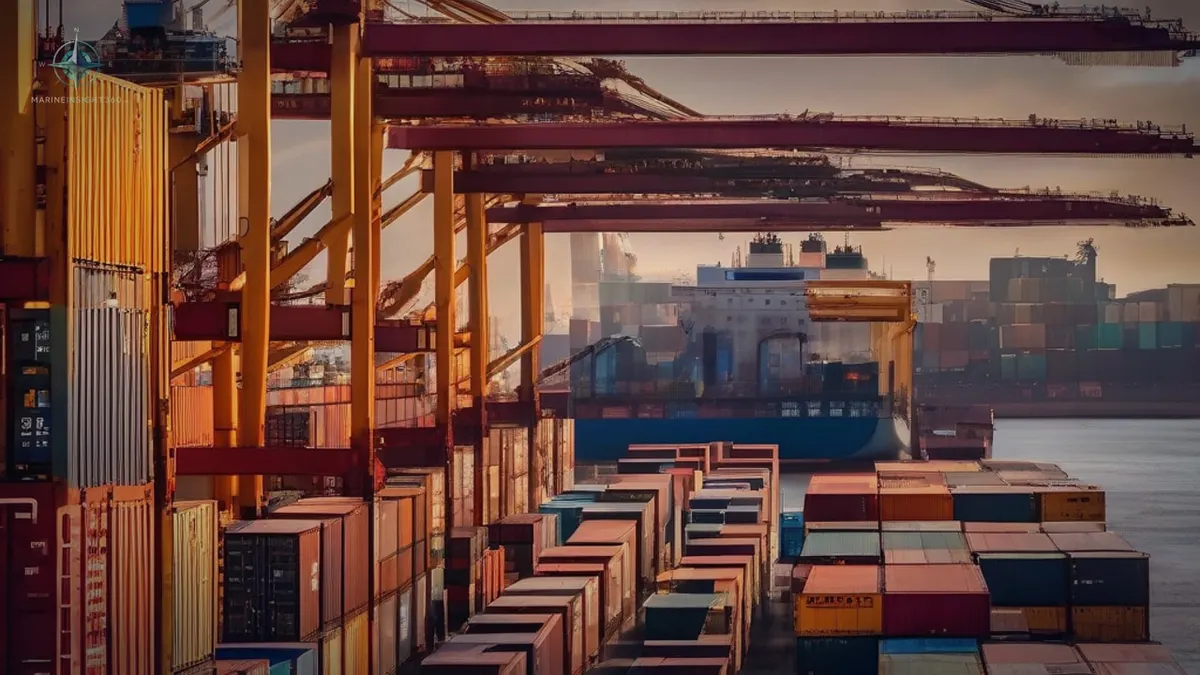
The main types of cargo ships are container ships, bulk carriers, tankers, gas carriers, roll-on roll-off vessels, general cargo ships and refrigerated ships. Each type is shaped by its cargo: boxes stack, grain pours, oil pumps, cars roll, and every hull is built around one of those verbs.
Between them these seven families carry the overwhelming majority of world trade by volume. Learn to tell them apart and every harbor view turns legible: the shape of a hull tells you what is inside it and where the money is. It is also the fastest way to read shipping news, because freight markets, casualty reports and port statistics all sort themselves by these same families.
1. Container Ships
The box movers. Steel containers stack in cell guides below deck and in lashed towers above it, and the biggest ships carry over 20,000 twenty-foot units on Asia-Europe runs. Container ships live on schedules like airlines, and their gantry-crane ballet in port is covered in our loading guide below.
2. Bulk Carriers
Boxy, hatch-topped ships that carry loose dry cargo poured straight into the holds: iron ore, coal, grain, bauxite, fertilizer. Sizes run from small handysize traders to capesize giants that only the largest terminals can feed. No packaging, no pallets, just tens of thousands of tonnes of one substance.
3. Tankers
Liquid cargo in subdivided tanks: crude oil from field to refinery, refined products outward, chemicals in specialized stainless or coated tanks. The class tops out with the VLCC, the two-million-barrel crude carrier profiled in our supertanker guide. Pipework and manifolds replace hatches, and pumps replace cranes.
4. Gas Carriers
LNG and LPG travel in their own vessels, in spherical or membrane tanks that hold natural gas liquefied at minus 162°C (minus 260°F). Gas carriers are among the most sophisticated and expensive merchant ships afloat, and the LNG trade's growth has made them the shipyard order books' favorites.
5. Roll-On Roll-Off Ships
Cargo that drives aboard: cars, trucks, trailers and machinery roll up stern ramps into multi-deck garages. Pure car carriers move the world's new vehicles; RoPax ferries add passengers on short-sea routes. The full family has its own guide below.
6. General Cargo Ships
The all-rounders that predate containerization and refuse to die: tween-deck holds, their own cranes, and the flexibility to load project cargo, steel, bagged goods and anything too awkward for a box. Heavy-lift and project variants carry transformers, wind turbine parts and even other vessels.
7. Refrigerated Ships
Reefers keep bananas, meat, fish and pharmaceuticals cold from origin to market. Dedicated reefer ships have lost ground to refrigerated containers plugged in aboard container ships, but the cold chain itself only grows, and specialized reefer tonnage still serves the fruit trades.
How to Tell Them Apart From Shore
- Deck full of boxes: container ship, the towers say so.
- Flat deck with rows of hatch covers and cranes: bulk carrier or general cargo ship.
- Low, pipe-covered deck and a manifold amidships: tanker.
- Spheres or a boxy insulated casing: gas carrier.
- A floating slab-sided garage with a stern ramp: ro-ro or car carrier.
- White hull and reefer vents: likely a refrigerated ship in the fruit trade.
Ports in the United States, Europe and Asia sort themselves around these families too, with dedicated container, bulk, tanker and vehicle terminals, so the ship type also tells you which corner of the harbor it is heading for.
Beyond the seven families live the specialists. Livestock carriers move animals on ventilated decks. Semi-submersible heavy-lift ships sink their own decks below the waterline to float drilling rigs and damaged vessels aboard. Cable layers spool the internet across ocean floors, and self-discharging bulkers carry their own conveyor systems for ports with no equipment at all.
Each is a tiny fleet solving one stubborn problem, and each proves the same rule that shapes the big seven: the cargo designs the ship, never the other way around. Ownership follows the same specialization, with most vessels trading under charter arrangements that match a ship's family to an operator's cargo book for months or years at a time.
What to do next
Three of these families have full guides of their own:
Recommended Reading
Ro-Ro Ships: How Roll-On Roll-Off Vessels Work and Why They Dominate Vehicle Trade
How ro-ro ships work: ramps, decks and lane meters, the difference between PCTC, ConRo and RoPax types, and the stability risks unique to roll-on roll-off.
The World's Major Sea Routes: Where Global Trade Actually Sails
The sea routes that carry world trade: Asia-Europe, transpacific, transatlantic and the chokepoints they squeeze through, from Suez to Malacca to Panama.
Cargo Barges: Every Major Type and What Each One Carries
The main types of cargo barges, hopper, deck, tank, crane and more, what each carries, and how tug-and-tow economics move bulk freight on inland waterways.