
Understanding the Ins and Outs of the Wall Wash Test (WWT) on Chemical Tankers
How the wall wash test works on chemical tankers: sampling method, hydrocarbon, chloride, permanganate time and color limits, and why tanks fail a WWT.
What the wall wash test decides
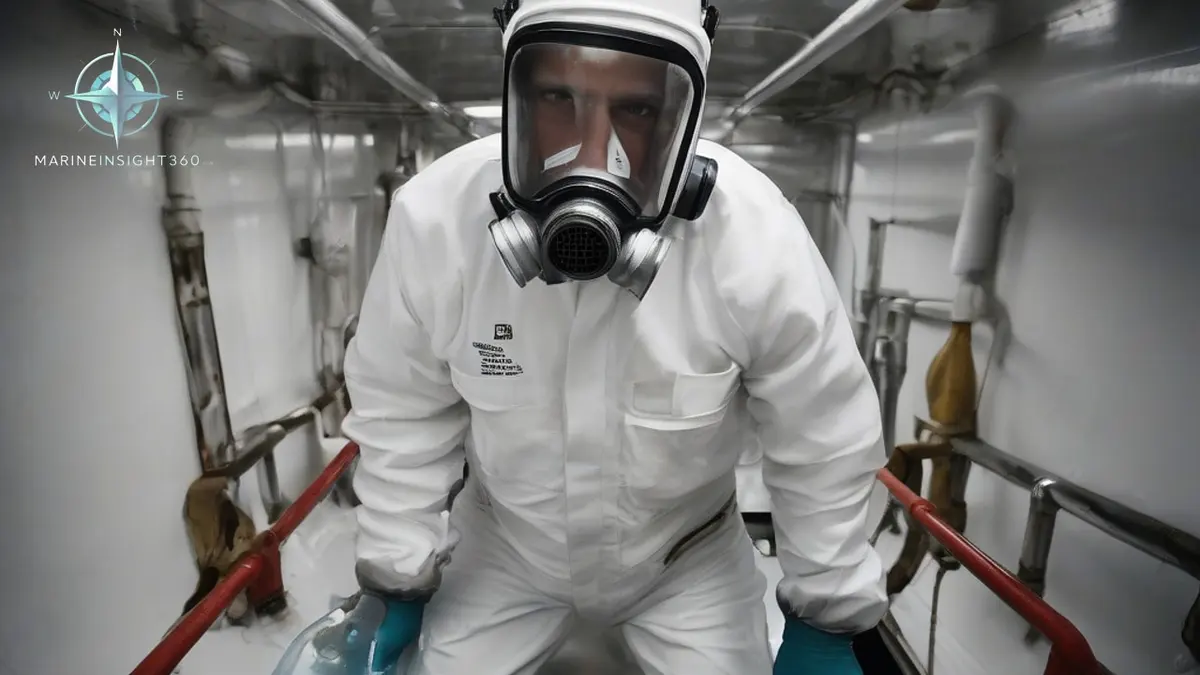
The wall wash test (WWT) is a chemical analysis of a solvent rinse taken off cargo tank surfaces. It proves a chemical tanker is clean enough to load the next parcel. Ship staff and an independent surveyor enter the tank, wash defined areas with a high purity solvent, collect the runoff and analyze it on board. If any result falls outside the shipper limits, the tank fails and cleaning continues.
The same method and the same limits apply at chemical berths in Houston, Rotterdam and Singapore, because the shipper writes them, not the flag state.
Nothing else in tank cleaning carries the same commercial weight. A failed wall wash keeps the ship off the berth on the owner's time, while a passed test that should have failed can contaminate a parcel worth far more than the entire cleaning cycle. Understanding the ins and outs of the wall wash test is core competence for a chemical tanker chief officer.
Which cargoes trigger a wall wash and why
Wall washing is demanded for cargoes where trace contamination destroys value: methanol, ethanol and other alcohols, ketones such as acetone and MEK, glycols including MEG, acrylates, and high specification base oils. These are sold on tight purity specifications, so a shipper will not release a parcel into a tank that has not been proven analytically.
Tank construction shapes the whole exercise. Stainless steel tanks tolerate aggressive solvents and generally clean to a higher standard. Coated tanks behave differently: zinc silicate coatings absorb traces of previous cargo and release them slowly, and epoxy coatings are damaged by some solvents. A tank whose coating has absorbed a difficult previous cargo can defeat several cleaning cycles.
The tests that decide the result
Hydrocarbon by UV spectrophotometer
The sample is scanned in a UV spectrophotometer and the absorbance curve is compared against a blank of the same solvent batch. Hydrocarbon traces from an earlier oil or aromatic cargo show as absorbance in the relevant wavelength band. The UV scan graph, not just the headline number, is what an experienced surveyor reads.
Chloride
Chloride indicates seawater. It is the most common self-inflicted failure, because seawater used in the middle of a cleaning cycle leaves chloride behind unless the final rinses are thorough fresh water and the lines, pumps and drop lines are properly flushed. Chloride carried into an alcohol or glycol parcel causes corrosion downstream in the receiver's plant.
Permanganate time test
The permanganate time test (PTT) detects oxidizable organic contamination in alcohols and ketones. Potassium permanganate solution is added to the sample in a water bath and the time taken for a defined color change is measured. A longer time means a cleaner sample, and a commonly specified acceptance limit is more than 50 minutes, though the charterer sets the figure for each fixture.
Color and residue
Color is read on the APHA platinum-cobalt scale against standards, catching discoloration a spectrophotometer scan may not flag. Non-volatile matter is measured by evaporating a known volume and weighing what is left, which catches heavy or polymeric traces. Appearance and water miscibility checks are quick visual screens for haze, particles or separation.
How the sample is actually taken
Sampling technique causes more disputed results than tank condition does. The tank is an enclosed space, so entry runs on a full permit: gas freeing to a stable atmosphere, oxygen and toxic gas checks at several levels, continuous monitoring, a standby attendant and a rescue plan that would actually work.
- Solvent is poured down a defined area of bulkhead and collected in a clean bottle held below it, so the runoff is never touched by hand or glove.
- Samples come from several bulkheads at different heights, plus the areas around the suction well and bellmouth where residue collects.
- Glassware is rinsed with the same solvent batch immediately before use, and a blank of that batch is run alongside every test.
- Methanol is toxic and absorbed through skin, so solvent handling needs the correct gloves, eye protection and ventilation rather than the nearest pair of work gloves.
Why tanks fail, and what to check first
- Contaminated solvent or dirty glassware. A single reused bottle can fail a clean tank. Run the blank before blaming the cleaning.
- Seawater late in the cycle. Chloride failures usually trace back to the wash sequence, not to the bulkhead.
- Incomplete gas freeing. Residual vapor redeposits on cold surfaces after the tank is closed up.
- Lines, pumps and heating coils. The bulkhead can be spotless while the cargo pump, drop line or manifold spool still holds the previous grade.
- Coating absorption. Zinc silicate releases absorbed cargo slowly, so a tank can pass and then fail hours later. Ventilation and time, not more solvent, is usually the answer.
What a failure costs and how crews shorten the loop
A rejected tank means more cleaning, more solvent, more slops to dispose of and a vessel sitting at the berth or at anchor while the clock runs. In the worst case the parcel shifts to another ship and the fixture is lost.
Chief officers who cut that risk plan the cleaning against the previous cargo and the next one together, run an in-house wall wash before calling the surveyor, and keep a tank cleaning log detailed enough to prove what was done.
Before the next chemical fixture, work the cleaning plan from the specific previous cargo rather than from habit, and confirm the acceptance limits in the charterparty instead of assuming last voyage's figures still apply. The Shipboard Operations section of Marine Insight 360 covers the wider tank cleaning sequence that feeds a successful WWT.
The analysis is commercial, but the tank behind it is regulated. A chemical tanker carries a Certificate of Fitness for the carriage of dangerous chemicals in bulk, issued by the flag state or by a class society acting for it, and DNV, Lloyd's Register and ABS all do that work. USCG inspectors verify the equivalent compliance document before a foreign chemical tanker works cargo at a US berth.
The wall wash itself is witnessed by an independent cargo surveyor appointed under the charterparty, working to the shipper limits rather than to a statutory standard. That is why a disputed result is settled between owner, charterer and surveyor, and why the surveyor method notes matter. Keep the blank result, the solvent batch number and the sampling positions with the tank cleaning log.
Sources and further reading
- A Comprehensive Guide To Wall Wash Test (WWT) On Chemical Tankers
- Onboard Laboratory Testing: Wall Wash and Chemical Analysis
- Wall Wash Test (WWT) on Chemical Tankers
What to read next
Recommended Reading
Chemical Tankers - Types, Designs, & Regulations
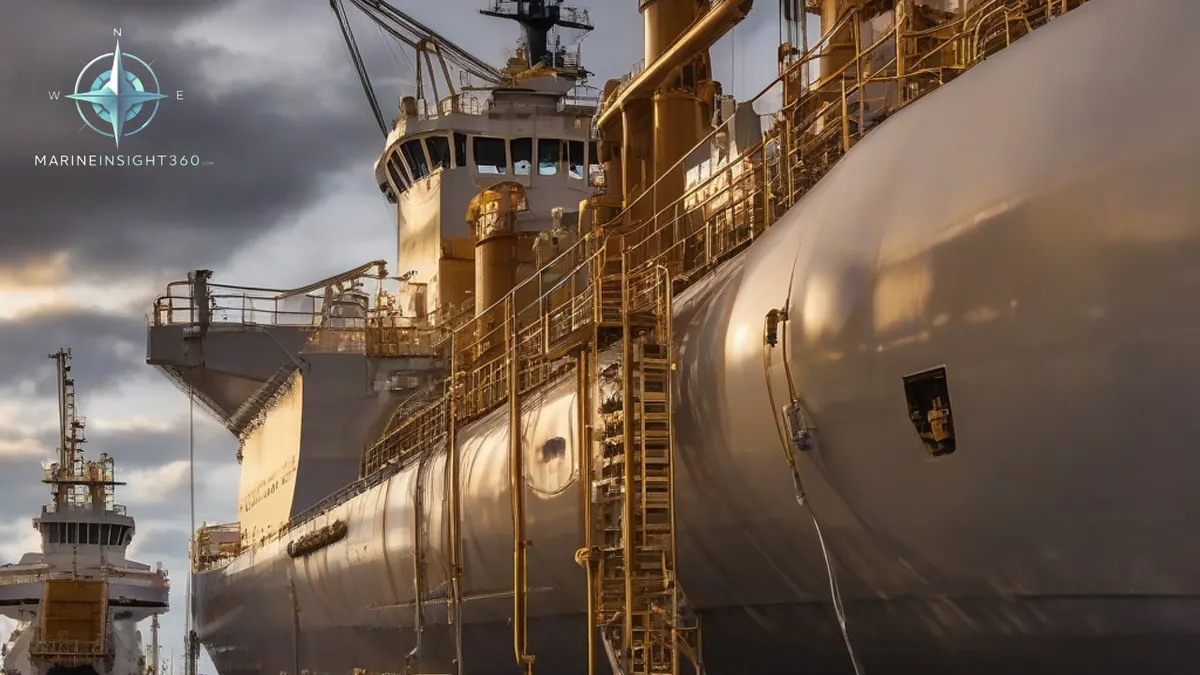
A large portion of the global trade supply chain system is based on maritime transport and relies on commercial shipping for the transportation of liquid cargoes.
VLCC and ULCC Tankers: Capacity, Size and How Supertankers Work
VLCC capacity in barrels, tonnes and meters: what separates a VLCC from a ULCC, how supertankers load at sea, and why giant tankers dominate crude shipping.
Saildrone Completes Missile Launch Test Aboard its Sail-Powered Surveyor
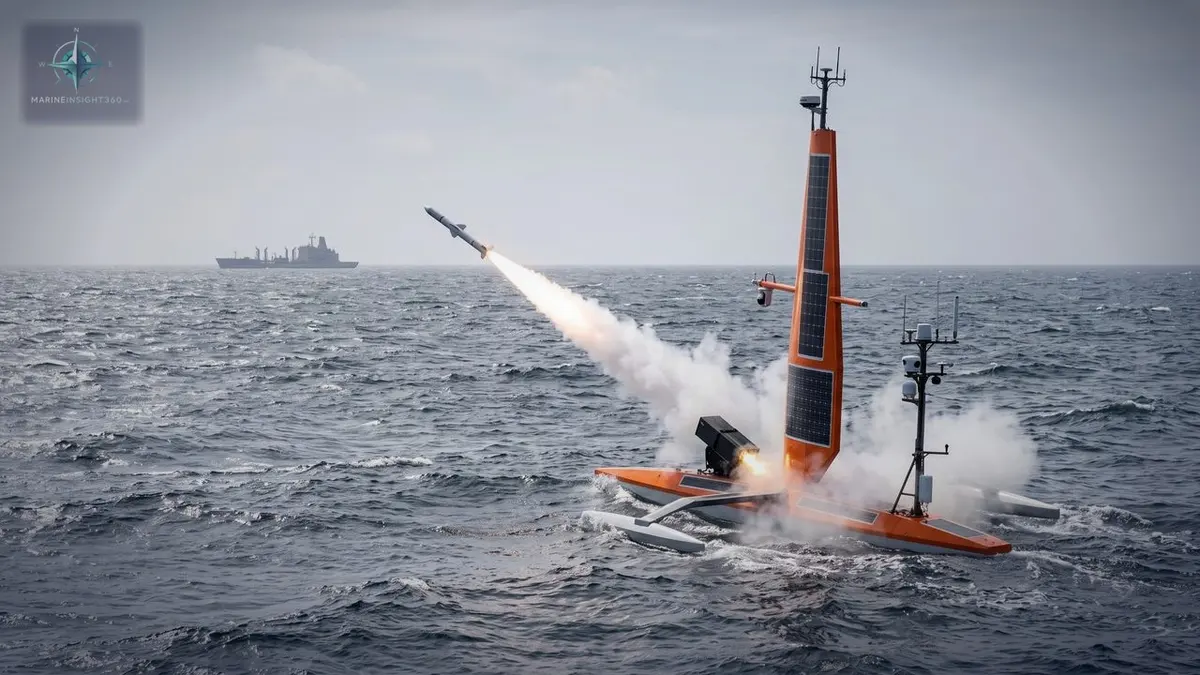
Saildrone’s autonomous vessel successfully launched a missile‑type payload, showing new possibilities for armed surveyors and implications for shipping operator