
VOC Meaning in Shipping: Volatile Organic Compounds on Tankers
VOC means volatile organic compounds. What they are on a tanker, how MARPOL Annex VI Regulation 15 controls them, and what a VOC plan requires.
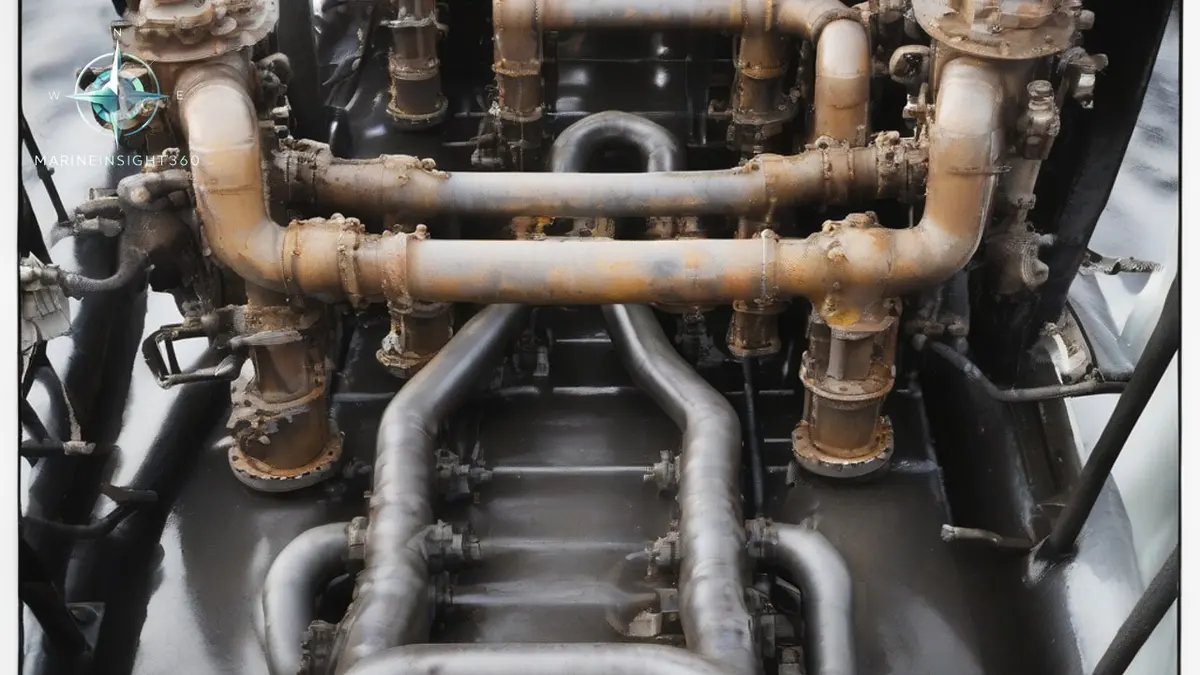
The VOC meaning used on ships
In shipping, VOC means volatile organic compounds: hydrocarbon vapors that evaporate readily from crude oil and refined petroleum products at ambient temperature and pressure. On a tanker they are cargo vapor. Controlling them is an environmental requirement under MARPOL Annex VI. It is also a direct commercial matter, because every kilogram of vapor vented is cargo that never reaches the discharge port.
Port state control officers in the United States, Norway and the EU ask to see the VOC Management Plan on crude carriers, and a missing plan is a documented deficiency.
The abbreviation appears in two other maritime contexts. Historically, the VOC was the Vereenigde Oostindische Compagnie, the Dutch East India Company, and the monogram appears on charts, wrecks and museum pieces. In commercial and quality management documents, VOC sometimes means voice of the customer. Neither is what a chief officer means on a tanker deck.
Where VOC emissions come from during cargo operations
Vapor generation is not a single event. It happens across the voyage cycle.
- Loading : incoming liquid displaces the tank atmosphere, pushing a hydrocarbon-rich mixture out through the vent system or the vapor return line.
- Sea passage : temperature cycling and cargo movement generate vapor, and pressure vacuum valves lift when tank pressure exceeds the setting. Ships that hold higher tank pressure lift their valves less often and lose less cargo.
- Crude oil washing : spraying warm crude around the tank creates additional vapor.
- Discharge and tank cleaning : inert gas replacing the outgoing cargo carries hydrocarbon vapor with it, and gas freeing releases whatever remains.
What MARPOL Annex VI Regulation 15 requires
Regulation 15 of MARPOL Annex VI is the instrument that controls VOC emissions from tankers, revised by IMO resolution MEPC.176(58) adopted in 2008 and in force from 1 July 2010. Two separate obligations sit inside it, and they apply to different ships.
Port and terminal controls. A state that wishes to regulate VOC emissions from tankers must notify IMO of the ports and terminals concerned, together with the cargoes covered and the date the requirement applies. Tankers loading at a designated terminal must then be fitted with and use a vapor emission control system approved by their administration. The obligation is on the terminal to provide a safe and compatible system, and on the ship to be able to connect to it.
The VOC Management Plan. Regulation 15.6 requires every tanker carrying crude oil to have on board and implement a ship-specific VOC Management Plan approved by the flag administration, developed in line with IMO resolution MEPC.185(59). This applies regardless of where the ship trades, so it is the part that affects the largest number of vessels.
What the VOC Management Plan has to cover
The plan is a working document, not a certificate. Class and port state control inspectors check that it is ship-specific and that the crew follows it. It should set out written procedures for:
- Loading : managing tank pressure, avoiding unnecessary venting, and operating the vapor return connection where fitted.
- Sea passage : maintaining tank pressure below the P/V valve lifting setting where the cargo and the tank design allow.
- Discharge and crude oil washing : minimizing vapor generation during washing cycles.
- Responsibilities : who on board owns each step, normally the chief officer under the master.
- Record keeping : what is logged and where, so compliance can be demonstrated.
Practical measures that reduce loss
Operating tank pressure a little higher during the loaded passage, keeping P/V valve settings correct and tested, avoiding unnecessary tank openings, and using vapor return lines correctly at terminals all reduce emissions. Crude oil washing planned for the right stage of discharge, with attention to wash duration, does the same. None of these require new equipment, which is why the plan focuses on procedure rather than hardware.
Why VOC control matters beyond the certificate
Three reasons, in the order crews usually encounter them.
- Health. Crude oil vapor contains benzene and other aromatics with recognised occupational exposure limits. Gas monitoring, respiratory protection and controlled tank entry are the direct response, and any operation that releases vapor on deck raises exposure risk.
- Fire and explosion. Released hydrocarbon vapor near the deck creates a flammable atmosphere. Inert gas systems, correct P/V valve operation and vapor lock arrangements exist for this reason, and vapor control and gas safety are the same discipline in practice.
- Environment and cargo value. VOCs contribute to ground level ozone and photochemical smog, which is why terminals in regulated regions require vapor recovery. From the operator's side, vapor lost is cargo shortfall that appears on the outturn figures.
What to check on your own ship
Confirm the approved VOC Management Plan is on board and matches the current cargo tank arrangement, that the crew can describe the loading and sea passage procedures without reading them, that P/V valve settings and test records are current, and that the vapor emission control connection has been tested since the last drydock. The Marine Insight 360 Shipboard Operations section covers inert gas and tank atmosphere control alongside this.
Sources and further reading
- Amendments to MARPOL Annex VI for Volatile Organic Compounds, ABS
- Volatile Organic Compounds (VOC) Management Plan on Ships, Marine Engineering Online
- Annex VI Regulation 15, Volatile organic compounds, MARPOL Training Institute
What to read next
Recommended Reading
What Is VOC in Shipping? Volatile Organic Compounds on Tankers Explained
What VOC means in shipping: the cargo vapors controlled by MARPOL Annex VI, what the VOC Management Plan requires, and how tanker crews cut emissions.
VLCC and ULCC Tankers: Capacity, Size and How Supertankers Work
VLCC capacity in barrels, tonnes and meters: what separates a VLCC from a ULCC, how supertankers load at sea, and why giant tankers dominate crude shipping.
What Are Volatile Organic Chemicals? VOC Control on Tankers
What volatile organic chemicals are, where VOC vapours come from on tankers, and how MARPOL Annex VI Regulation 15 and VOC management plans control them.