
What Is VOC in Shipping? Volatile Organic Compounds on Tankers Explained
What VOC means in shipping: the cargo vapors controlled by MARPOL Annex VI, what the VOC Management Plan requires, and how tanker crews cut emissions.
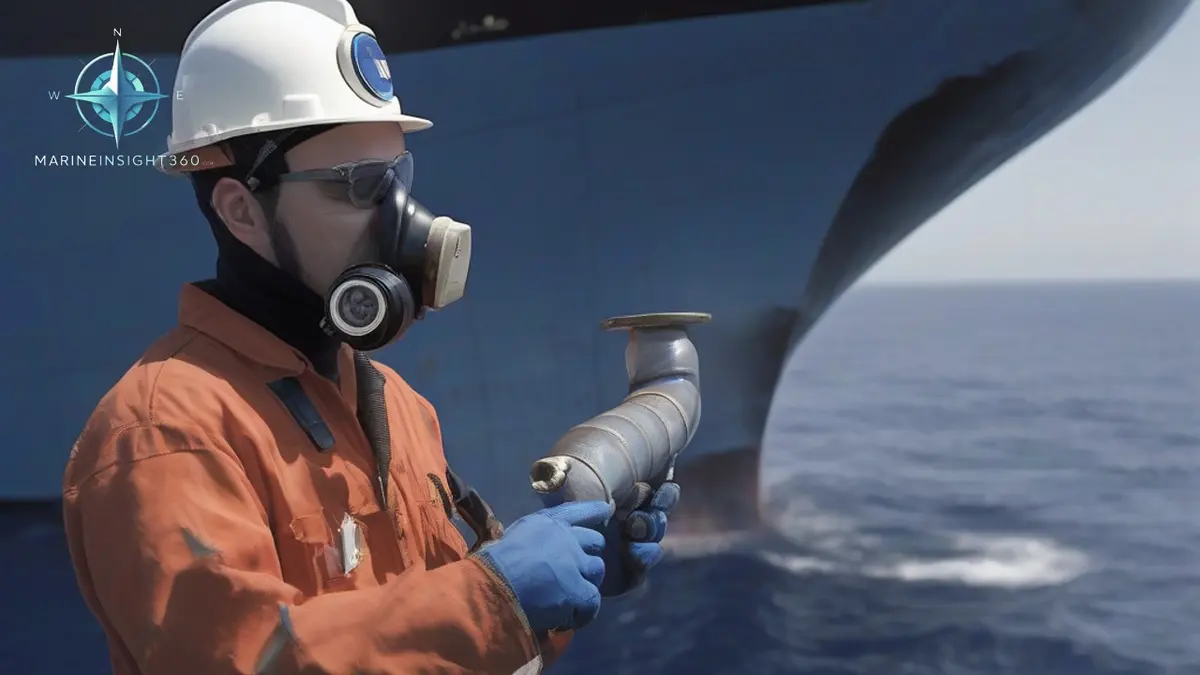
What is VOC in shipping? VOC stands for volatile organic compounds. In shipping the term covers the hydrocarbon vapors that evaporate from crude oil and other liquid cargoes. It also points to one rule: Regulation 15 of MARPOL Annex VI, the air pollution annex. Under it, every tanker carrying crude oil must hold and follow an approved VOC Management Plan. Port states may also control tanker vapor emissions at their own terminals.
The US Coast Guard, Transport Canada and EMSA all enforce vapor control at loading berths from Houston to Rotterdam.
The subject stops being abstract the first time you stand on a tanker deck during loading. As cargo rises in the tanks, it pushes a rich hydrocarbon vapor mixture out of the ullage space, the empty volume above the liquid. That vapor is the VOC problem in physical form. It is flammable, it contributes to smog formation ashore, and every tonne vented to atmosphere is cargo the owner paid for and lost.
What counts as a VOC on board a ship
The vapors of concern are the light ends of the cargo: methane, ethane, propane, butane and similar fractions that evaporate readily at normal cargo temperatures. Crude oil is the biggest source because it arrives straight from the well with its light components still dissolved in it. Gasoline and other volatile product cargoes raise the same issue on product tankers.
Paints, solvents and chemical stores also release volatile organic compounds, but the regulation is aimed at cargo vapors, because the quantities involved dwarf everything else. A large crude carrier can generate a substantial vapor volume during a single loading, and more again on passage as the cargo warms and sloshes.
What MARPOL Annex VI Regulation 15 requires
Regulation 15 places obligations on both ships and ports. On the ship side, a tanker carrying crude oil must have a ship-specific VOC Management Plan approved by its flag administration. The plan sets out written procedures for preventing or minimizing vapor release during three phases: loading, sea passage and discharge. Port State Control officers can ask to see the plan and evidence that the crew actually follows it.
On the shore side, a country that chooses to regulate VOC emissions in its ports or terminals must notify the International Maritime Organization (IMO), the UN agency for shipping, and must provide approved vapor emission control systems, known as VECS. Tankers trading to those terminals need compatible vapor collection arrangements so that displaced cargo vapor is returned ashore instead of vented.
Classification societies such as ABS publish guidance on how the requirements apply to specific ship types, and the Oil Companies International Marine Forum (OCIMF) maintains detailed industry practice on VOC emissions.
How crews cut VOC emissions during loading and passage
Most VOC control is operational discipline rather than hardware. The measures that appear in a typical management plan include:
- Planning the loading sequence and rate so vapor growth stays manageable and venting is not forced early
- Connecting the vapor return line to the terminal VECS where one is provided, and checking it before cargo starts
- Keeping tank pressure as high as safely possible within the design limits of the pressure and vacuum valves, because releasing early wastes vapor that would otherwise recondense into the cargo
- Avoiding unnecessary tank openings, gauging through closed systems instead of open ullage ports
- Recording tank pressures and any venting events so the plan can be shown to work during inspections
- Timing crude oil washing carefully, since washing stirs the cargo and generates additional vapor
On passage, the main levers are pressure management and temperature awareness. A cargo that heats up in tropical waters generates more vapor, so monitoring and logging matter as much as valve settings.
Why VOC control is money as well as compliance
Vented vapor is lost cargo. The light ends that escape have commercial value, and charterers watch cargo outturn figures closely, so a ship that vents freely delivers measurably less than one that manages pressure well. Over a year of voyages the difference is real money.
There is also a safety case. Hydrocarbon vapor released on deck can form flammable pockets around the vents, which is why VOC procedures sit alongside inert gas and tank atmosphere routines in a tanker safety system. Vetting inspectors and Port State Control both treat a stale or ignored VOC Management Plan as a warning sign about the wider safety culture on board.
For related explanations of MARPOL annexes, inert gas systems and tanker cargo equipment, the Marine Insight 360 Knowledge Base covers each convention in plain language.
The plan itself is the common deficiency. Vetting and Port State Control inspectors regularly find a generic VOC Management Plan bought as a template, never made ship specific, with no record of tank pressures or venting events to show it was ever followed. Officers who cannot say where the plan sits, or what it asks of them during loading, confirm the finding.
Hardware fails in predictable places. Pressure and vacuum valves seize, corrode or leak past their seats, so tanks vent early and light ends escape while the gauge still reads normal. Flame screens on the vent risers clog with rust and salt, restricting flow. On vapor return, a mismatched connection or a closed valve ashore can overpressure the tanks during loading.
Sources and further reading
- ABS: Amendments to MARPOL Annex VI for Volatile Organic Compounds
- OCIMF: Volatile Organic Compound Emissions
- Marine Engineering Online: VOC Management Plan on Ships
What to read next
Recommended Reading
VOC Meaning in Shipping: Volatile Organic Compounds on Tankers
VOC means volatile organic compounds. What they are on a tanker, how MARPOL Annex VI Regulation 15 controls them, and what a VOC plan requires.
VLCC and ULCC Tankers: Capacity, Size and How Supertankers Work
VLCC capacity in barrels, tonnes and meters: what separates a VLCC from a ULCC, how supertankers load at sea, and why giant tankers dominate crude shipping.
What Are Volatile Organic Chemicals? VOC Control on Tankers
What volatile organic chemicals are, where VOC vapours come from on tankers, and how MARPOL Annex VI Regulation 15 and VOC management plans control them.