
What Are Portholes? Purpose, Construction and the Rules Behind Ship Side Scuttles
What portholes are, why they are round, how side scuttles are built with toughened glass and deadlights, and the strength grades rules require at sea.
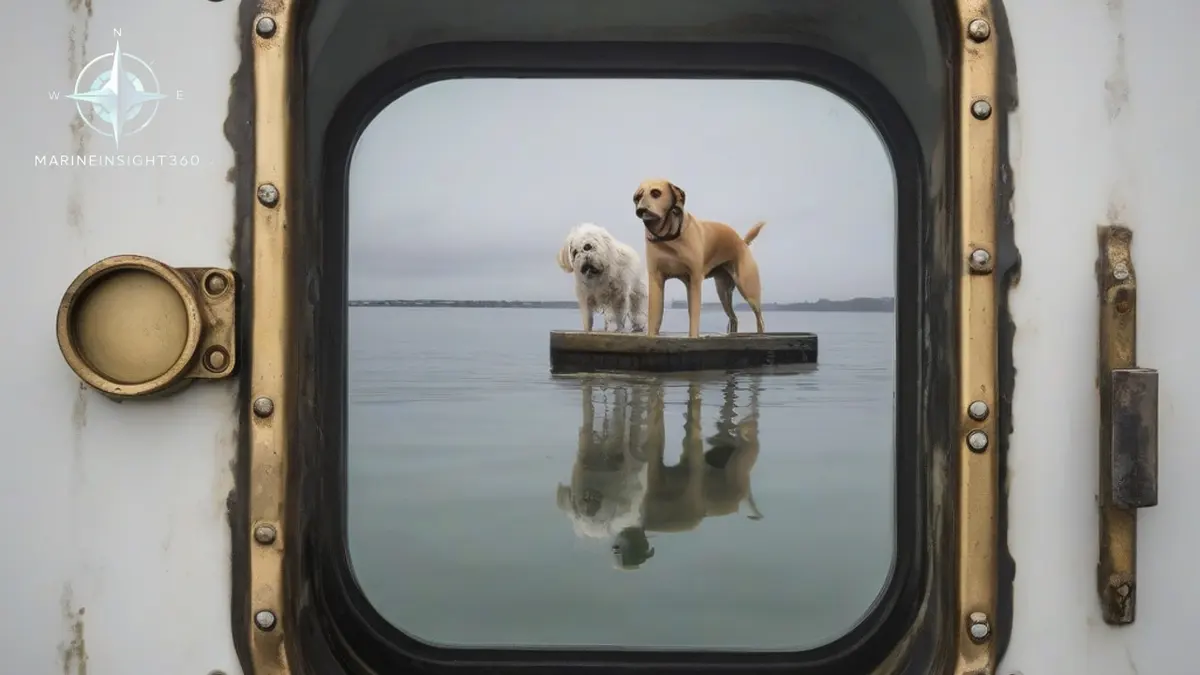
Portholes are the round windows fitted in a ship's hull and superstructure to admit light and air. The formal term in international regulations is side scuttle. A porthole is far more than glazing. It is a pressure-rated closure in the weathertight envelope of the ship, built to take green seas. Class societies such as Lloyd's Register, DNV and ClassNK set the strength grades. Load line surveyors in US, UK and Japanese ports check them.
That dual identity, window and hull opening, drives everything about how portholes are designed, where the rules allow them, and how crews are expected to look after them.
What are portholes made of and how are they built
A porthole assembly starts with a metal frame welded or bolted through the plating. Traditional frames are brass or bronze because both resist seawater corrosion; modern ships also use steel and aluminum frames matched to the surrounding structure.
Inside the frame sits a circular pane of toughened glass, which on heavy-duty units can be as much as 50 mm (2 in) thick. On opening types the glass is carried in a hinged holder that lands on a rubber gasket and is pulled tight by swing bolts, known on board as dogs or wing nuts.
Not every porthole opens. Fixed side scuttles are permanently sealed and are used where ventilation is unnecessary or where the position in the hull makes an opening light unacceptable.
Why portholes are round
A circular opening spreads stress evenly around its edge, avoiding the corner concentrations that crack plating and glass in a working, flexing hull. A circle is also the easiest shape to machine accurately and to seal against a compressible gasket, so the round scuttle earned its place through engineering rather than style.
The deadlight: the porthole's storm shutter
Behind many portholes hangs a deadlight, a hinged metal cover that clamps over the opening from inside. Its job is to protect the glass in heavy weather and to keep the compartment watertight even if the pane fails.
Crews close and dog deadlights when heavy weather is expected, and on the lowest decks they may be kept shut at sea as routine. A secondary use is simple darkness, blanking out daylight so an off-watch sailor can sleep.
Strength grades and where each type may be fitted
Side scuttles are graded by the water pressure they must survive. Industry and class standards divide them into three types. Heavy Type A units are rated for a 24 meter (79 ft) head of water. Medium Type B is rated for 12 meters (39 ft), and light Type C for 6 meters (20 ft).
Position in the hull decides the grade. The lower and more exposed the opening, the heavier the scuttle. The International Convention on Load Lines also restricts how low in the hull an opening scuttle may sit, and requires deadlights for scuttles below the freeboard deck.
Rectangular windows are a separate, lighter category. They belong in superstructures and deckhouses well above the waterline, which is why the hull proper carries round scuttles while the bridge front carries square glass.
Keeping portholes weathertight on board
Most porthole failures are maintenance failures. Gaskets harden, paint builds up on landing faces, and dogs seize, and any one of the three turns a watertight closure into a leak path.
- Renew or dress rubber gaskets when they crack, flatten or take a permanent set.
- Keep landing faces paint-free, because a painted gasket seat will not seal.
- Grease dog threads and hinge pins so covers can be closed fast in worsening weather.
- Inspect the glass for chips and star cracks, and report damage rather than paint over it.
Surveyors check side scuttles during load line inspections, and a defective deadlight on a lower deck is a classic port state control finding that can hold a ship in port.
From gun ports to cruise ship cabins
The name is usually traced to the gun ports cut in the sides of sailing warships, openings that had to close tight against the sea. Salvaged brass portholes from scrapped tonnage now sell as maritime antiques, which says something about how recognizable the fitting remains.
Modern practice keeps the porthole where it still makes sense. Cruise ships fit balconies and panoramic glass high up. Lower passenger decks, crew cabins and workboats keep the classic round scuttle, because nothing better has been invented for a window that must sometimes be part of the hull. The Shipboard Operations section of Marine Insight 360 covers related weathertight closures, from hatch covers to watertight doors.
Sources and further reading
- Porthole, port light, sidescuttle - Wartsila Encyclopedia of Marine and Energy Technology
- Deadlight - Wikipedia
- Side Scuttles - Marine Porthole Windows - YSmarines
What to read next
Recommended Reading
Marine Scrubbers: Types, How They Work and Where the Rules Are Tightening
How marine scrubbers strip sulfur from ship exhaust, the difference between open-loop, closed-loop and hybrid systems, and where washwater discharge is banned.
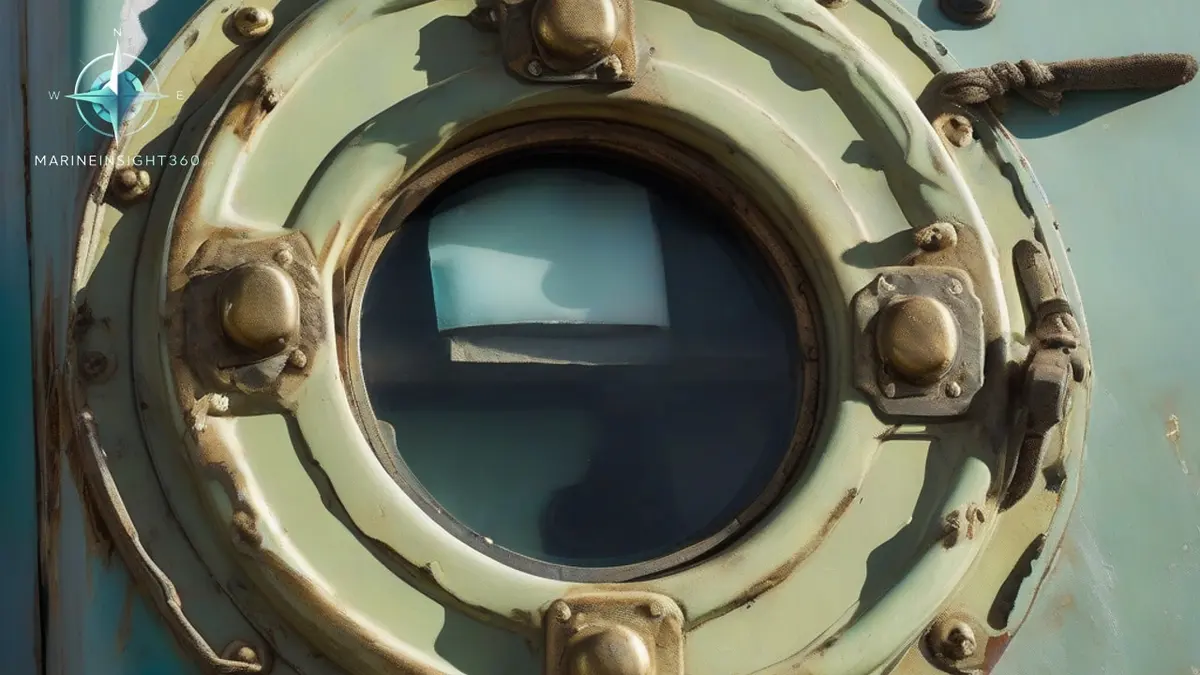
Why Are Portholes Round? The Structural Reason Behind the Shape
Portholes are round because square corners concentrate stress in a working hull. How side scuttles, deadlights and bridge windows differ, and what fails.
The Marine Environment and Shipping: The Rules That Govern What Goes Over the Side
How shipping protects the marine environment: the six MARPOL annexes, special areas and ECAs, ballast water standards, carbon rules and shipboard practice.